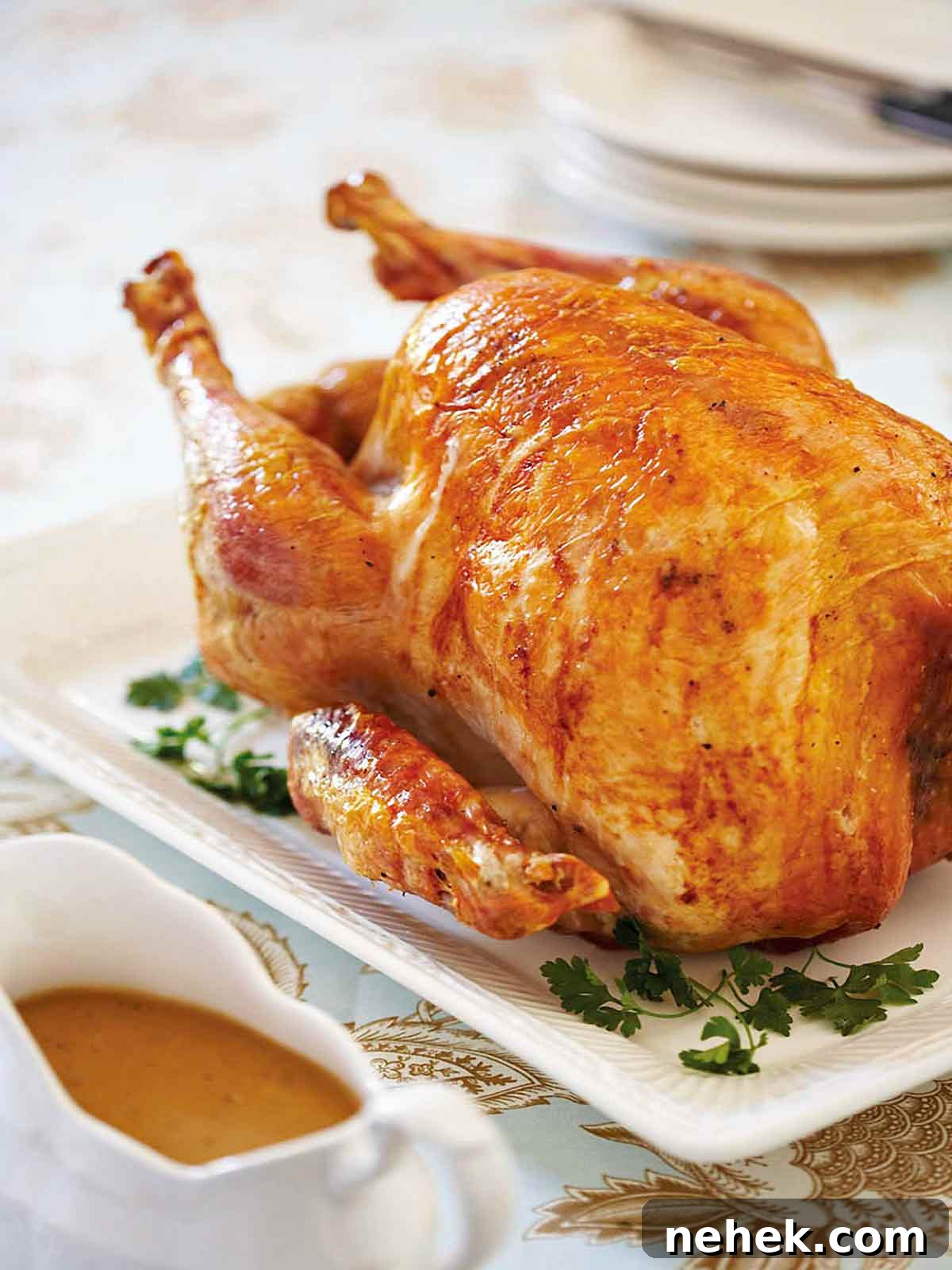
This old-fashioned roast turkey and gravy demonstrates why draping cheesecloth over a turkey as it roasts is a reliable way to achieve tender meat and exceptionally crisp skin. There’s no need to stuff, truss, brine, or fuss—this straightforward method does the work for you.
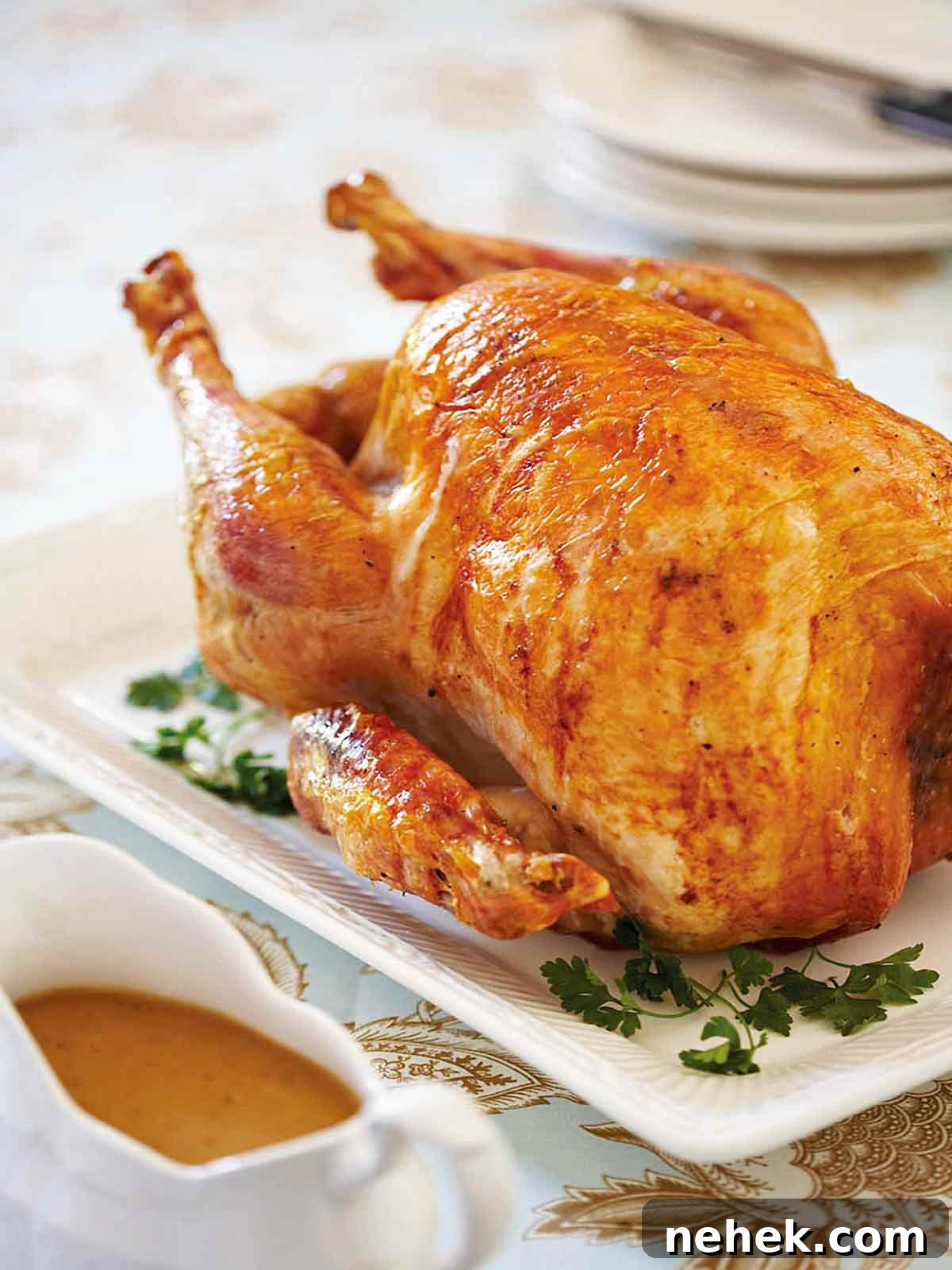
This classic roast turkey and gravy proves the value of old-fashioned techniques like using cheesecloth to protect the bird while allowing the skin to dry and then crisp beautifully. It’s a simple, dependable approach that yields moist, flavorful meat and a deeply satisfying pan gravy. —Renee Schettler Rossi
Old-Fashioned Roast Turkey and Gravy
David Leite
Video
Equipment
-
Cheesecloth
Ingredients
For the turkey
- 4 cups cold water
- One (12- to 14-pound) turkey, neck and giblets reserved
- 1 pound salt pork, cut into 1/4-inch-thick (6 mm) slices
For the gravy
- 1 tablespoon mild vegetable oil
- Reserved turkey neck and giblets
- 1 5 oz onion, diced
- 5 cups cold water
- 2 cups homemade chicken stock or low-sodium canned chicken broth
- 4 sprigs fresh thyme
- 1 bay leaf
- 4 to 6 tablespoons unbleached all-purpose flour
- Salt and freshly ground black pepper
Instructions
Roast the turkey
-
Preheat the oven to 350°F (175°C) and position a rack in the lowest slot. Fold the cheesecloth into an 18-inch square, place it in a large bowl, and cover it with the 4 cups of cold water.
-
Place the turkey breast-side up on a V-rack set inside a roasting pan and tuck the wings behind the back. Prick the skin of the breast and legs all over with a fork, arrange the slices of salt pork over the breast and legs, drape the soaked cheesecloth over the bird, and pour any remaining water into the roasting pan. Cover the cheesecloth completely with heavy-duty aluminum foil.
-
Roast until the thickest part of the breast registers 140°F (60°C) on an instant-read thermometer, about 2 1/2 to 3 hours.
-
Remove the foil, cheesecloth, and salt pork and discard them. Increase the oven temperature to 425°F (220°C) and roast until the breast reaches 160 to 165°F (71°C), about 30 to 45 minutes more.
-
Transfer the turkey to a cutting board and let it rest for 30 minutes. Reserve the roasting pan and its juices for the gravy.
Make the stock for the gravy
-
While the turkey roasts, heat the oil in a large saucepan over medium-high heat until it shimmers. Add the turkey neck and giblets and cook, stirring, until browned, about 5 minutes.
-
Add the diced onion and cook until softened, 5 to 7 minutes.
-
Stir in 5 cups water, the chicken stock or broth, thyme, and bay leaf and bring to a boil. Reduce the heat and gently simmer, skimming any scum that rises, until the stock reduces by half, about 3 hours.
-
Strain the stock through a fine sieve, reserving the giblets if you wish. You should have about 3 1/2 cups of stock.
Make the gravy
-
Pour the liquid from the roasting pan through a strainer into a container, then into a fat separator. Let the juices and fat separate.
-
Skim the fat from the surface of the strained pan juices, reserving about 1/4 cup of fat in a small bowl.
-
Combine the defatted pan juices with enough of the prepared stock to measure 4 cups total.
-
Heat the reserved fat in a saucepan over medium heat until it shimmers. Stir in 4 to 6 tablespoons of flour and cook, stirring, until the roux is honey-colored and fragrant, about 4 minutes.
-
Slowly whisk in the 4 cups of liquid and bring to a boil. Reduce heat to medium-low and simmer, stirring frequently, until the gravy thickens slightly, 5 to 10 minutes.
-
If you like, chop the giblets and add them to the gravy. Season with salt and freshly ground black pepper to taste.
-
Carve the turkey and serve with the gravy.

Adapted From
The Best of America’s Test Kitchen
Explore More with AI
Nutrition
Calories: 929 kcal
Carbohydrates: 3 g
Protein: 116 g
Fat: 48 g
Saturated Fat: 16 g
Cholesterol: 375 mg
Sodium: 1997 mg
Fiber: 0.3 g
Sugar: 1 g
Nutrition information is automatically calculated and should be used as an approximation.
Recipe Testers’ Reviews
This recipe passed a rigorous blind testing process by multiple home cooks and earned the Leite’s Culinaria stamp of approval. Below are notes from testers who tried the recipe.

Kristen Kennedy
This method is a super simple way to prepare a flavorful turkey without stuffing, basting, brining, or trussing. I roasted a larger bird and the timing remained close to the recipe’s guidance: about 3 hours for the first phase, then about 45 minutes after removing the cheesecloth and salt pork to reach 160°F. Because the bird is not stuffed or trussed, air circulates freely and cooking is efficient.
Letting the turkey rest 30 minutes or longer improves juiciness. I started the gravy while the turkey roasted and supplemented the reduced stock with defatted pan juices to reach the needed liquid. The gravy, enhanced with chopped giblets, was deeply flavorful and well received by my family.

Gina M.
This recipe is foolproof. It produced tender, juicy, evenly cooked meat without basting. The salt pork bastes and flavors the bird, while removing the pork and cheesecloth near the end yields perfectly browned, crisp skin. I recommend seasoning the cavity with salt and pepper for extra flavor. Timing was accurate for a 15-pound bird; plan roughly five hours total, including resting time. The gravy thickened nicely and tasted rich, especially with neck meat added.
Expect about 10 to 12 servings from this recipe.