
- Fiber-Rich Foods: Fuel for Your Microbiome
- What Is Fiber, Really?
- Types of Fiber
- Fiber’s Role in Gut Health
- Fiber and Autoimmunity
- How Much Fiber Do You Need?
- Using Fiber Wisely (Especially with Autoimmune Conditions)
- How to Get More Fiber Every Day
- The Gut-Immune Connection
Fiber-Rich Foods: Fuel for Your Microbiome
Most people associate fiber with digestion and regularity, but its role extends far beyond that. Fiber is a key nutrient for maintaining a healthy gut microbiome, reducing inflammation, and supporting overall immune balance. For people with chronic inflammation or autoimmune conditions, a fiber-rich diet can be an important component of daily care.
What Is Fiber, Really?
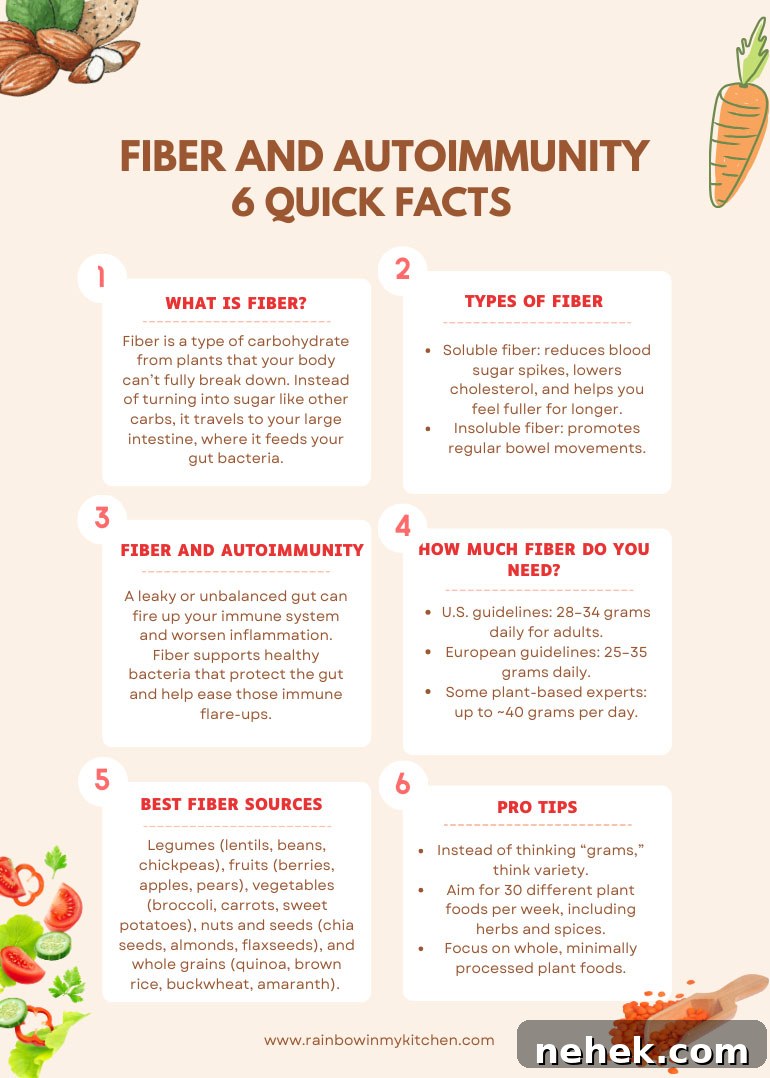
Fiber is a category of carbohydrates found in plant foods that the human body cannot fully digest. Rather than being absorbed as sugar, fiber passes through the stomach and small intestine mostly intact. In the large intestine, resident microbes ferment fiber and produce short-chain fatty acids (SCFAs). These SCFAs serve as an energy source for the cells that line the gut and help preserve a healthy intestinal environment.
Types of Fiber
Dietary fiber comes in two main forms: soluble and insoluble, and most plant foods contain a mix of both.
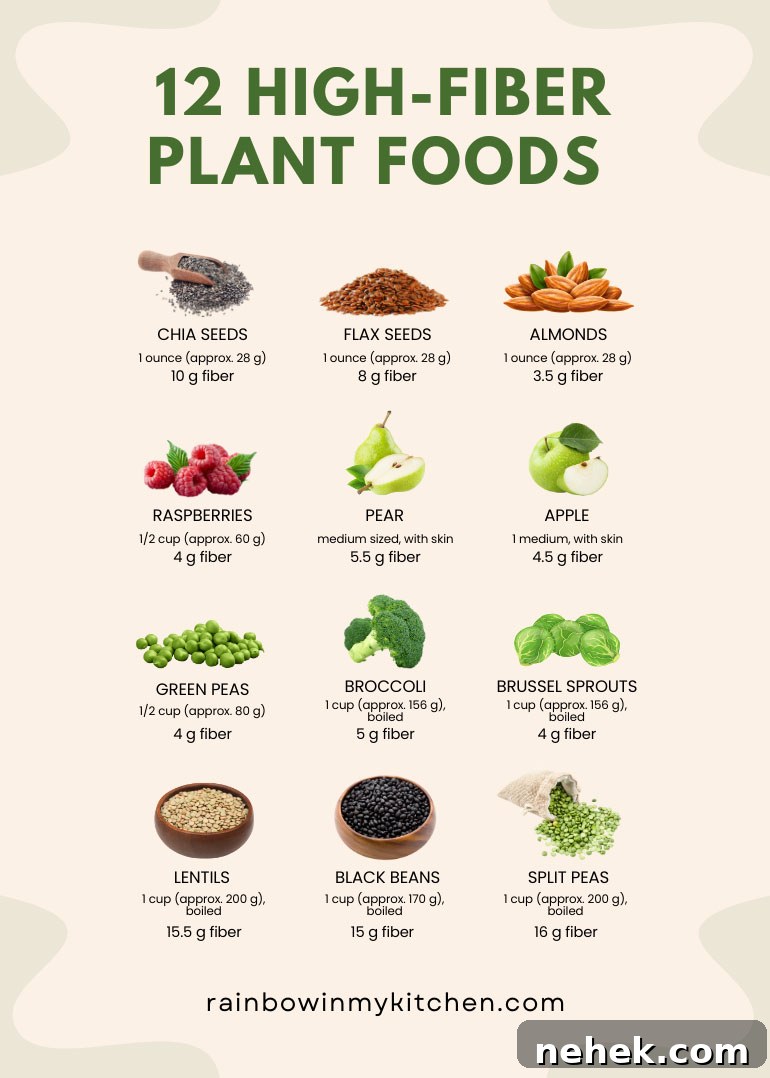
Soluble fiber dissolves in water to form a gel-like substance. It slows digestion, which helps moderate blood sugar, lower cholesterol, and increase feelings of fullness. Good sources include apples, bananas, citrus fruits, avocados, carrots, sweet potatoes, beans, lentils, oats, quinoa, chia seeds, flaxseeds, and almonds.
Insoluble fiber absorbs water and adds bulk to stool, speeding transit through the digestive tract and helping prevent constipation. Excellent gluten-free, plant-based sources include legumes (beans, lentils, peas), vegetables (broccoli, Brussels sprouts, carrots, spinach, sweet potatoes), fruits with skins (berries, apples, pears), seeds (chia, flax, sunflower), and whole grains such as quinoa, brown rice, and buckwheat.
Both types are beneficial: soluble fiber nourishes microbes while insoluble fiber supports regular bowel movements.
Fiber’s Role in Gut Health
Fiber contributes to gut and immune health in several important ways:
1. Fiber feeds beneficial gut bacteria
Beneficial microbes ferment fiber into short-chain fatty acids like butyrate, acetate, and propionate. These metabolites support gut cell health and act as signaling molecules that influence inflammation and metabolic responses.
2. Fiber strengthens the gut barrier
Butyrate, in particular, helps maintain the integrity of the intestinal lining and the tight junctions between cells, reducing the risk of increased intestinal permeability that can trigger immune responses.
3. Fiber reduces systemic inflammation
By promoting a diverse, balanced microbiome and generating anti-inflammatory SCFAs, fiber can help dampen chronic inflammatory signaling linked to many health conditions.
4. Fiber improves metabolic health
Adequate fiber intake supports stable blood sugar, healthier cholesterol levels, and weight management, all of which can influence immune function and the course of chronic diseases.
5. Fiber supports long-term disease prevention
Regular fiber consumption is associated with lower risks of heart disease, type 2 diabetes, and colorectal cancer. Reducing inflammation through a fiber-rich diet may also improve outcomes related to autoimmune complications.
Fiber and Autoimmunity
Autoimmune conditions like Hashimoto’s thyroiditis, rheumatoid arthritis, lupus, and multiple sclerosis involve an immune system that attacks the body’s own tissues. Emerging research highlights the gut as a major player in immune regulation. When the microbiome is imbalanced or the gut barrier is compromised, chronic inflammation can follow.
Fiber supports autoimmunity management by:
- Fostering growth of anti-inflammatory bacterial strains.
- Promoting production of SCFAs that regulate immune responses.
- Lowering systemic inflammation that can exacerbate autoimmune symptoms.
Many people with autoimmune conditions report better energy, improved digestion, and fewer flares after increasing the diversity and amount of plant fiber in their diets.
How Much Fiber Do You Need?
Guidelines vary slightly by organization:
- U.S. recommendations: roughly 28–34 grams per day for adults.
- European recommendations: about 25–35 grams per day.
- Some experts suggest aiming for around 40 grams per day.
Most people consume only 14–18 grams daily, which is well below these targets. For individuals with autoimmune conditions or a sensitive gut, it’s wise to increase fiber gradually so the microbiome can adapt without causing excessive gas or discomfort.
Using Fiber Wisely (Especially with Autoimmune Conditions)
Rapidly increasing fiber intake can lead to bloating, gas, and cramps. To minimize symptoms:
- Introduce fiber slowly over several days or weeks.
- Drink plenty of water to help fiber move through the digestive tract.
- Consume a variety of fiber types, rather than loading up on a single source.
- Choose whole, minimally processed plant foods over processed “high-fiber” snacks that may contain additives and offer less benefit to the microbiome.
How to Get More Fiber Every Day
Focus on variety more than counting grams. Different plant foods contain distinct fiber structures that nourish different microbial communities. Practical ways to increase fiber:
- Breakfast: overnight oats with chia seeds and berries.
- Add beans or lentils to salads, soups, and stews for easy fiber and protein.
- Swap refined grains for quinoa, amaranth, or buckwheat.
- Keep high-fiber snacks handy: apples, pears, carrots with hummus, or mixed nuts.
- Aim to include a wide range of plant foods each week—targeting many different fruits, vegetables, whole grains, legumes, herbs, and spices.
The Gut-Immune Connection
Fiber is more than a digestive aid; it is foundational to gut health and immune balance. For people managing autoimmune conditions, increasing fiber from a variety of whole plant foods may help reduce inflammation, support the gut barrier, and provide the microbiome with fuel to promote overall well-being. Gradual changes, adequate hydration, and diverse food choices make it easier to enjoy the benefits of fiber without discomfort.