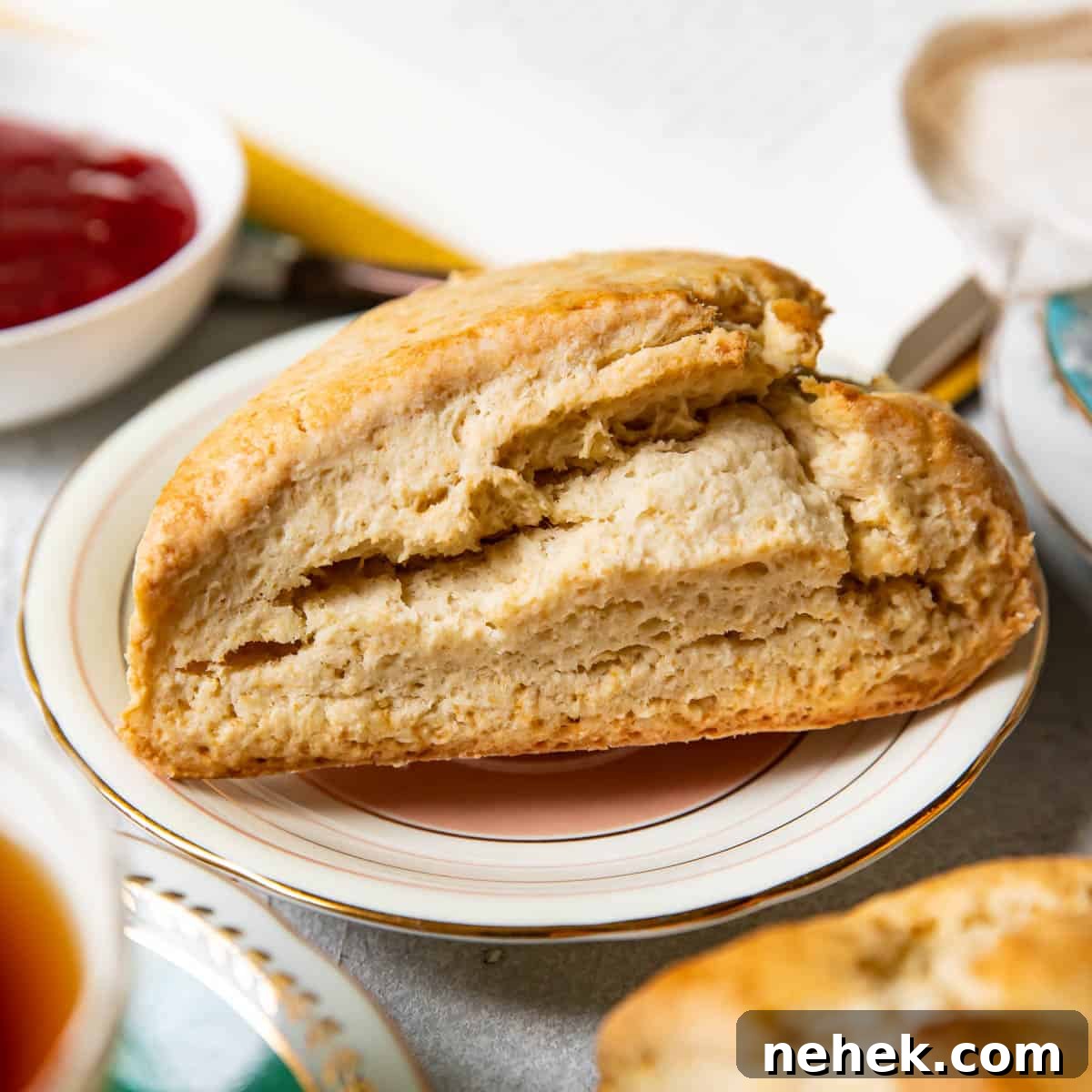
These are the ideal soft English scones—tender inside, lightly crisp at the edges, and perfectly balanced between buttery and mildly sweet. They’re simple to make and quickly become a go-to scone recipe.
This recipe was first published on May 13, 2019.

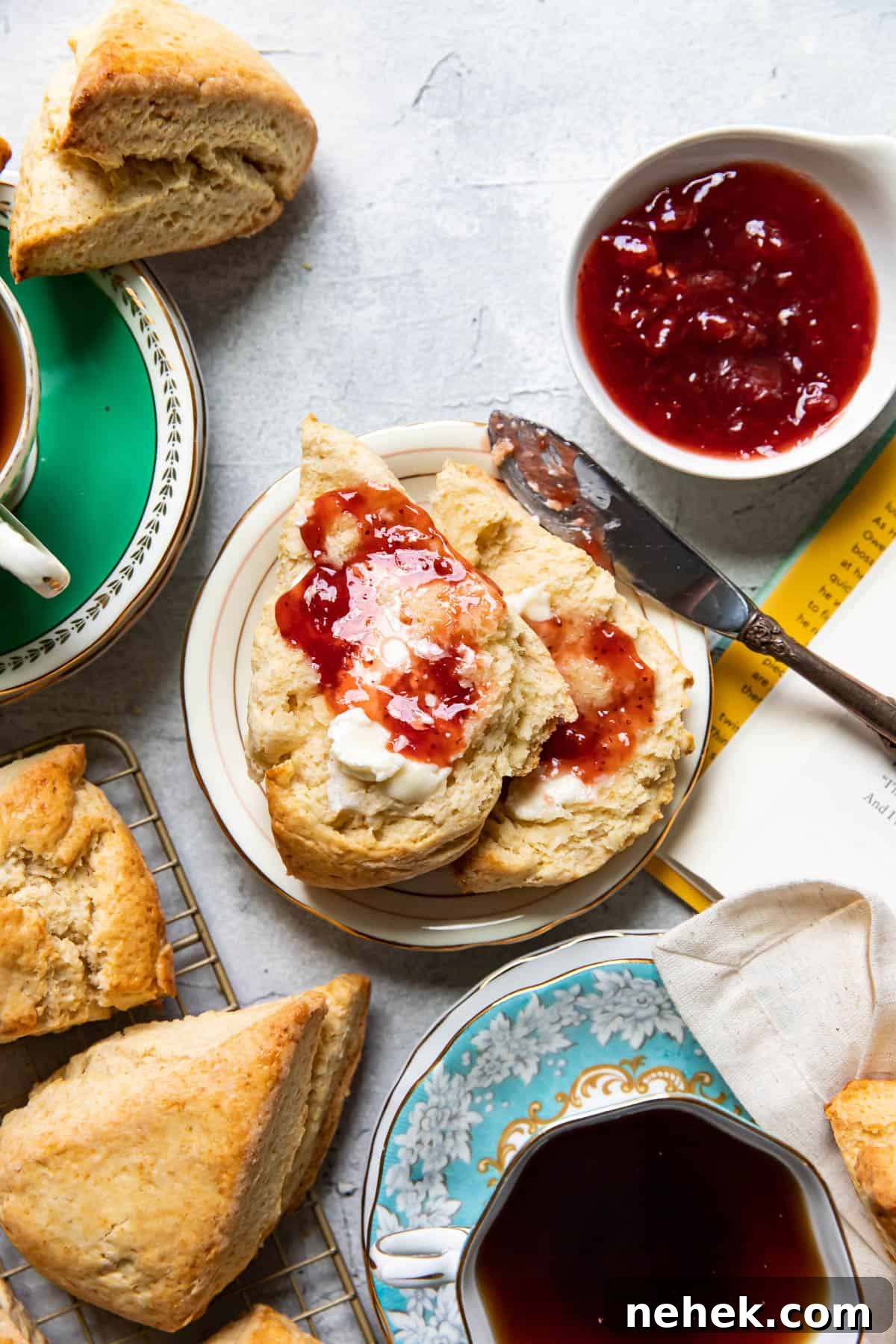
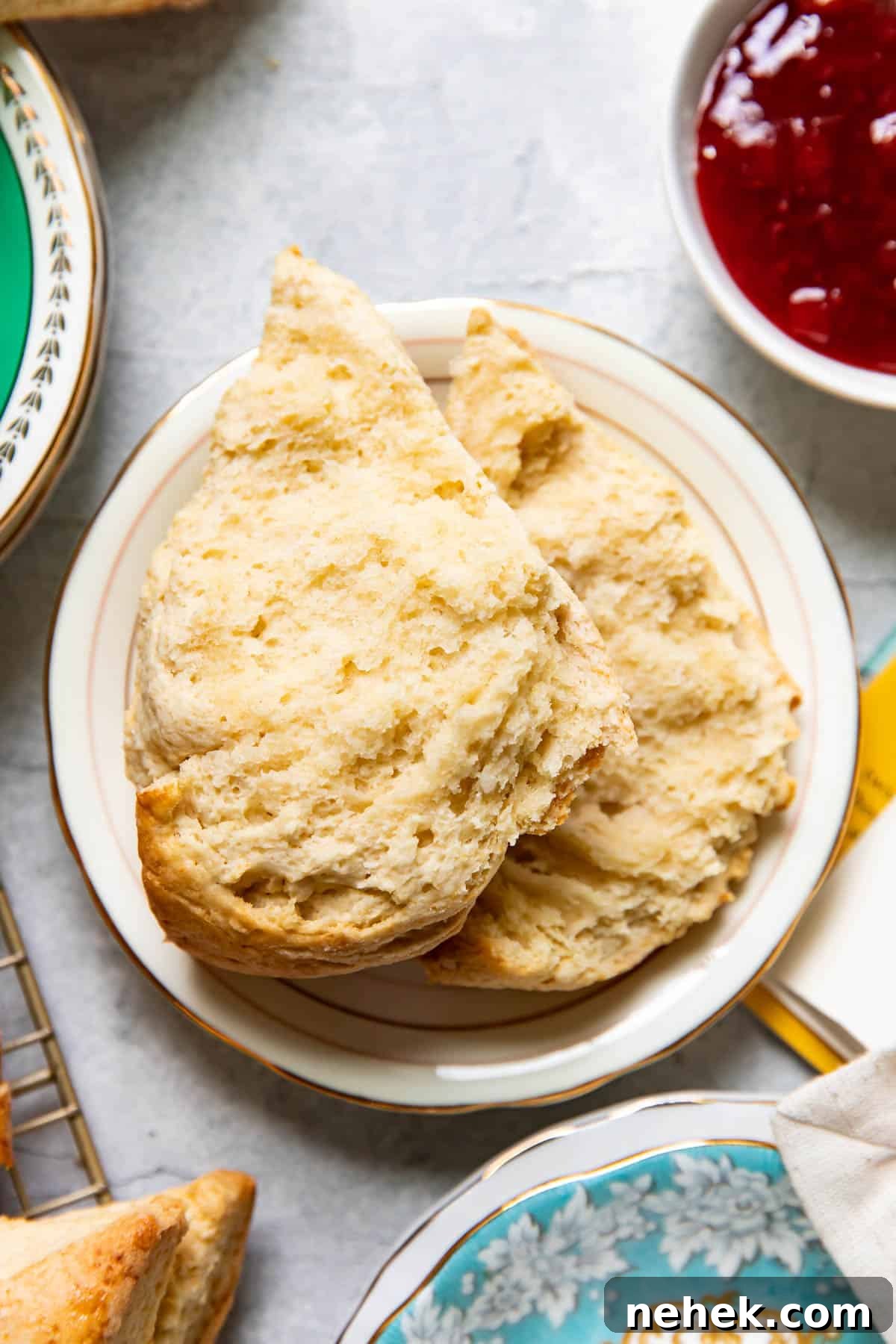
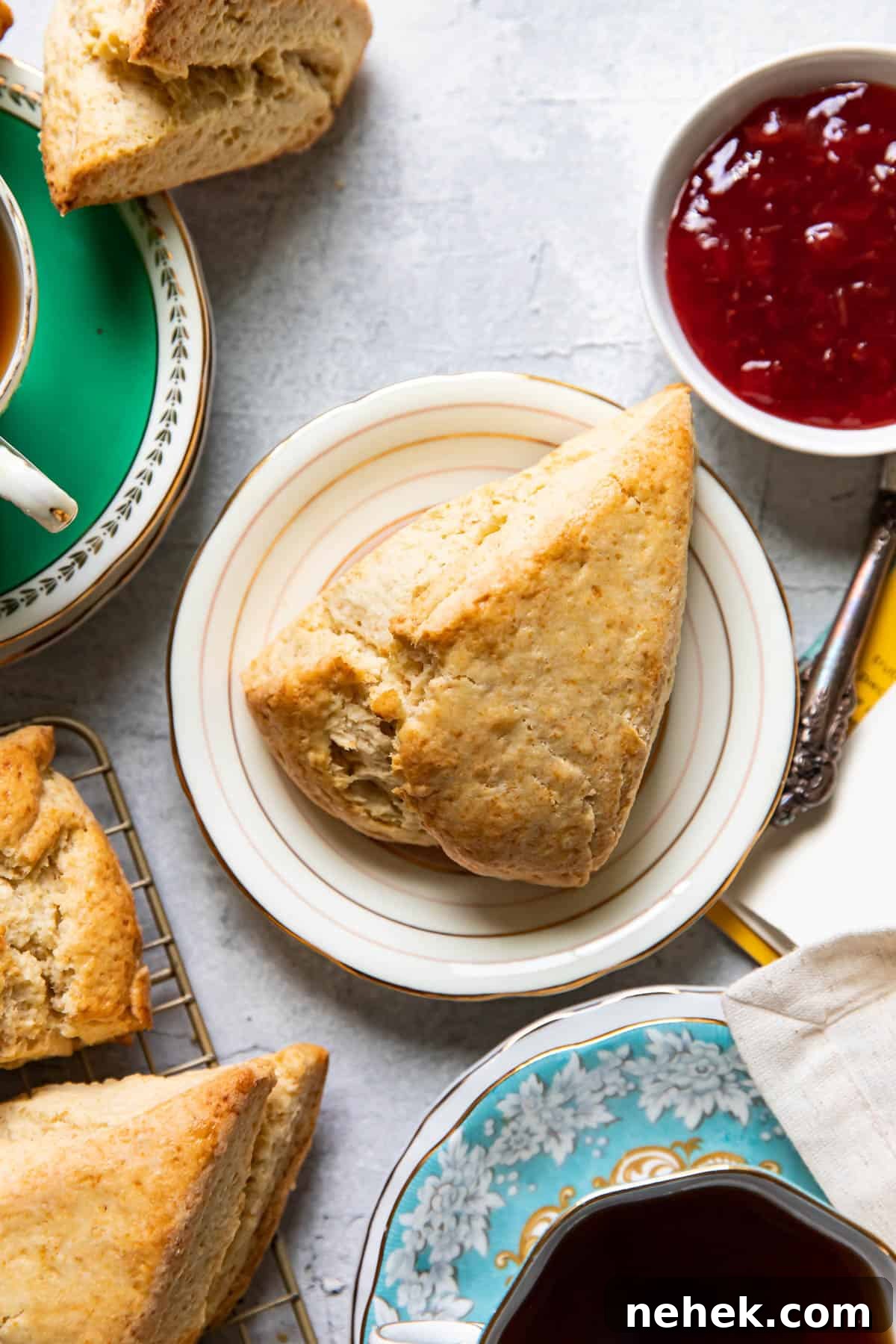
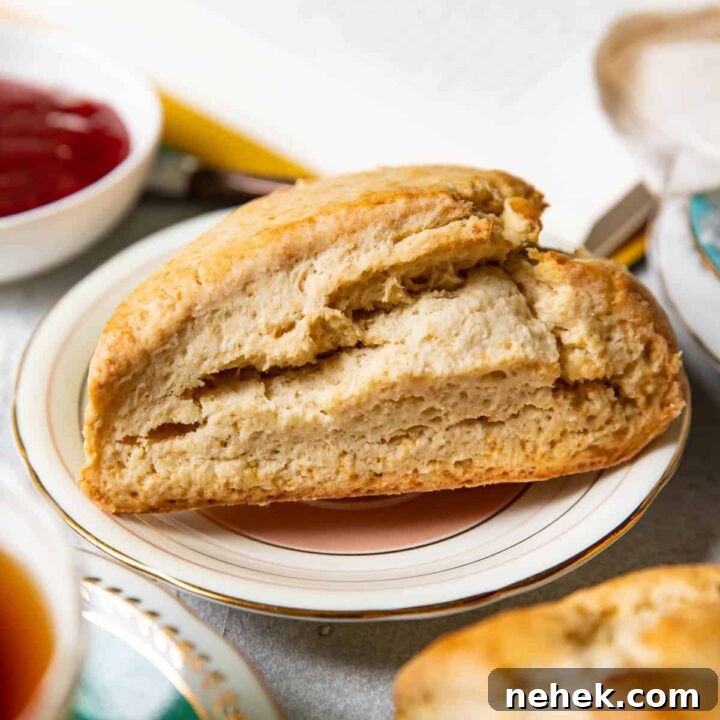
This version captures the classic soft English scone I love to enjoy with a warm cup of tea. The crumb is tender and light, and the flavor is subtly buttery without being overly sweet.
The method is straightforward: about 15 minutes of prep and 22–25 minutes to bake. In under an hour you can have fresh, puffy English-style scones on the table.
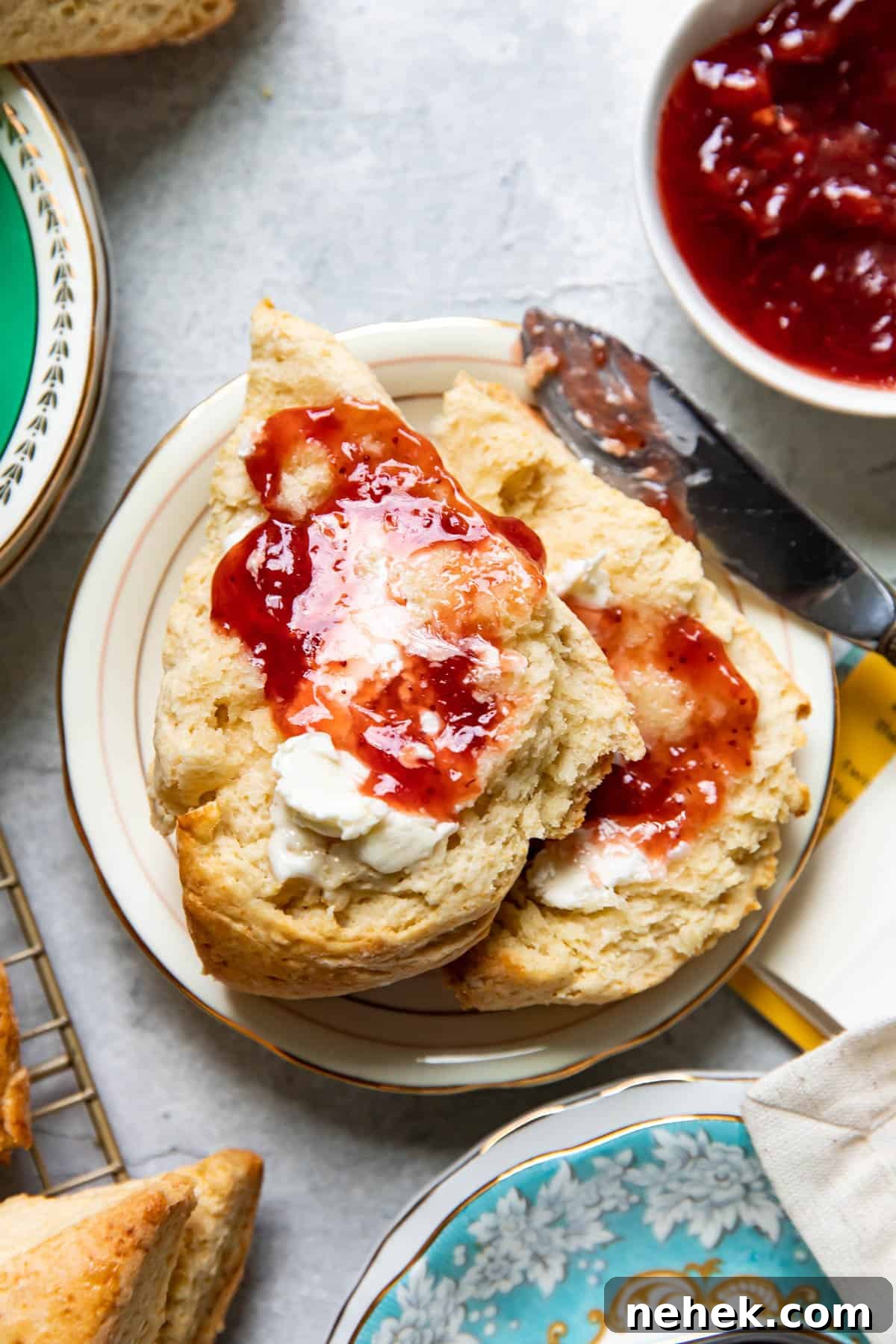
For an indulgent pairing, try serving these scones with homemade lemon curd or a favorite jam. They also adapt well to seasonal variations—try adding a touch of pumpkin spice in autumn or a maple-pecan glaze for a cozy treat.
These scones are soft, tender and very easy to prepare. They are not dry, dense, or fussy to make. You only need a handful of pantry staples, a mixing bowl, a cutter or knife, and a baking sheet.
My key tip: get the ratio of liquid to dry ingredients right. Too much flour yields heavy, hard scones; the goal is a light, slightly flaky interior with a gentle rise.
Ingredients
Below are the ingredients you’ll need for classic English scones. Exact amounts and the step-by-step method are in the recipe card further down.
- all purpose flour
- baking powder
- cane sugar
- salt
- butter (cold, cubed)
- egg
- heavy cream
- milk
How To Make Classic English Scones
Preheat the oven to 400°F (205°C).
In a large bowl sift together the flour, baking powder, sugar and salt, then whisk to combine. Add the cold, diced butter and use your fingers to pinch the butter into the flour until the mixture resembles coarse crumbs with some small pea-sized pieces of butter remaining.
Use both hands to press those small butter pieces between your palms so they flatten slightly—this helps create tender layers in the baked scones.
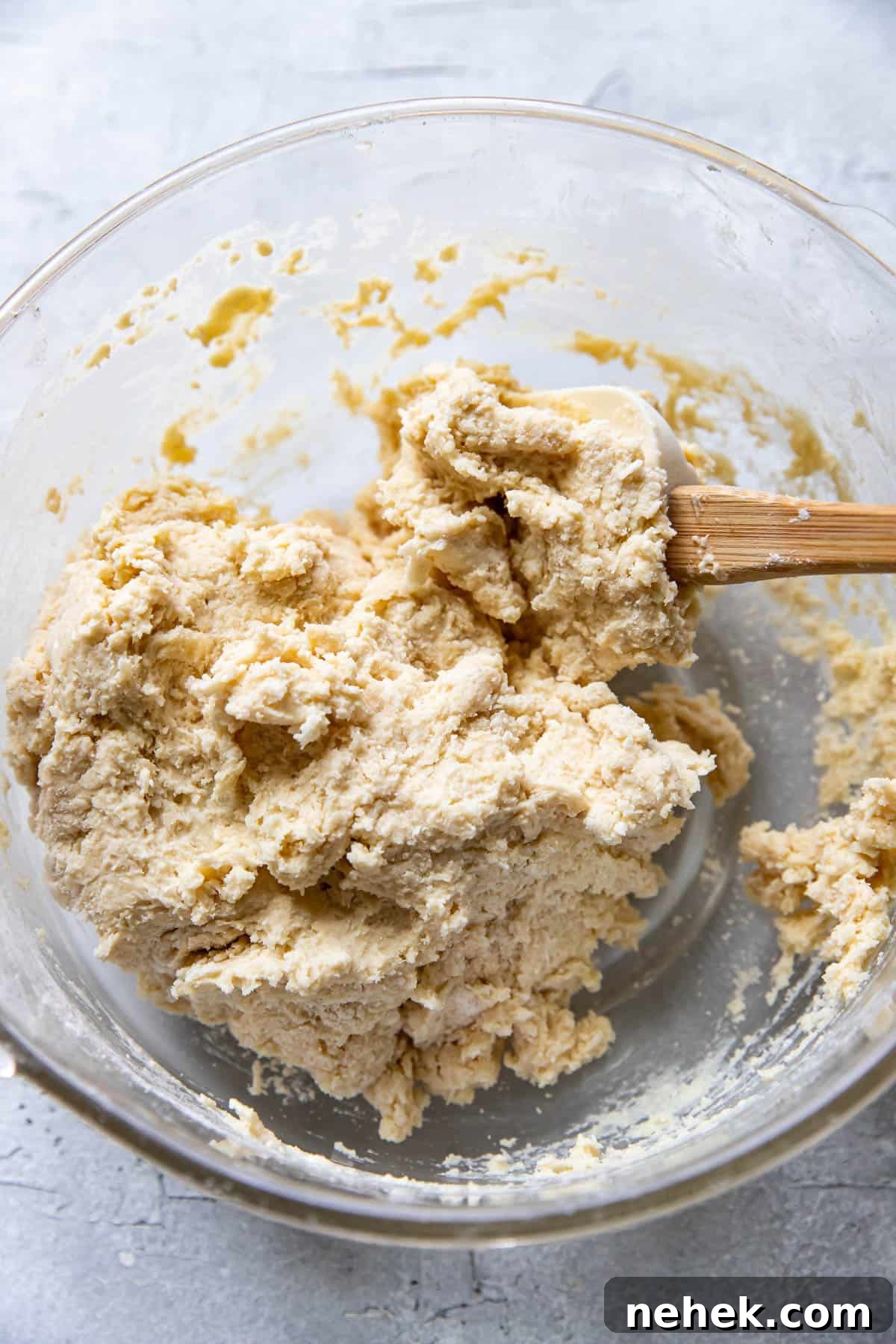
In a separate bowl whisk together the egg, heavy cream and milk. Pour the liquid into the dry ingredients and stir until the dough is just coming together—avoid overmixing.
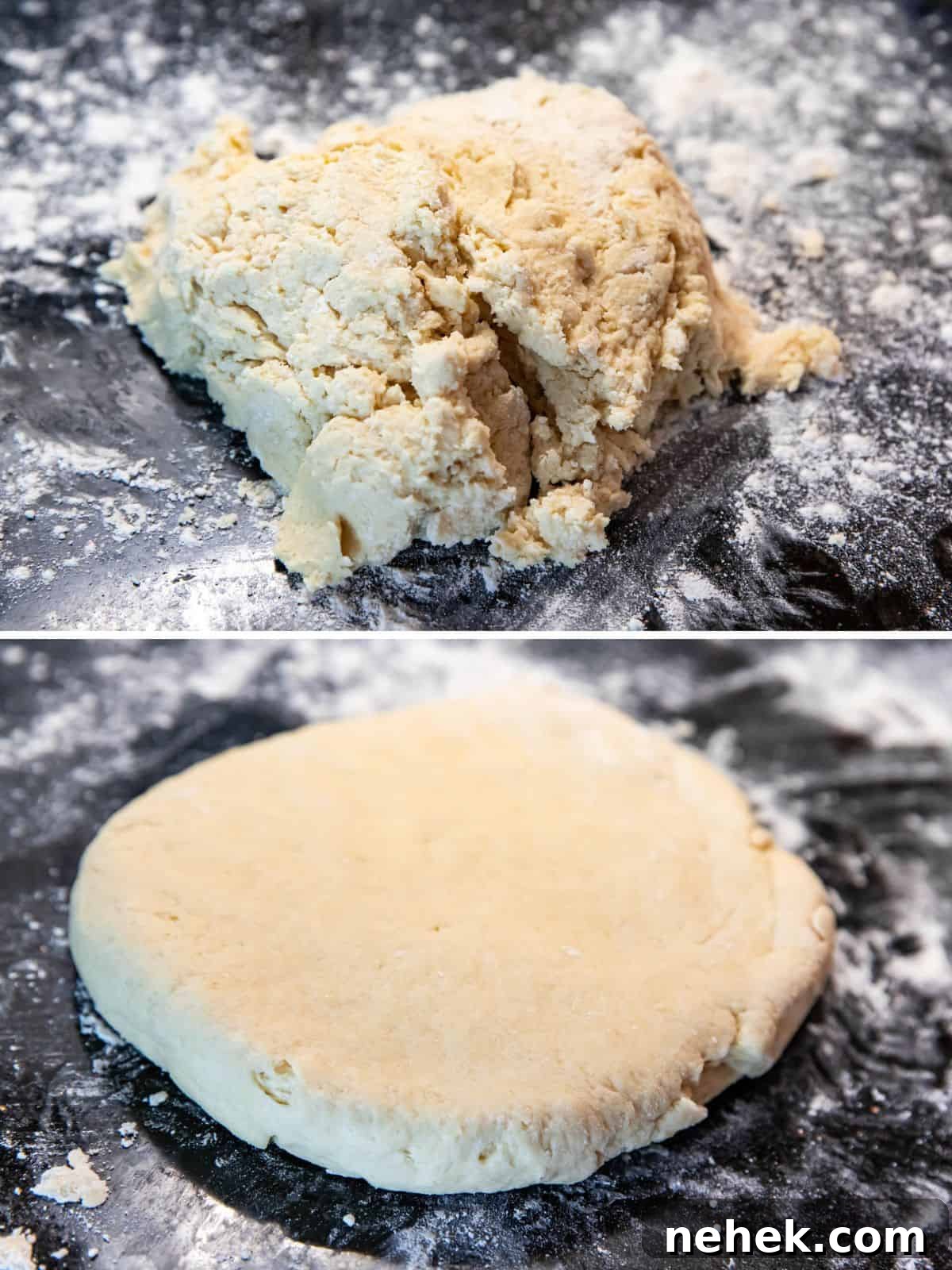
Turn the dough out onto a lightly floured surface. Dust your hands with flour and gently press the dough. Using a bench scraper or spatula, fold half the dough over itself and press down. Repeat this folding and pressing step a total of five times to build light layers.
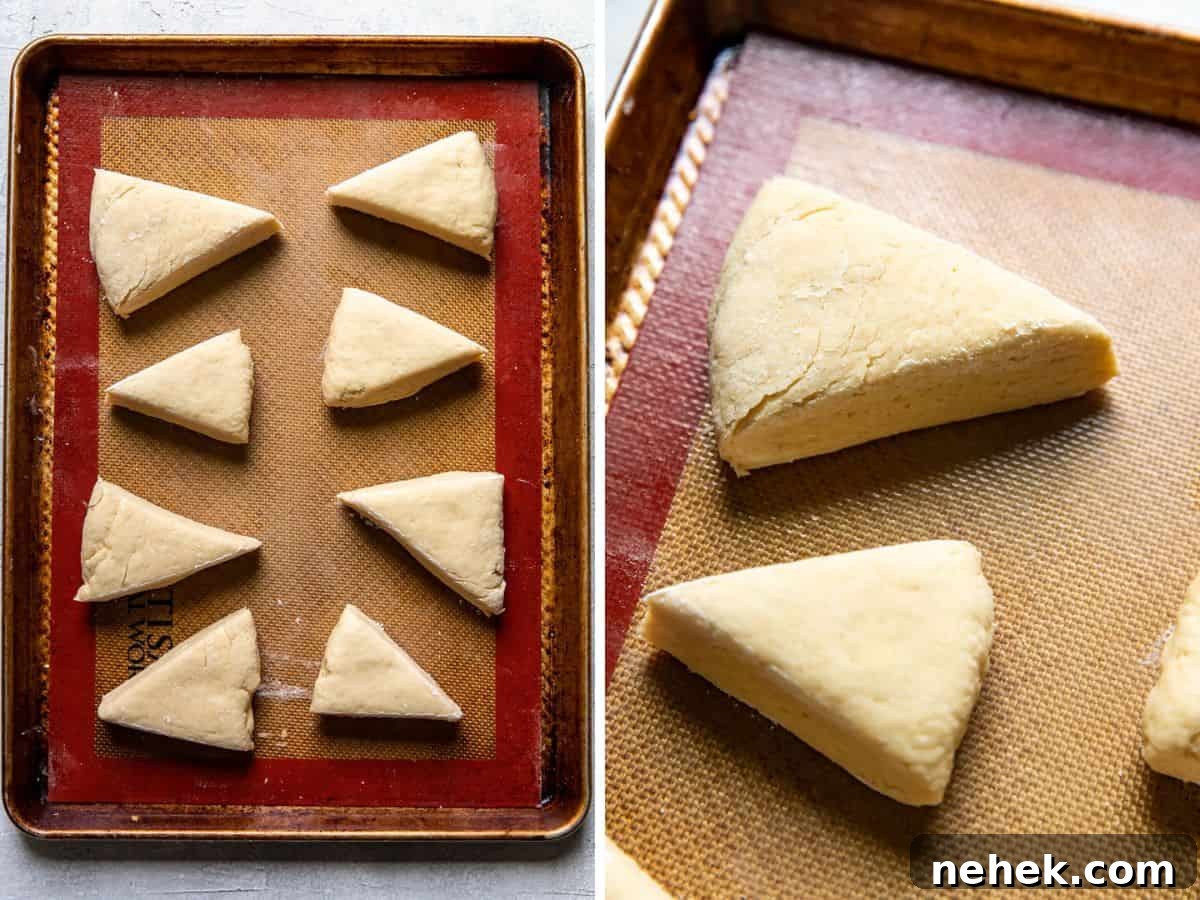
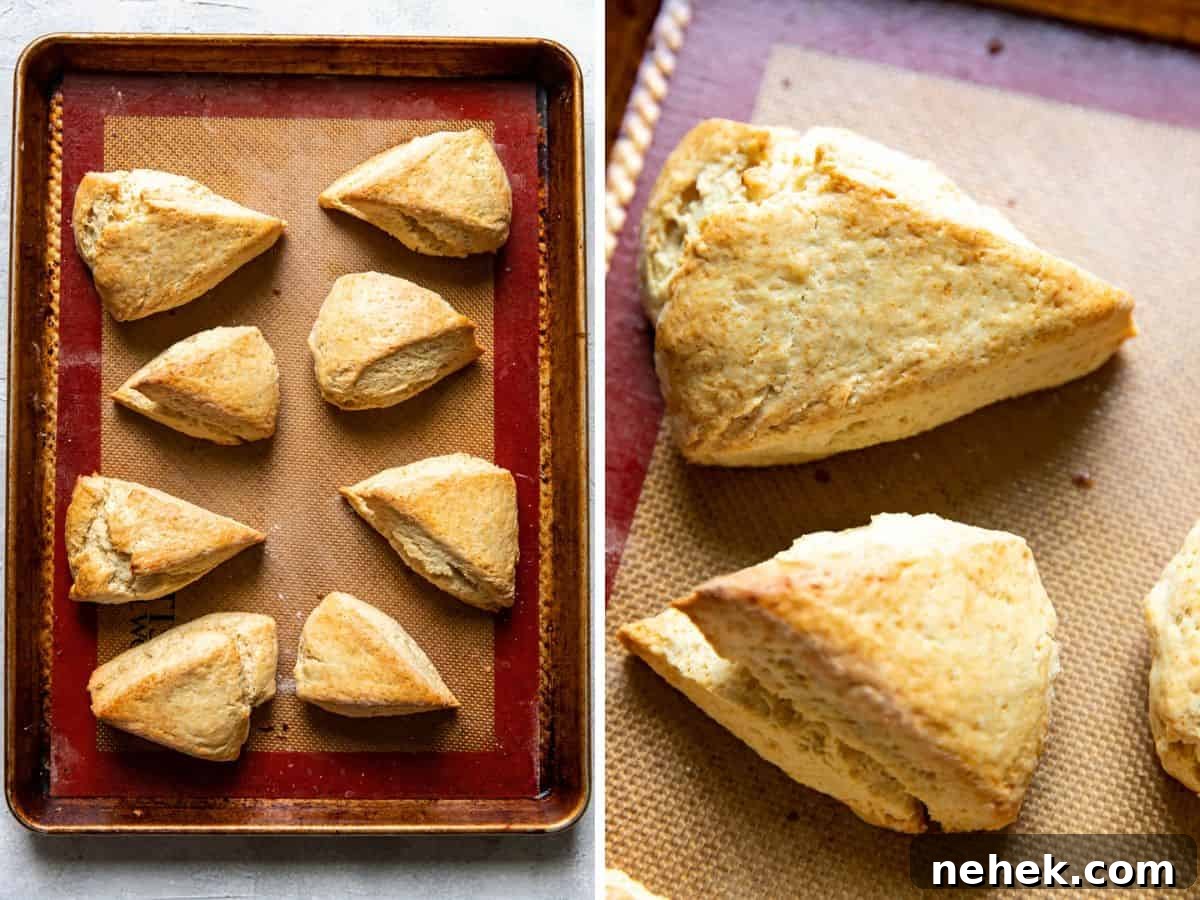
Pat the dough into a disk about 1″ to 1¼” thick. Dust a sharp knife with flour and cut the disk into 8 wedges, or use a biscuit cutter for round scones if preferred. Place the scones on a parchment-lined baking sheet, brush the tops lightly with milk, and bake for 22–24 minutes, until golden at the edges and risen.
Remove from the oven and transfer to a wire rack to cool briefly before serving.
What I Love About These Scones
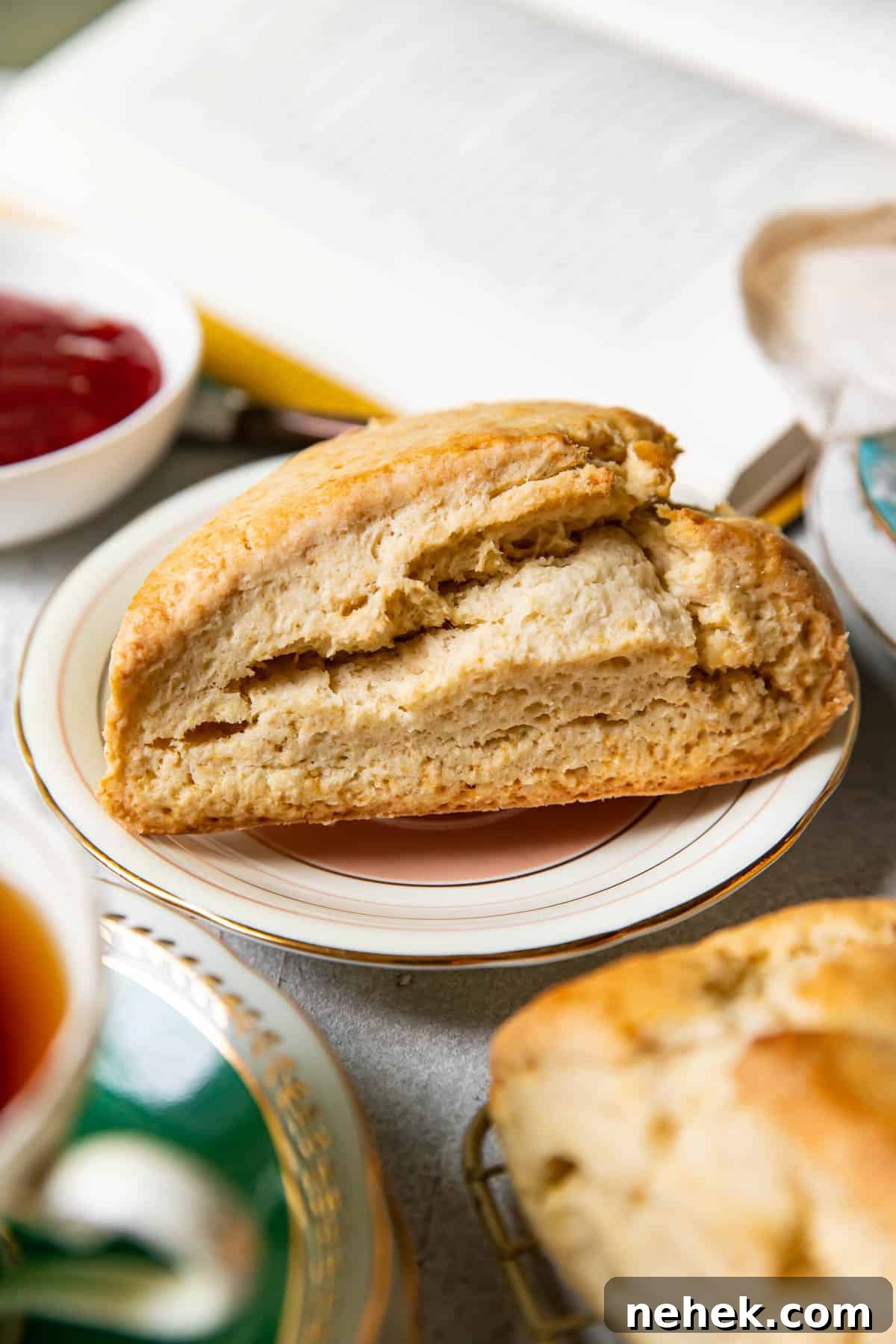
These scones have a pleasing contrast of textures: a slightly crisp exterior and a soft, tender interior. The buttery flavor is pronounced but not overpowering, making them ideal with tea, jam, or lemon curd.
The recipe draws inspiration from an old family recipe and English-style baking traditions. The result is a reliably tender scone that works well as written or as a base for simple variations.
FAQ
- Can I use all milk? For best texture follow the recipe quantities. Using all milk may slightly alter tenderness, so stick to the listed combination if you can.
- My scones turned out like bricks, what happened? Overmixing or expired leavening (baking powder) can cause dense scones. Mix until just combined and check your baking powder freshness.
- Can I make these gluten free? This recipe hasn’t been tested with gluten-free flour here, but a reliable 1:1 GF flour blend often works as a substitute.
- My dough is really wet? Excess liquid or inaccurate measuring can cause wet dough. Use proper measuring tools—liquids in a liquid measuring cup and dry ingredients in a dry measuring cup—and add just enough flour to make the dough manageable.
- Can these be made round? Yes. Use a biscuit cutter to cut rounds if you prefer round scones.
- How long are scones good for? Scones are best enjoyed the same day they’re baked for optimal texture and flavor.
Baked Goods Recipes
- Irish Scones
- Basic Muffin Recipe
- Blueberry Muffins With Lemon Zest
- Buttermilk Biscuits
- Carrot Cake
- Pecan Sticky Buns
- Banana Bread
- Coffee Cake Loaf
Classic English Scones
8 scones
15 minutes
25 minutes
40 minutes
Soft, tender and perfectly balanced—these classic English scones are a reliably delicious bake for teatime or brunch.
Ingredients
- 3 c all purpose flour
- 1 tbsp baking powder
- 2 tbsp cane sugar
- 1 tsp salt
- 10 tbsp butter, cold and cubed
- 1 egg
- ½ c heavy cream
- ½ c milk
Instructions
- Preheat your oven to 400 degrees.
- In a large bowl sift together the flour, baking powder, cane sugar and salt. Whisk to combine. Add the cold diced butter and use your hands to pinch the flour and butter together until pea-sized pieces remain. Press those pieces between the palms of your hands to flatten slightly.
- In a separate bowl mix together the egg, milk and heavy cream. Pour into the dry ingredients and mix until nearly combined.
- Turn the dough out onto a floured surface. Flour your hands and gently press the dough. Lift one side and fold it over, pressing down; repeat five times to create light layers.
- Shape into a disk about 1″–1¼” thick. Flour a sharp knife and cut into 8 triangles. Place on a parchment-lined baking sheet, brush tops with milk, and bake 22–24 minutes.
- Transfer to a wire rack, cool slightly, and serve.
Notes
The dough will be soft—use flour on your hands and surface when handling. Adding too much flour will make the scones hard; add only enough to keep the dough manageable.
Nutrition Information:
Yield: 8
Serving Size: 1
Amount Per Serving:
Calories: 378
Total Fat: 21g
Saturated Fat: 13g
Trans Fat: 1g
Unsaturated Fat: 7g
Cholesterol: 79mg
Sodium: 609mg
Carbohydrates: 41g
Fiber: 1g
Sugar: 5g
Protein: 7g
Nutrition figures are estimates from online calculators and are provided as a guideline only.
Did you make this recipe?
Please leave a review!