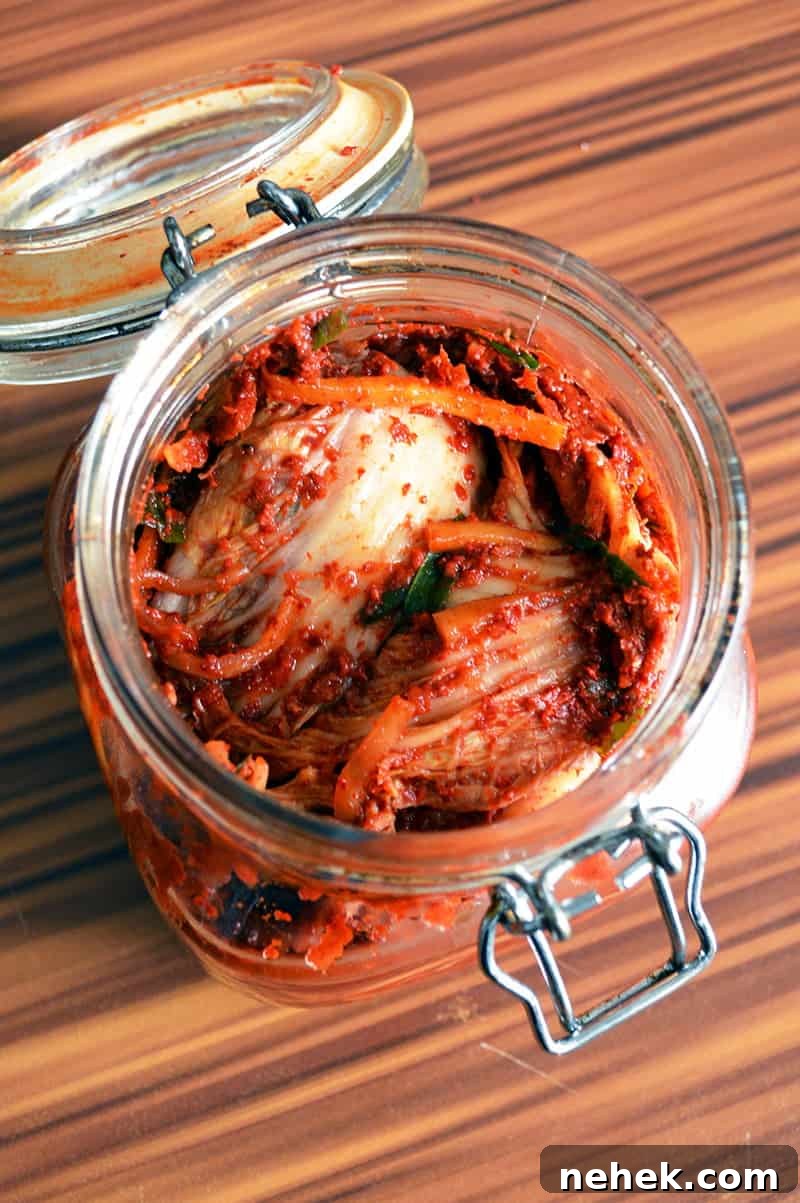
Step-by-step instructions for making traditional Napa cabbage kimchi, a staple in Korean meals used as a side dish or an ingredient in many recipes.
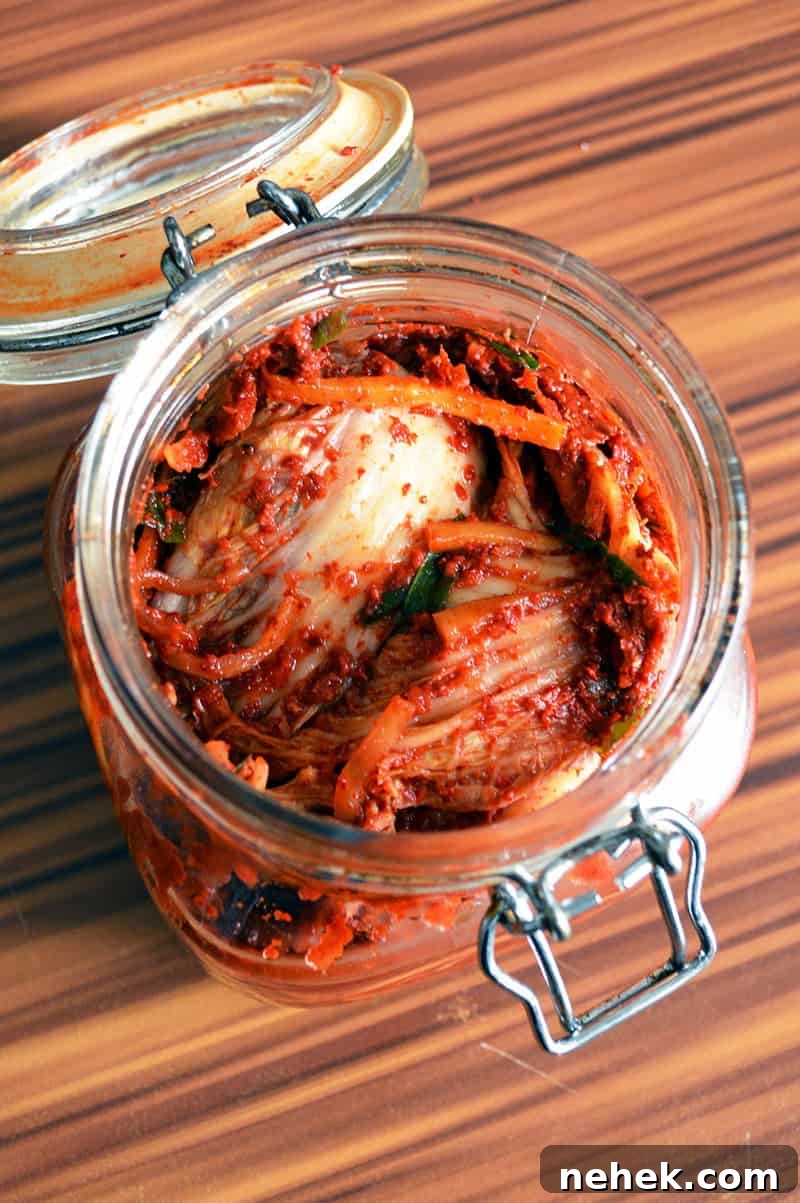
Kimchi’s bold, fermented flavor has become familiar worldwide with the rise of Korean food. It appears at almost every Korean meal, whether as a starter, a side, or a cooking ingredient. Many people recall a puckering first bite of pungent, sour napa cabbage kimchi, only to discover that the flavor grows addictive with time.
There are many kimchi varieties, but napa cabbage kimchi (baechu-kimchi, 배추김치) is among the most common. In Korea, families take pride in their kimchi recipes, passed down through generations. Regional differences and household preferences create a wide range of textures and flavors. Some households even use dedicated kimchi refrigerators to control fermentation temperatures.
Homemade kimchi can seem intimidating, especially because large traditional batches are made during kimjang, a communal kimchi-making event. But making kimchi at home is manageable if you prepare smaller batches. Once you practice the basic method, you can adjust flavors, spiciness, and fermentation to your taste.
Health Benefits of Kimchi
Kimchi is often called a superfood. It is low in calories, high in fiber, and rich in vitamins A, B1, B2, and C, plus antioxidants and minerals such as calcium, selenium, and iron. Fermentation produces beneficial lactobacilli that support digestion and contribute to a healthy gut. These probiotics help break down food, support nutrient absorption, and can aid the body in managing unwanted microbes.
Why Make Kimchi at Home
Store-bought kimchi varies widely in taste, texture, and saltiness. Making kimchi at home lets you control ingredients and flavor profile, from spice level to fermentation time. Traditional ingredients like saeujeot (salted fermented shrimp) and gochugaru (Korean red pepper flakes) are commonly found in Asian markets, but you can adapt based on availability.
Fermentation can sound worrying because it relies on bacteria, but the salting step suppresses harmful microbes while encouraging beneficial lactic acid bacteria. These bacteria consume sugars in the vegetables and produce CO2 and lactic acid, which create kimchi’s characteristic tang and texture. Bubbling or fizzing during fermentation is normal and indicates active microbes.
If you plan to eat kimchi regularly, making it yourself can be cost-effective and allows you to refine the recipe over time. A properly stored jar will last for weeks to months in the refrigerator.
How to Make Napa Cabbage Kimchi
There’s no single perfect kimchi formula; results vary by cabbage water content, salt type, and ambient conditions. The key is practice. Below is a reliable, traditional-style method for napa cabbage kimchi.
1. Cut the cabbage
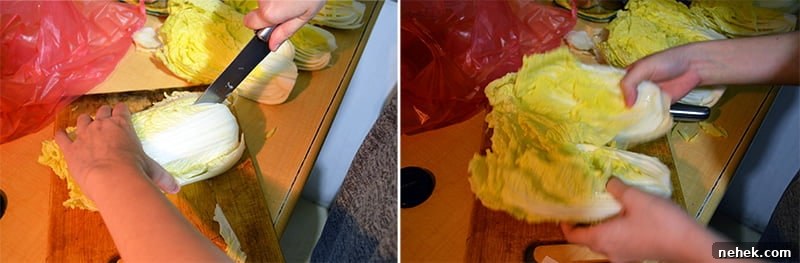
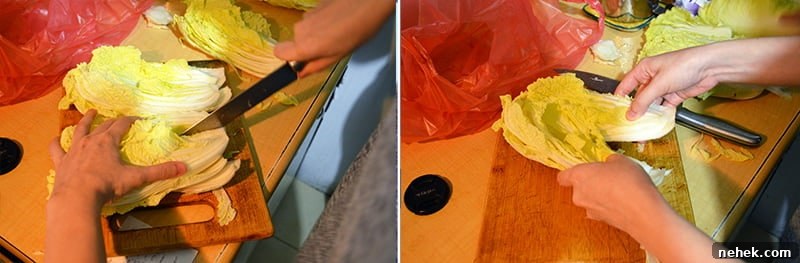
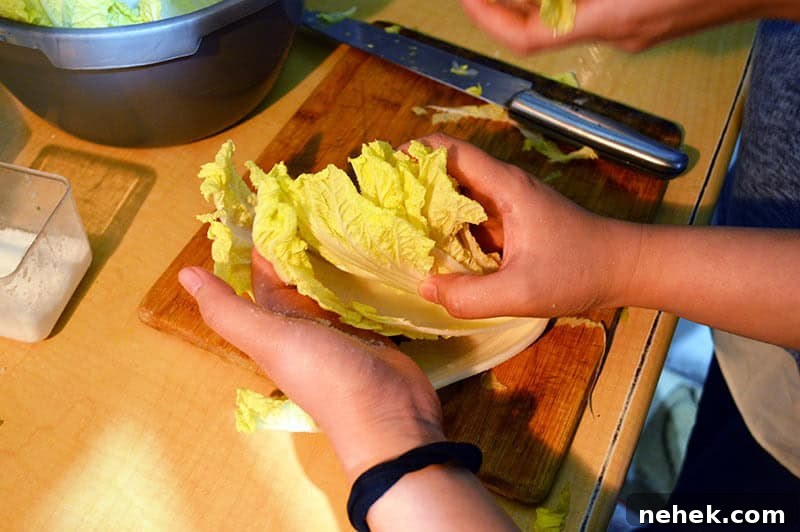
Remove the outer leaves and rinse the cabbage. Make a slit at the base of the core and separate the cabbage in half, then quarter it. Remove the hard core with a paring knife while keeping the leaves attached. You may leave quarters whole for the traditional presentation or cut into bite-sized pieces for easier eating and mixing.
2. Salt the cabbage
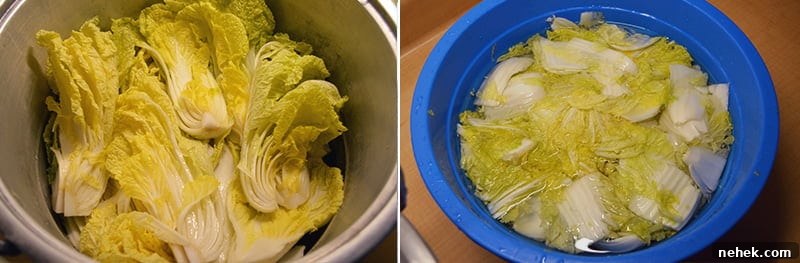
Salting draws water out of the cabbage and creates conditions for safe fermentation. If you kept quarters, sprinkle non-iodized salt between the leaves and concentrate it near the thicker stem. Use the correct salt-to-cabbage ratio for your batch; this helps suppress harmful bacteria and encourage lactic acid bacteria.
Let the salted cabbage rest 2–6 hours depending on cabbage and salt type, turning every 30 minutes for even distribution. I find 3–4 hours works well. The leaves should wilt and soften but retain some crunch. Rinse thoroughly under cool running water to remove excess salt, then drain.
3. Prepare the seasoning
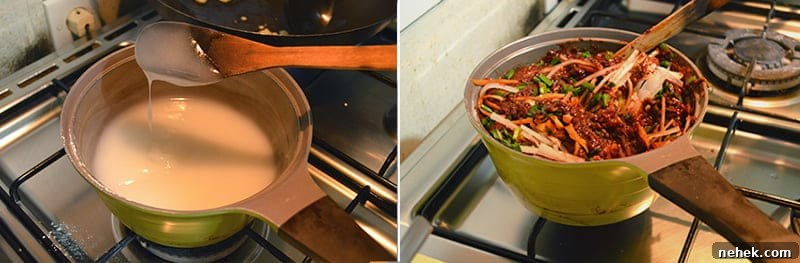
This recipe uses a rice porridge (glutinous rice flour and water) to thicken and help the paste adhere to the leaves. The porridge is optional but useful for even coating.
In a food processor, blend garlic, ginger, onion, grated pear or apple, saeujeot (or a suitable substitute), and fish sauce until smooth. Mix this puree into the cooled rice porridge, then add gochugaru and the prepared vegetables. Reduce gochugaru if you prefer milder kimchi.
4. Mix seasoning with the salted cabbage
Wearing gloves if desired, rub a thin layer of the paste onto every leaf, working the paste between the layers and applying extra to thicker stems. Wrap each cabbage quarter and pack tightly into a clean container, pressing to remove air pockets. If you cut the cabbage into pieces, toss with the paste until evenly coated, then pack into the jar.
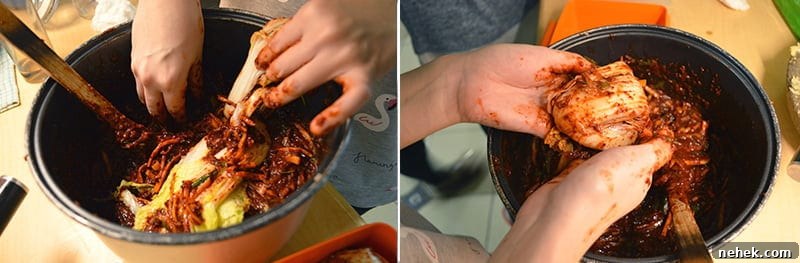
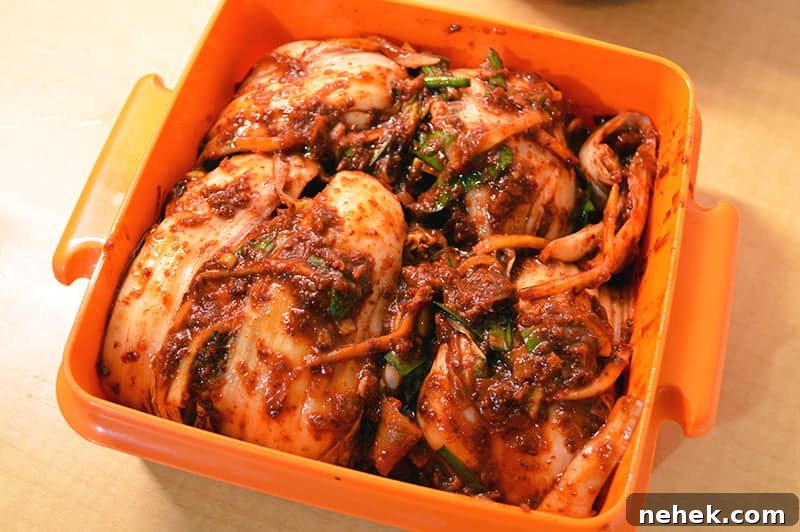
Pack tightly so the vegetables remain submerged in brine and leave a bit of headspace to prevent overflow during fermentation.
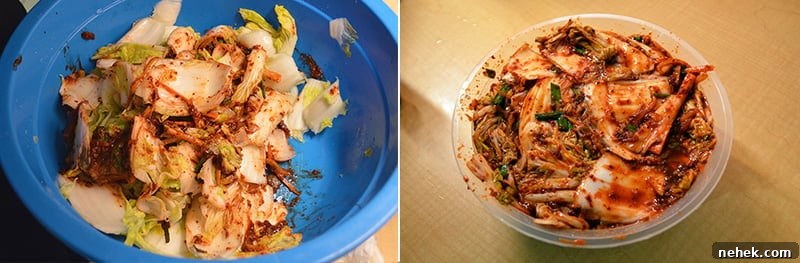
5. Ferment the kimchi
Leave the packed kimchi at room temperature for 1–5 days, out of direct sunlight, depending on ambient temperature. In warmer climates fermentation is faster; in cooler climates it takes longer. Expect bubbling and occasional brine seepage — this is a sign of active fermentation. Taste daily with a clean utensil until the flavor reaches your preferred level of tang and integration.
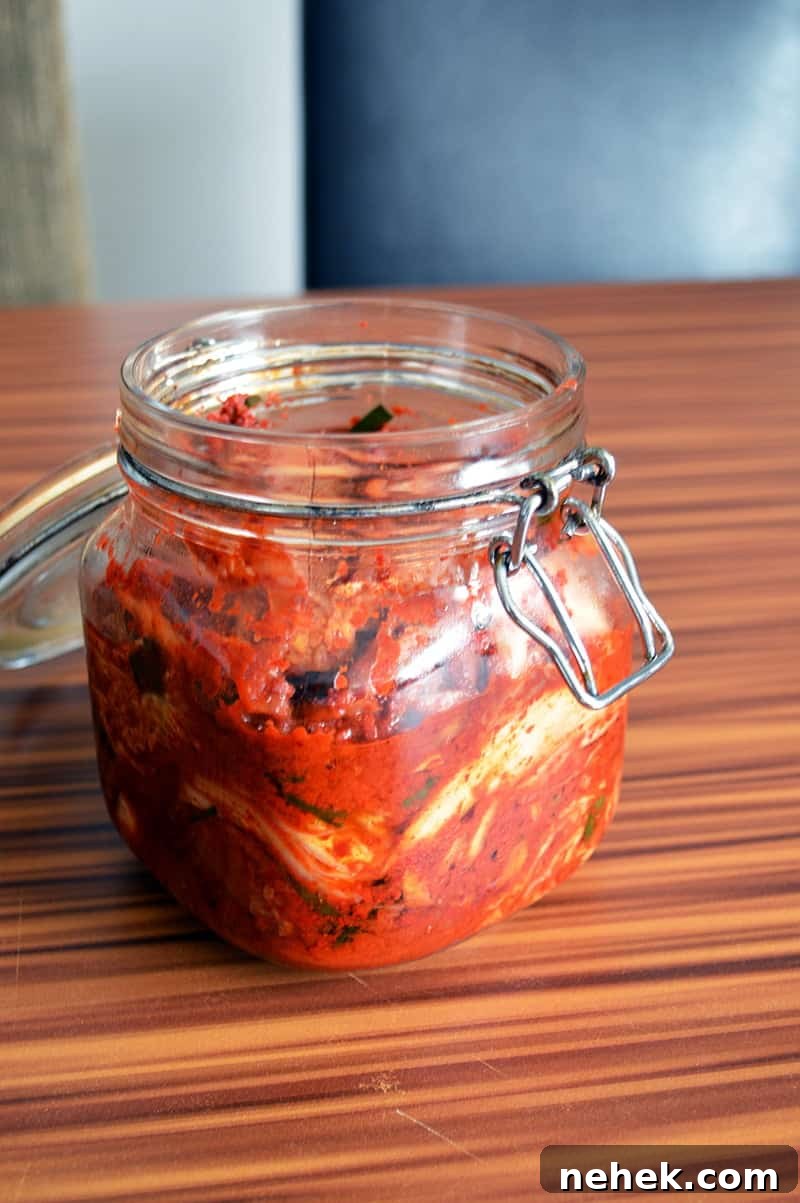
6. Store kimchi
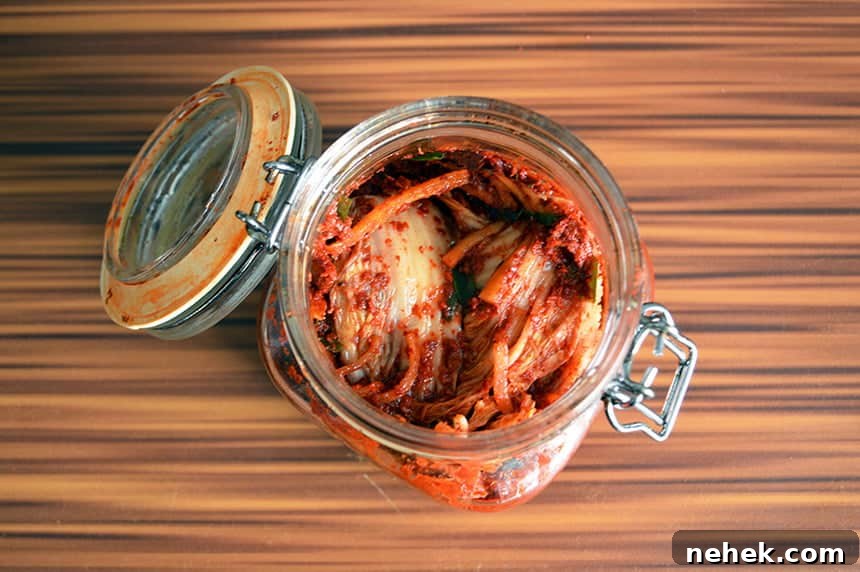
When the kimchi is fermented to your liking, transfer it to the refrigerator to slow fermentation. It will continue to age and become tangier over time. Properly stored, homemade kimchi can last for weeks or months; if you dislike over-fermented flavor, consume it sooner. A white film on the surface is often yeast and can be skimmed off; if kimchi smells or tastes unpleasant beyond normal sourness, discard it and make a fresh batch.
Recipes that Use Napa Cabbage Kimchi
Ripe kimchi is excellent for cooking; heat enhances its umami and caramelizes flavors. Fully fermented kimchi works best in cooked dishes. Popular uses include kimchi fried rice, kimchi pancakes, kimchi kimbap, bibimbap, and fillings for steamed buns or savory pancakes.
- Kimchi Fried Rice
- Kimchi Pancake
- Chicken Kimchi Mayo Steamed Buns
- Kimchi Kimbap
- Bibimbap
- Tuna Kimchi Pancakes
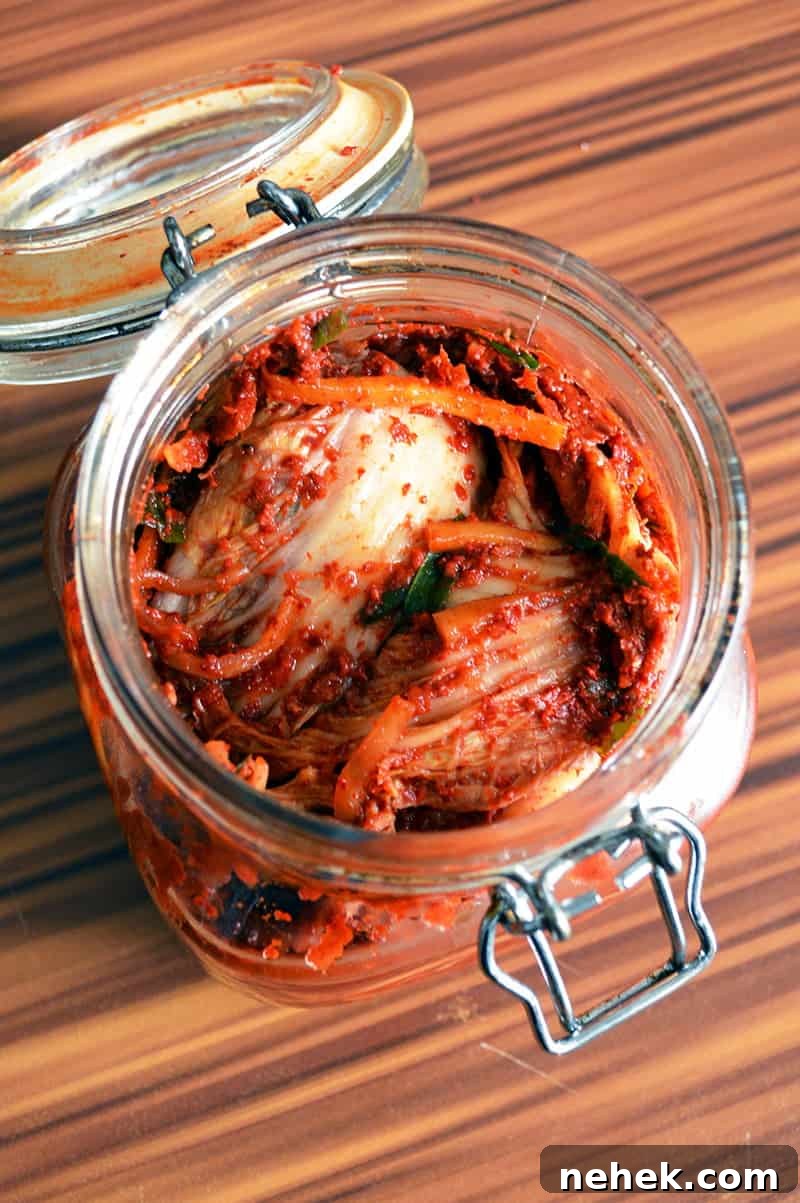
Napa Cabbage Kimchi
Ingredients
- 3.3 lbs (1.5 kg) napa cabbage (about 2 large cabbages)
- 1/4 cup (35 g) kosher salt
Rice Porridge Paste
- 1 cup (240 g) water
- 1 tbsp glutinous rice flour
- 1 tbsp sugar
Seasoning
- 1/4 cup garlic cloves (about 12 cloves)
- 1 cm ginger, peeled
- 1/2 onion, roughly chopped
- 1/2 pear or apple, roughly chopped
- 1/4 cup (60 ml) fish sauce
- 2 tbsp saeujeot (salted fermented shrimp)
- 1/2–1 cup (50–100 g) gochugaru (Korean red pepper flakes)
Vegetables
- 1 cup radish matchsticks (about 1/2 medium radish)
- 1/2 cup carrot matchsticks (about 1/2 large carrot)
- 4 green onions, thinly chopped
- 1/2 cup chives, cut into 1-inch (2.5 cm) pieces
Instructions
Salt the Napa Cabbage
- Remove outer leaves and rinse. Split the cabbage, remove the core, and quarter it.
- Sprinkle salt between leaves, focusing on thicker stems.
- Let rest 2–3 hours, turning every 30 minutes, until soft. Rinse under cold water and drain.
Make the Rice Porridge Paste
- Heat water, glutinous rice flour, and sugar in a small pot until bubbling and thickened. Remove from heat and cool completely.
Make the Seasoning
- Puree garlic, ginger, onion, pear, fish sauce, and saeujeot in a food processor until blended.
- Mix this puree with the rice porridge and gochugaru until well combined.
- Add radish, carrot, green onion, and chives and mix thoroughly.
Mix Seasoning with Salted Cabbage
- Spread a thin layer of paste on every leaf, including between layers, and add extra to thicker stems.
- Wrap cabbage quarters, pack tightly into a container, and press down to remove air pockets. Leave a little headspace to prevent overflow.
Ferment Kimchi
- Leave at room temperature 1–5 days, out of direct sunlight. Taste daily until it reaches the desired tang.
- Once ripe, refrigerate and press vegetables down to keep them submerged in brine.
Notes
Use non-iodized salt to avoid inhibiting fermentation.
Saeujeot adds a distinct umami; dried shrimp can be used as a substitute, but the flavor differs.
Use 1/2 cup gochugaru for mild heat or 1 cup for spicier kimchi.