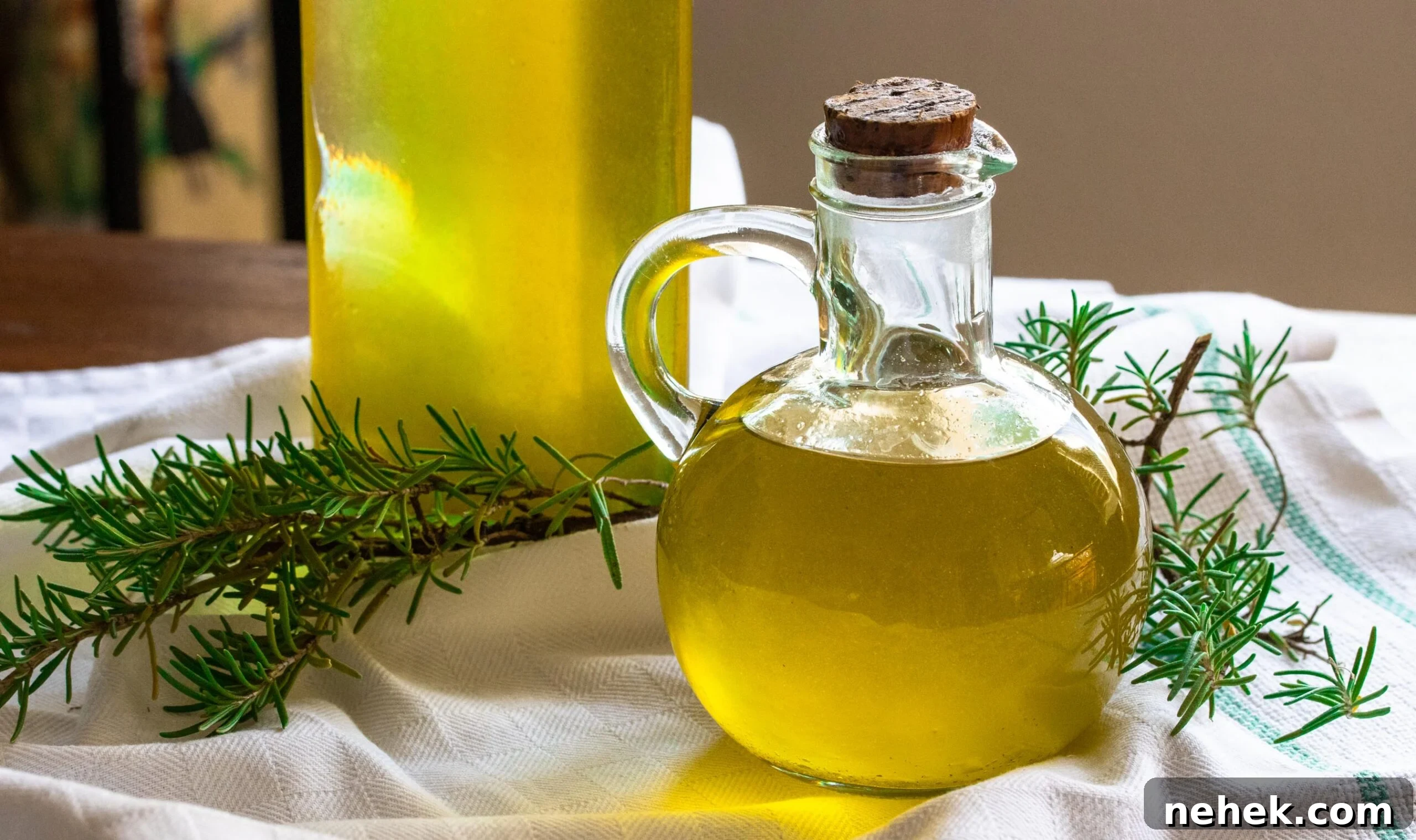
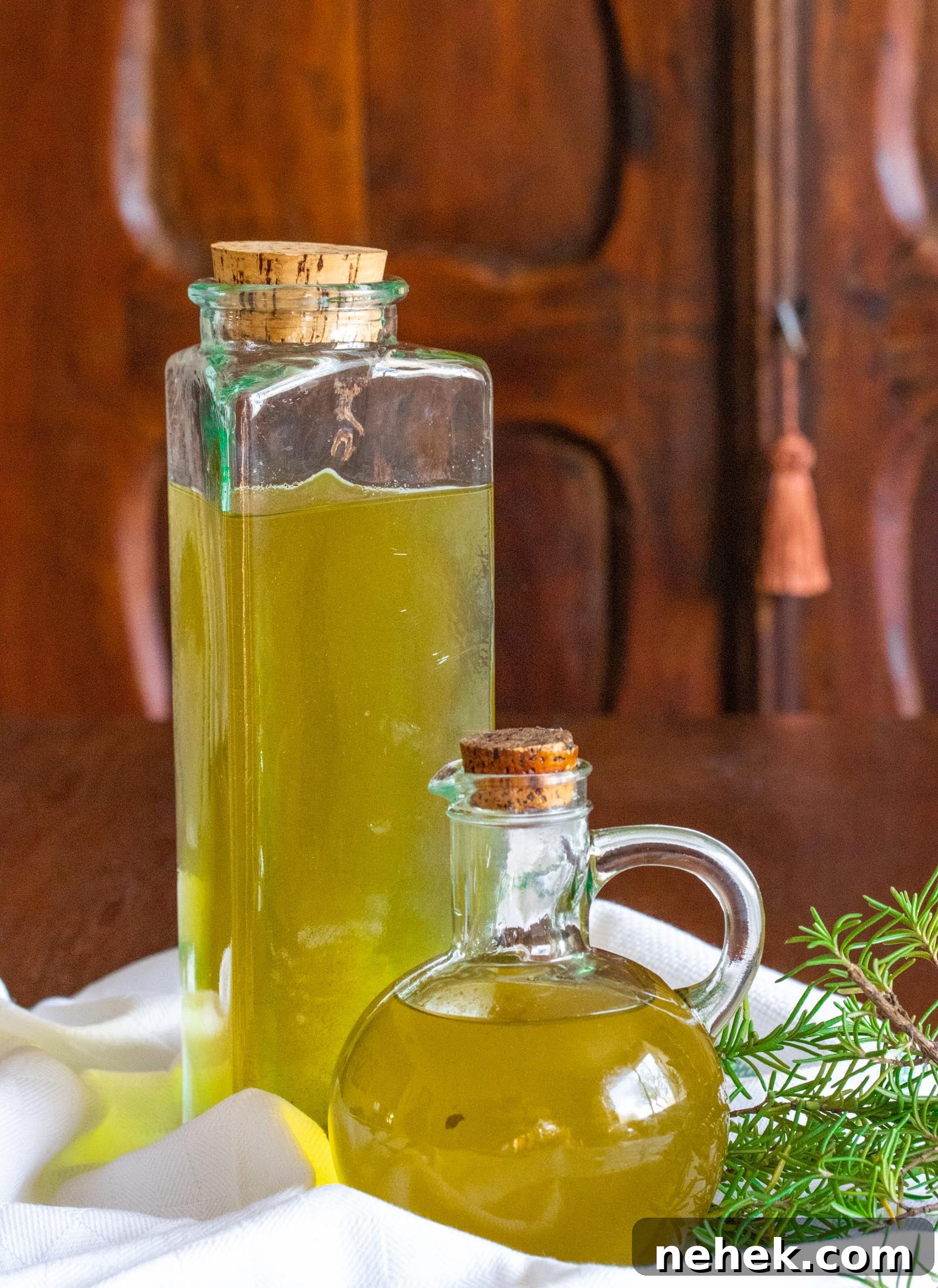
Rosemary Infused Olive Oil — one of my favorite summer creations. With an abundance of herbs in the garden, it’s easy to make an aromatic, savory oil that elevates many dishes. This homemade rosemary oil is simple to prepare and becomes a staple in my kitchen.
After a quick blitz in the food processor and about twenty minutes of gentle simmering, the oil is ready to use. You don’t need to buy specialty oils — this deep green, fragrant infusion is effortless to make at home and offers a robust rosemary flavor when made with fresh sprigs.
In this Article
- What is Rosemary Infused Olive Oil?
- Is Homemade Rosemary Oil Good for Cooking?
- It Makes a Perfect Gift
- Recipe Tips
- Equipment Needed
- How to Infuse Olive Oil with Rosemary — Step by Step
- How Long Does Infused Olive Oil Last?
- Substitutes and Additions
- Storage
- Frequently Asked Questions
What is Rosemary Infused Olive Oil?
Rosemary is a Mediterranean herb rich in vitamins and antioxidants. Aside from culinary uses, it’s valued in skincare and hair care, but here the focus is culinary. Rosemary is easy to grow in pots or garden beds and is hardy in a range of climates.
Is Homemade Rosemary Oil Good for Cooking?
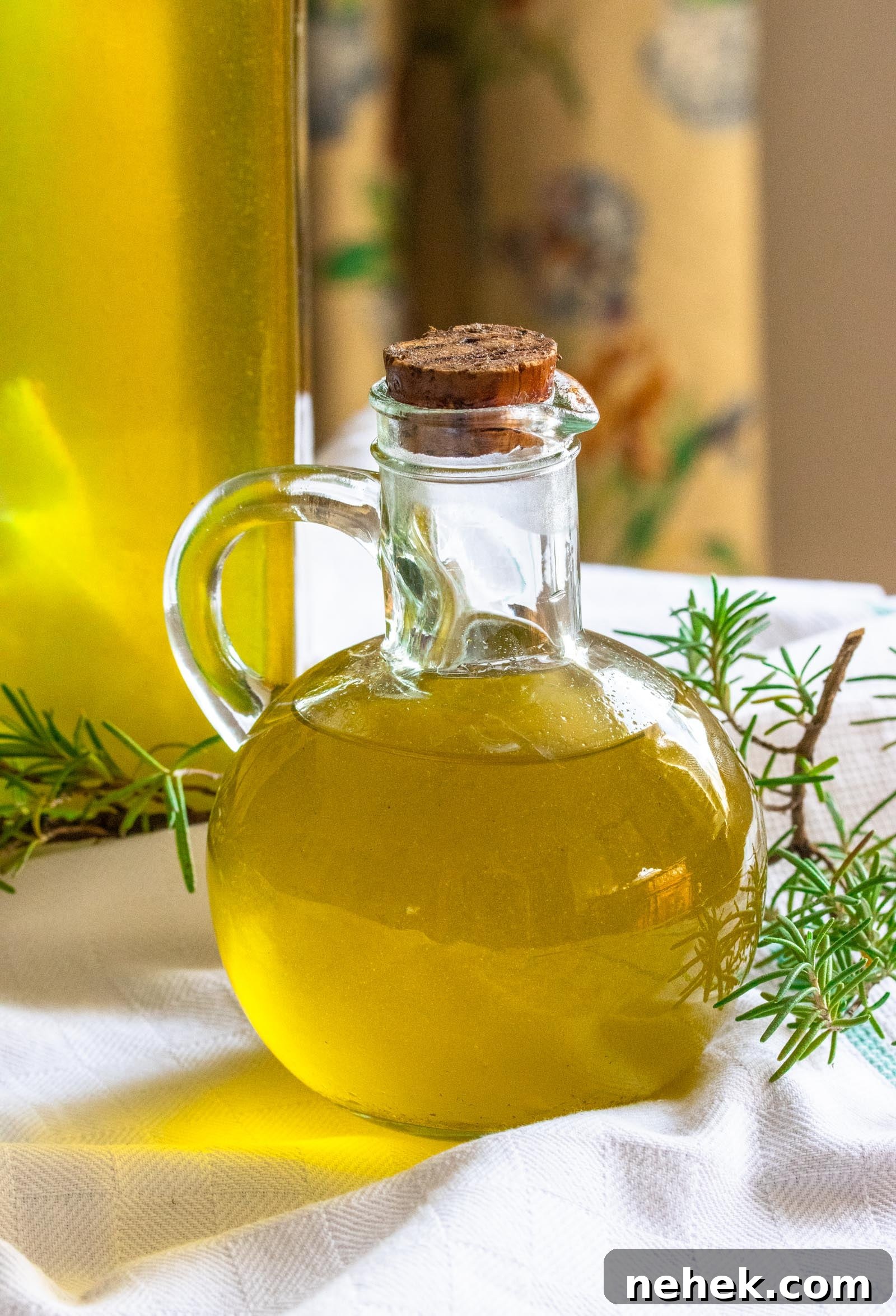
Absolutely. Once you make a bottle, you’ll find plenty of ways to use it. Keep some on hand for everyday cooking and finishing dishes.
- Drizzle over salads or add to salad dressings.
- Use for basting meats or sautéing lamb and other proteins.
- Roast chicken and vegetables (carrots, fennel, potatoes) with it for added depth.
- Add a few drops to vegetable soups for a bright herbal lift.
- Brush on steak before searing or grilling for an aromatic crust.
My father used to baste barbecued meats with fresh rosemary sprigs and olive oil — the flavor is unforgettable. Rosemary oil also pairs beautifully with fish, garlic, and roasted vegetables. Try it on bruschetta: grill bread, rub with garlic, and finish with infused rosemary oil.
It Makes a Perfect Gift
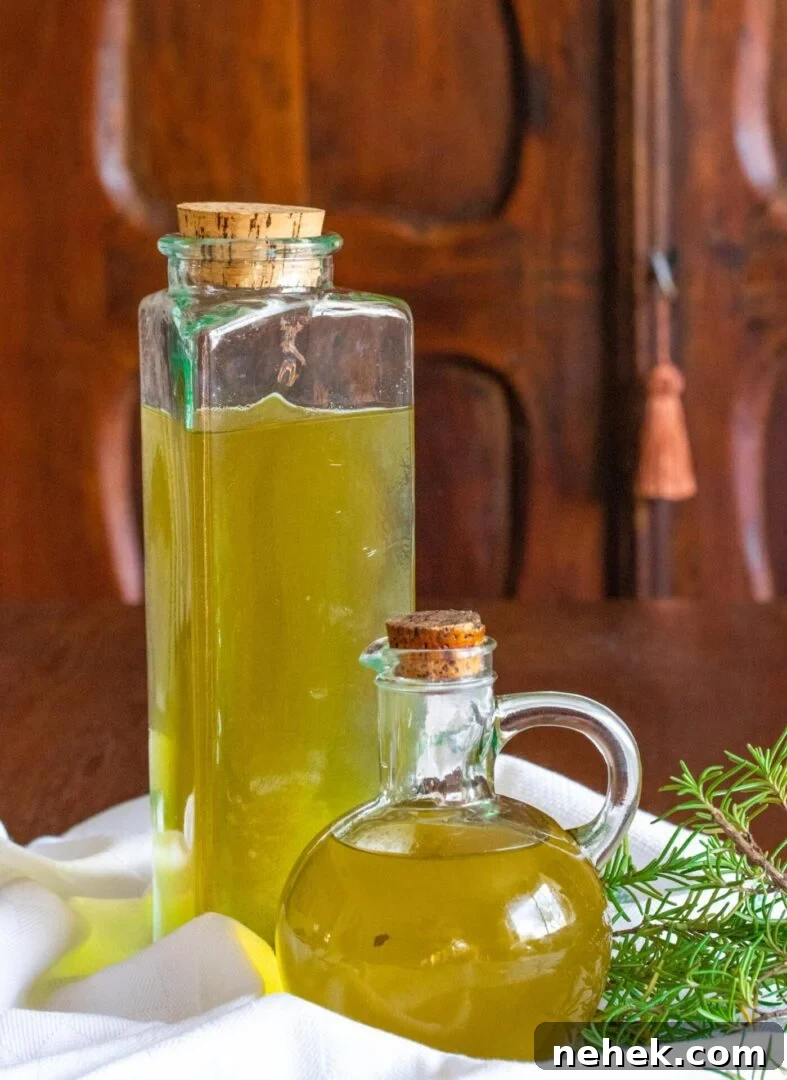
Homemade rosemary oil makes an elegant, thoughtful gift. Bottle it in a pretty decanter and include a small recipe card for presentation. It’s ideal for holidays, housewarmings, or just to share something handmade with friends and family.
Recipe Tips
These simple tips help you get the best flavor and clarity from your infusion:
- Heat the oil gently over medium-low so small bubbles appear but the oil does not boil.
- Strain the oil through a double layer of cheesecloth or muslin without pressing the solids — let the infused oil drip through naturally for the cleanest flavor.
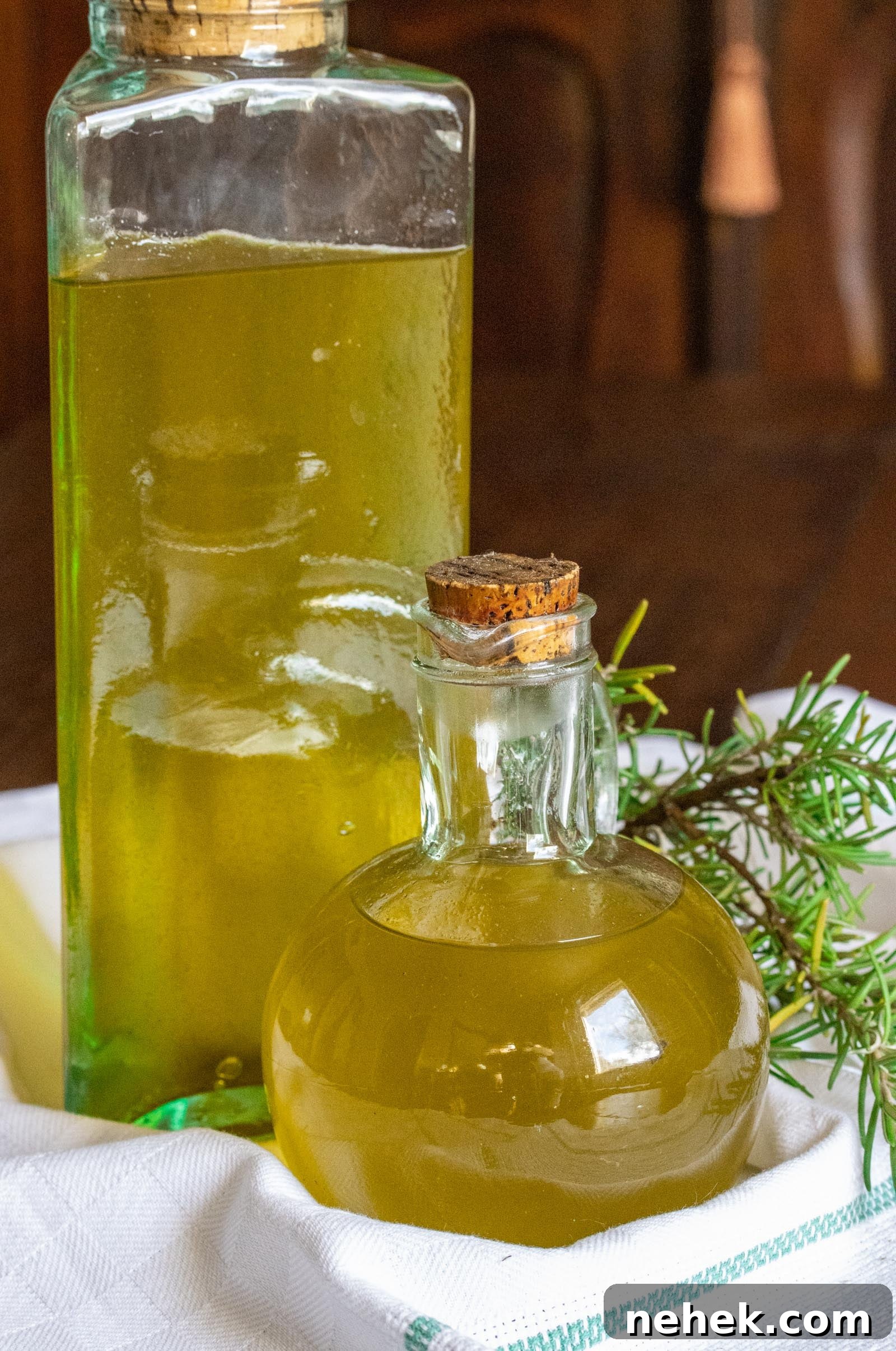
- Transfer the cooled, drained oil into a clean glass jar or bottle and seal tightly to preserve freshness.
Equipment Needed
Heavy-duty pan
Food processor
Fine sieve
Cheesecloth
Glass bottles
How to Infuse Olive Oil with Rosemary — Step by Step
Preparing the rosemary
- Rinse rosemary sprigs under running water and pat dry on a towel. Remove individual needles by running your fingers down the stem against the direction of the needles and discard the woody stems.
- Place the needles in a food processor and pulse a few times to break them down.
- With the motor running, slowly add the olive oil and process until the mixture is almost a puree.
Making the infused oil
- Transfer the rosemary–oil puree to a heavy pan and warm very gently for about 20 minutes.
- Remove from heat and strain through a double layer of dampened cheesecloth or muslin into a bowl. Do not press on the solids — allow the oil to drip through slowly for the clearest result.
- When cool, pour the oil into a clean glass bottle and seal tightly.
How Long Does Infused Olive Oil Last?
With proper care, infused olive oil keeps well. Store it in a cool, dark place away from heat and direct sunlight, and keep the bottle sealed when not in use to prevent oxidation and rancidity.
If you’ve made a large batch, you can freeze portions in an ice cube tray and transfer the frozen cubes to a freezer-safe bag for long-term storage; thaw cubes at room temperature before using. Always make sure solids are thoroughly strained out before storing to reduce the risk of spoilage.
Substitutes and Additions
Use the same method to infuse other herbs or aromatics. Fresh basil, thyme, or sage work well. For a spicy oil, add dried chilies; for a bright citrus note, include lemon zest. Whole peppercorns or a clove of garlic (dried) will add depth. Ensure additions are dry to avoid introducing moisture that can shorten shelf life.
Storage
Store infused oil in an airtight glass container in a cool, dark cupboard. Freezing in measured portions is a convenient option for longer storage. Always keep the oil sealed and away from heat and light.
Frequently Asked Questions
Can I use dried rosemary for this recipe?
Yes. Dried rosemary can be used, but fresh rosemary gives a brighter, more vibrant flavor. Use less dried herb, since dried herbs are more concentrated.
What type of oil should I use?
Extra virgin olive oil is preferred for its flavor and health benefits, but neutral oils like canola or sunflower can also be used. The base oil affects the final taste, so choose according to desired flavor.
Can I heat the oil in the microwave?
Microwaving isn’t recommended because heat can be uneven and create hot spots that may burn the herbs. A stovetop allows for gentle, controlled warming.
How can I use infused olive oil?
Use it for drizzling, dipping, marinating, roasting, basting, or finishing dishes. It’s also a lovely gift when bottled attractively.
If You Enjoy This Recipe, Try These
Roasted Rosemary Potatoes
Cauliflower with Olives and Cherry Tomatoes
Pot Roast with Vegetables
Chimichurri
I hope you enjoy making and using this rosemary-infused oil.
VIDEO: Cook Along With Me
More Favorites from Giangi’s Kitchen
- Orange Roughy Recipe
- Popover Recipe
- Cocadas Recipe
Rosemary Infused Oil
Ingredients
- 1 bunch rosemary, about 8 sprigs
- 4 cups olive oil
Instructions
-
Wash and dry the rosemary thoroughly. Remove the needles and place them into the bowl of a food processor.
-
With the motor running, add the oil slowly and process until the plant fiber breaks up and forms a smooth puree.
-
Heat the mixture very gently for about 20 minutes. Strain the oil through a double layer of dampened cheesecloth or muslin. Do not press on solids; allow the oil to drip through slowly.
-
Fill a clean glass bottle and store in an airtight container.
Equipment
-
Food processor
-
Cooking pan
-
Strainer
-
Cheesecloth
-
Glass bottle
Nutrition
Giangi’s Kitchen provides estimated nutritional information.
- Course: Sides
- Cuisine: French
- Occasion: Christmas
- Season: Summer
- Type: Affordable Gourmet, Under 45 minutes, Videos
Did you make this?
Leave a comment below and tag @giangiskitchen on Instagram
Originally published on June 7, 2022.