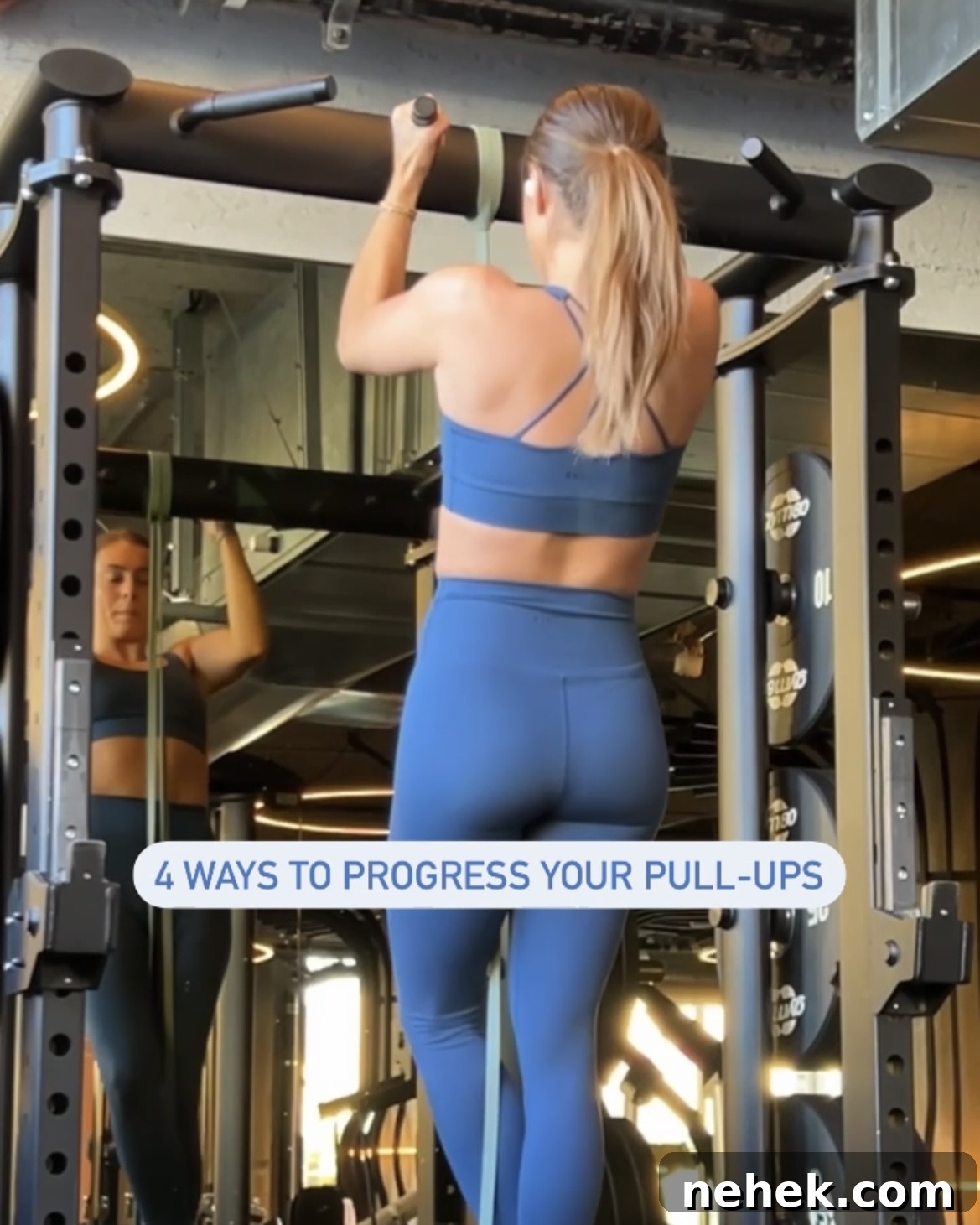
Many of you are well into my Strength Guide and still working toward that first solid pull-up. It’s important to understand that pull-up progress often takes time—months for most people—so don’t be discouraged if you aren’t seeing dramatic changes in the first few weeks. Consistent practice and gradual upper-body strength development are the most reliable ways to improve. I recently shared a short reel with my top tips for building strength and muscle memory for pull-ups; here I’ll break those tips down in more detail. Tell me which method has helped you the most. Personally, I found practicing assisted pull-ups with power bands to be a game-changer—medium bands give more assistance early on, while light bands are useful as you advance.
Banded Pull-Downs
To set up banded pull-downs, secure a resistance band around the pull-up bar so it won’t slip. Grasp the band with both hands and kneel beneath the bar. Pull the band down until your elbows graze your sides, then return to the starting position under control, extending your arms fully. This movement targets the lats and teaches the pulling pattern without having to lift your full bodyweight. As you get stronger, switch to a band with less assistance to increase the challenge.
Banded pull-downs are also a useful option when you don’t have access to a standard pull-up bar, since they can be adapted to many anchor points.
Negatives
Negatives focus on the lowering phase of the pull-up, which builds strength and reinforces the required motor pattern. Here are two practical setups:
- Adjust the bar to chest height and position yourself underneath. Grip the bar shoulder-width apart, lift your hips so your feet can remain planted, and pull up until your chin is over the bar. Hold the top briefly, engage your upper-back, then lower yourself slowly and with control to the start.
- Use a chair or box placed slightly off-center beneath the bar so you can step up and grab the bar at chest height. From that elevated start, pull to the top, hold for a moment to engage your back, and then lower yourself deliberately. Repeat by stepping onto the chair or box each set.
Assisted (with a jump)
Assisted pull-ups with a small hop are a good transition between banded or negative work and full, strict pull-ups. Loop a resistance band securely around the bar and thread one foot into the band’s bottom loop. Stand on a chair or box so you can reach the bar, then use a light hop from your supporting foot to help initiate the upward motion. At the top, hold briefly, engage the back, and control the descent. Start with a band that provides more assistance and progress to a lighter band as you gain strength.
Assisted (strict)
Once you’ve practiced the assisted variations, move to strict assisted pull-ups—this means no jumping or kipping, only controlled, deliberate movement. Secure the band to the bar and place one foot in the band’s loop. Grip the bar and hang with your core and glutes braced so your body stays steady. Initiate the pull by engaging the outer upper-back and driving your elbows down toward your hips. Keep your shoulders away from your ears and avoid swinging; perform each rep with a clean, controlled range of motion. Strict assisted reps teach full-body tension and the exact pulling mechanics needed for unassisted pull-ups.
Stick with these progressions—banded pull-downs, negatives, jump-assisted reps, and strict assisted pull-ups—and be patient with the process. Regular, focused practice will pay off. Wishing you steady progress and consistency—xx