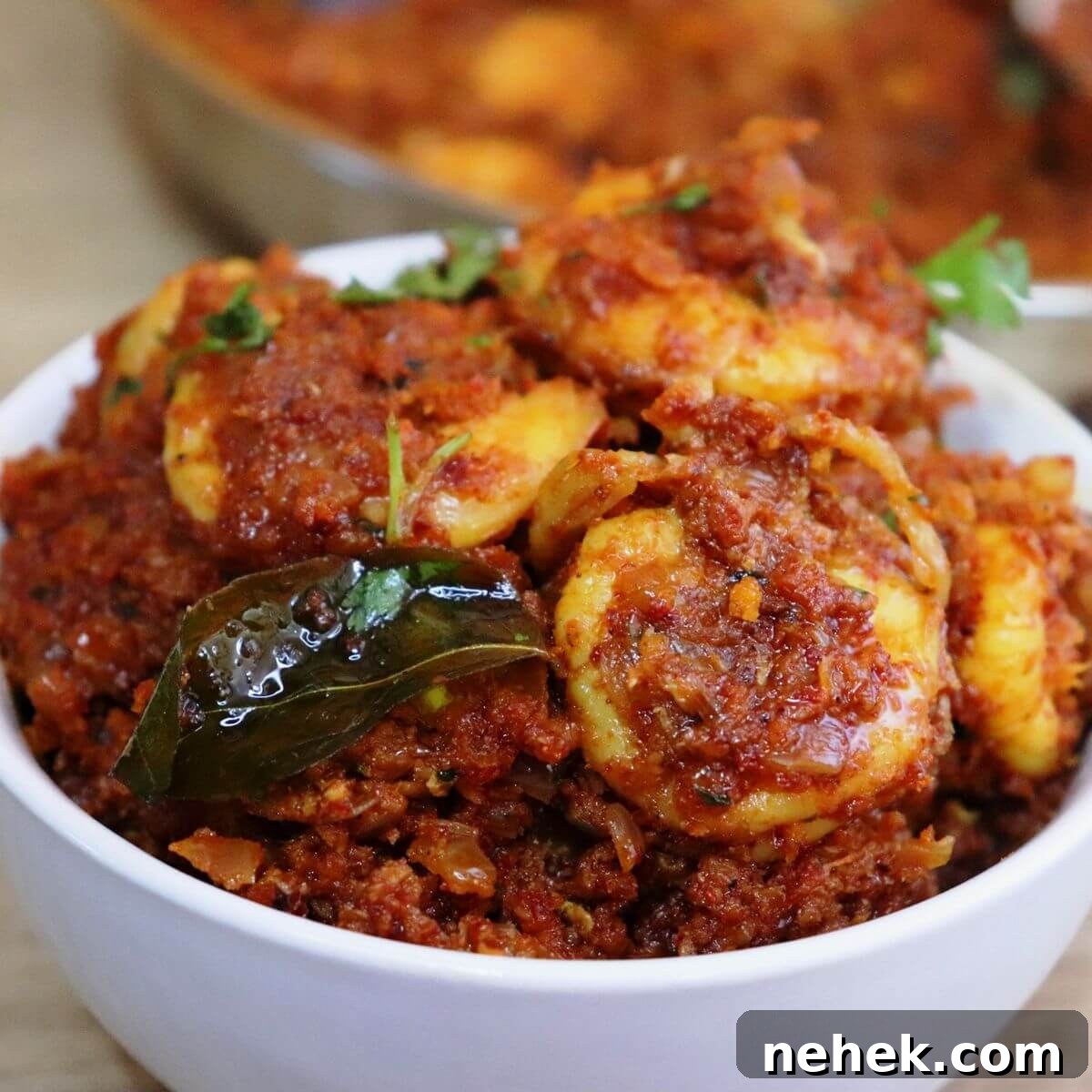
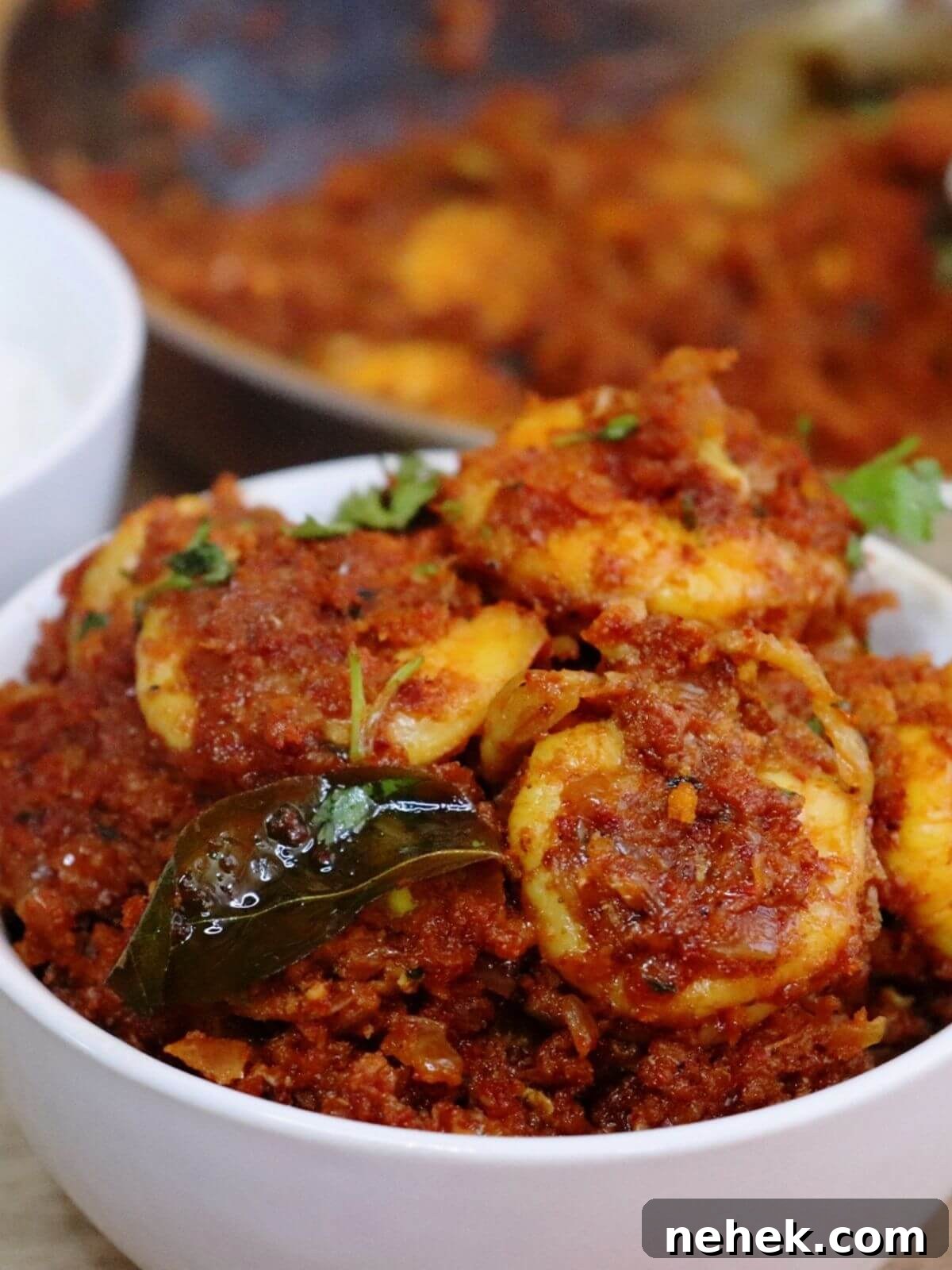
Mangalorean prawn sukka (also called yetti sukka) is a classic dry Konkani prawn dish from Mangalorean cuisine. Made with fresh prawns, coconut, red chilies, tamarind and a simple spice mix, it delivers a spicy, tangy coastal flavor. Serve this flavorful prawn sukka with steamed rice, neer dosa, roti or ghee rice. This post explains how to prepare the dish with step-by-step photos and a video tutorial.
[feast_advanced_jump_to]
This prawn sukka has been a family favorite for years. With freshly grated coconut, curry leaves and a homemade sukka masala, it captures the authentic taste of Mangaluru. The dish is quick to make and ideal for a weekend lunch or a special weekday meal.
Mangalorean cuisine is known for bold, spicy preparations such as Prawns Ghee Roast, Chicken Ghee Roast, Fish Fry and Mangalorean Chicken Sukka. Prawn sukka is another signature coastal dish that pairs beautifully with South Indian breads and rice.
About this Prawn Sukka
In this recipe I show how to make Mangalorean-style prawn sukka using a freshly prepared sukka masala. Locally it’s also called Yetti Sukka or Yetti Ajadina in Tulu—“yetti” meaning prawns and “sukka” meaning dry. The homemade sukka masala is aromatic and elevates the dish; you can also use it for chicken or mutton sukka.
Yetti sukka is spicy, tangy and fragrant. It takes about 30 minutes from start to finish when using cleaned prawns. The prawns are cooked gently in the sukka masala, finished with roasted coconut and coriander leaves for texture and aroma.
Other prawn recipes you may like:
- Prawns Ghee Roast
- Prawn Masala
- Prawn Biryani
- Prawn Curry
- Prawn Fry
Ingredients Notes
Most ingredients for this Mangalorean prawn sukka are pantry staples. The only slightly time-consuming step is cleaning and deveining the prawns, so I recommend doing that ahead and freezing portions in airtight containers. Thaw on the counter for about 30 minutes before cooking or buy pre-cleaned prawns to save time.
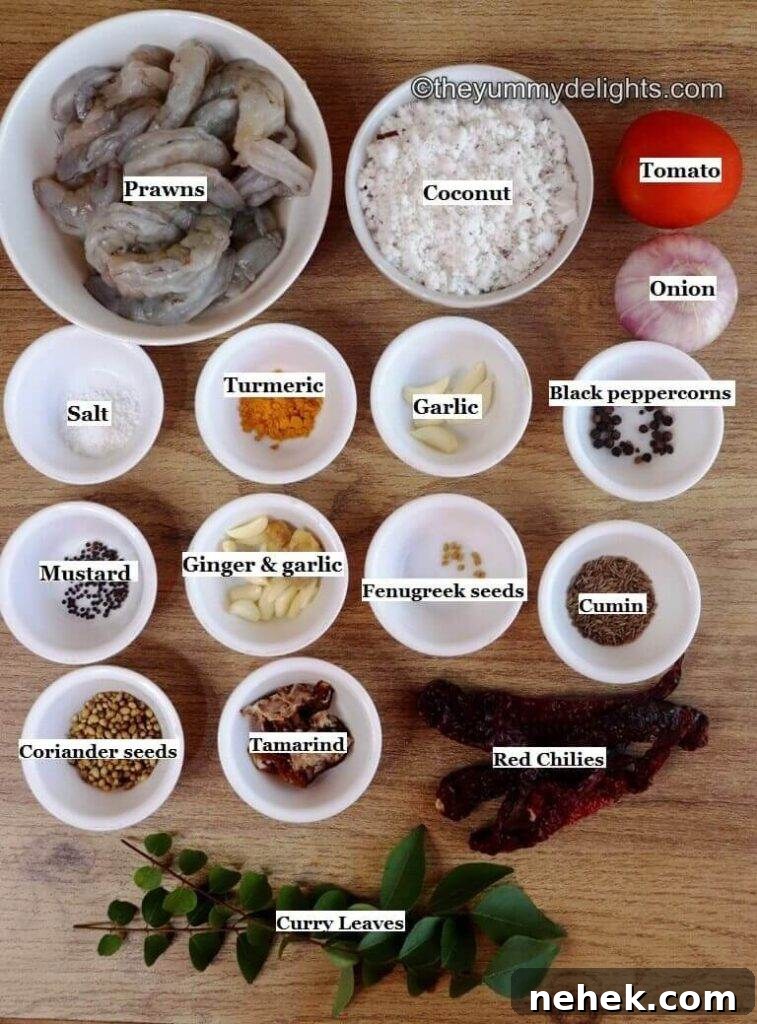
- Prawns – Use fresh or fully thawed prawns. Large tiger prawns or medium-sized prawns both work well.
- Red chilies – Byadagi chilies give bright color without much heat; Kashmiri chilies can be used instead.
- Sukka masala – A blend of cumin, mustard seeds, black pepper, fenugreek and coriander seeds. Don’t omit the whole spices as they define the flavor.
- Onion, ginger & garlic – Red onions give a richer color, but yellow onions are fine. Fresh ginger and garlic are preferred; paste can be used in a pinch.
- Oil – Coconut oil gives authentic aroma; substitute a neutral oil if needed.
- Coconut – Freshly scraped coconut is best; desiccated or dry coconut may be substituted.
- Tamarind – Adds tang; lemon juice or vinegar can replace it if unavailable.
- Tomato – Fresh tomato gives the best result; canned tomatoes or a teaspoon of tomato paste can be used or omitted.
- Herbs – Curry leaves and coriander leaves. Curry leaves are essential for the characteristic South Indian flavor.
For exact quantities and the full ingredient list, see the recipe card below.
How to make Mangalorean Prawn Sukka
Preparations for Yetti Sukka
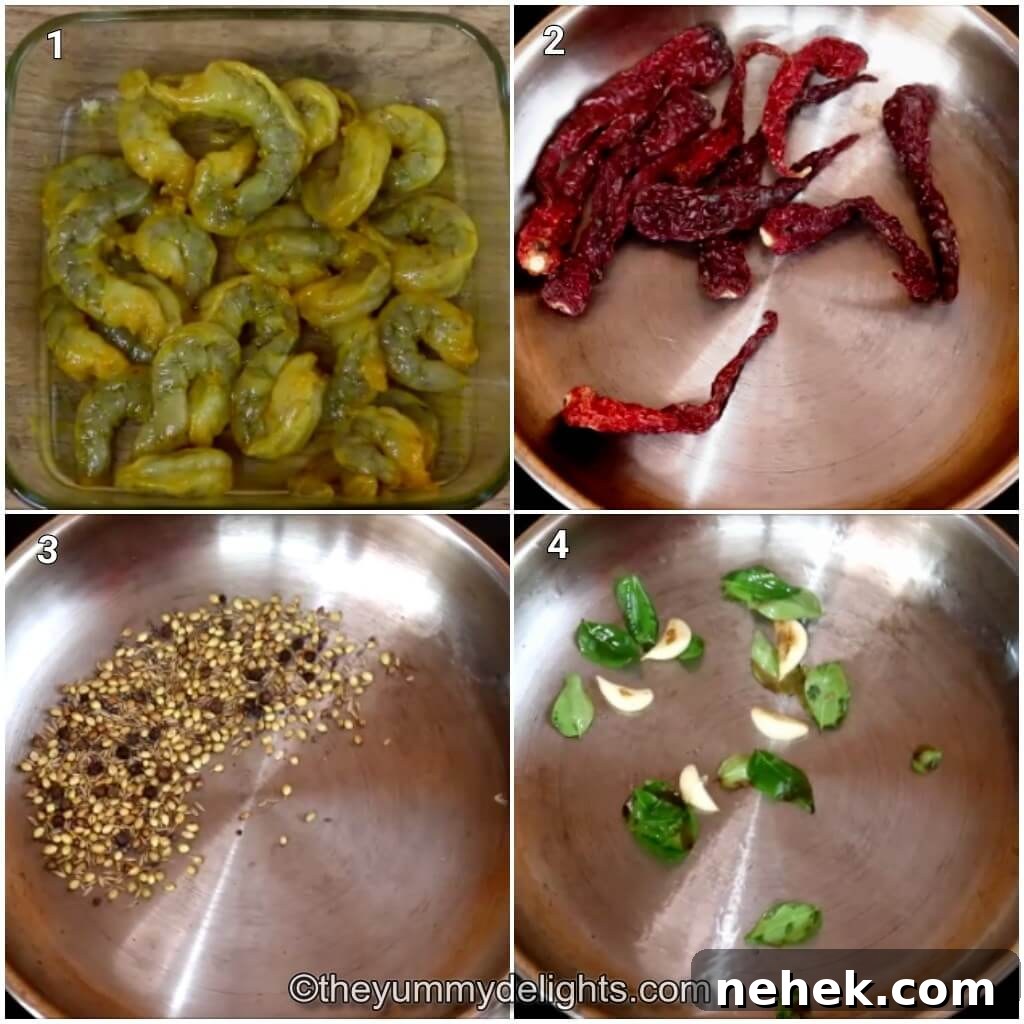
- To marinate the prawns – Clean and devein the prawns, then toss with salt and turmeric and marinate for 30 minutes.
- Roughly crush ginger and garlic and set aside.
- Chop the onion and tomato and grate the coconut.
Making Sukka Masala
- Dry roast the red chilies over medium-low heat until crisp; remove and set aside.
- Dry roast cumin, mustard seeds, black peppercorns, fenugreek seeds and coriander seeds until aromatic; remove and cool.
- Heat 1 teaspoon oil in the same pan, lightly fry garlic until pale golden, then fry curry leaves until crisp; set aside.
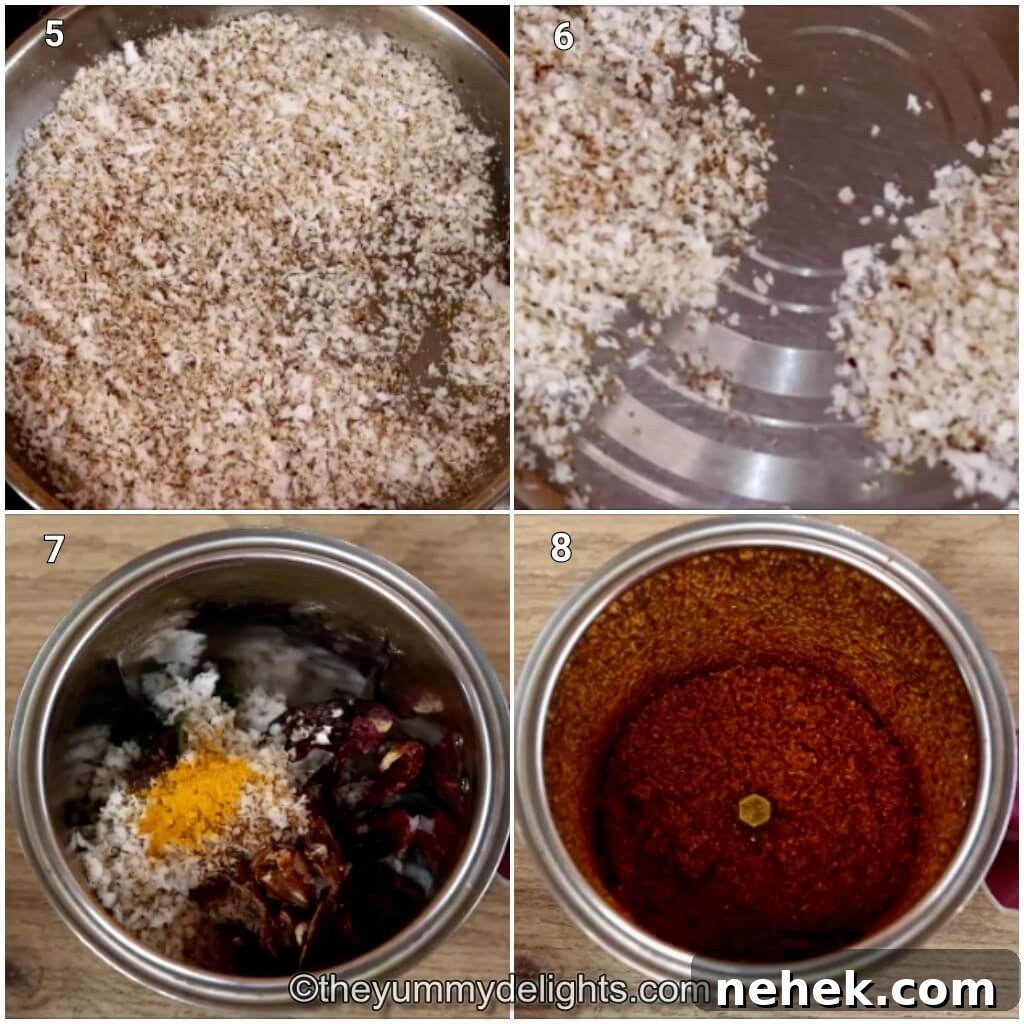
- Dry roast the scraped coconut until golden and let it cool.
- Reserve a quarter of the roasted coconut for finishing. Combine the remaining roasted ingredients and ¾ of the coconut in a grinder.
- Add turmeric and a small ball of tamarind (or a little tamarind paste) and grind to a fine powder without adding water. This is your sukka masala; set aside.
- Store any extra sukka masala in an airtight container in the freezer for up to a month.
Making the Mangalorean Prawn Sukka
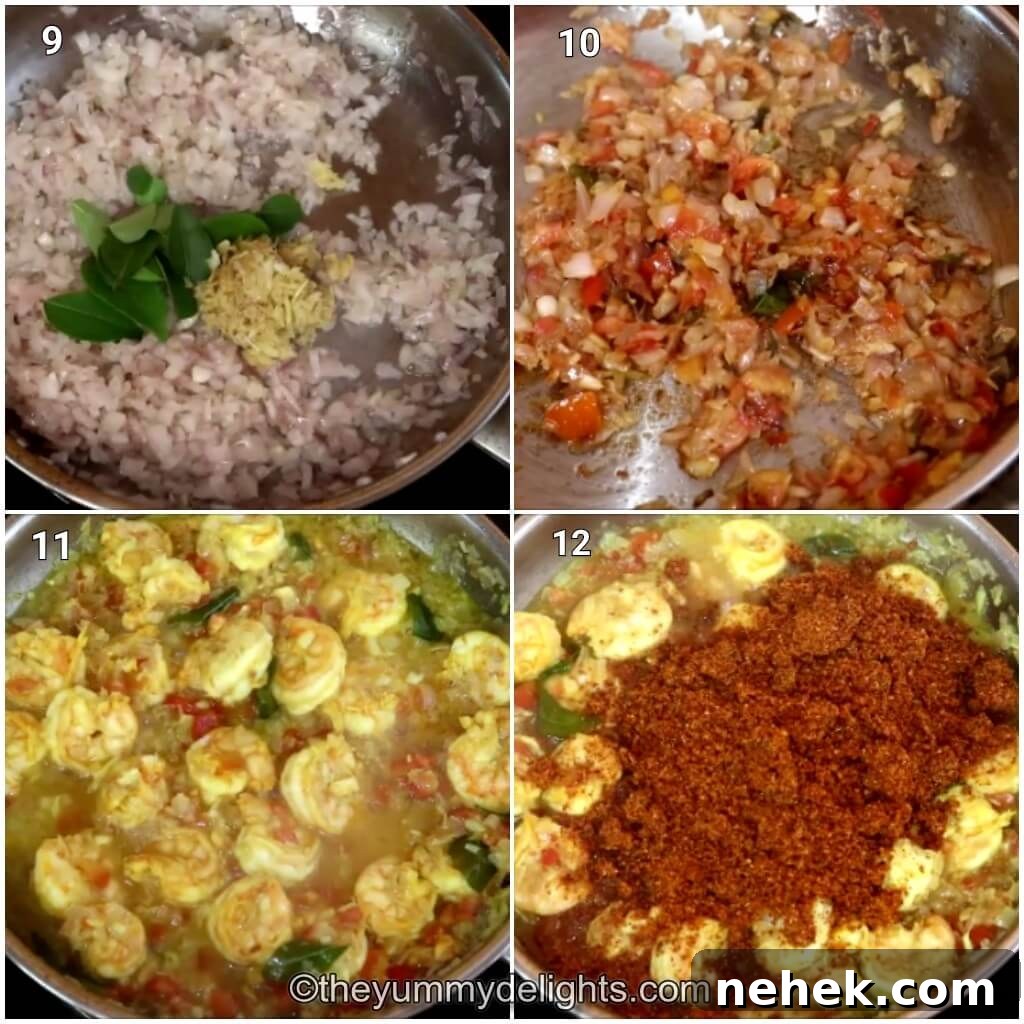
- Heat 2–3 teaspoons of oil in a pan over medium heat and sauté chopped onion until translucent.
- Add curry leaves, crushed ginger and garlic; cook until the onions turn golden.
- Add chopped tomato and cook until soft.
- Add the marinated prawns and stir; when they begin to curl, add 1/4 cup water, cover and cook until just done.
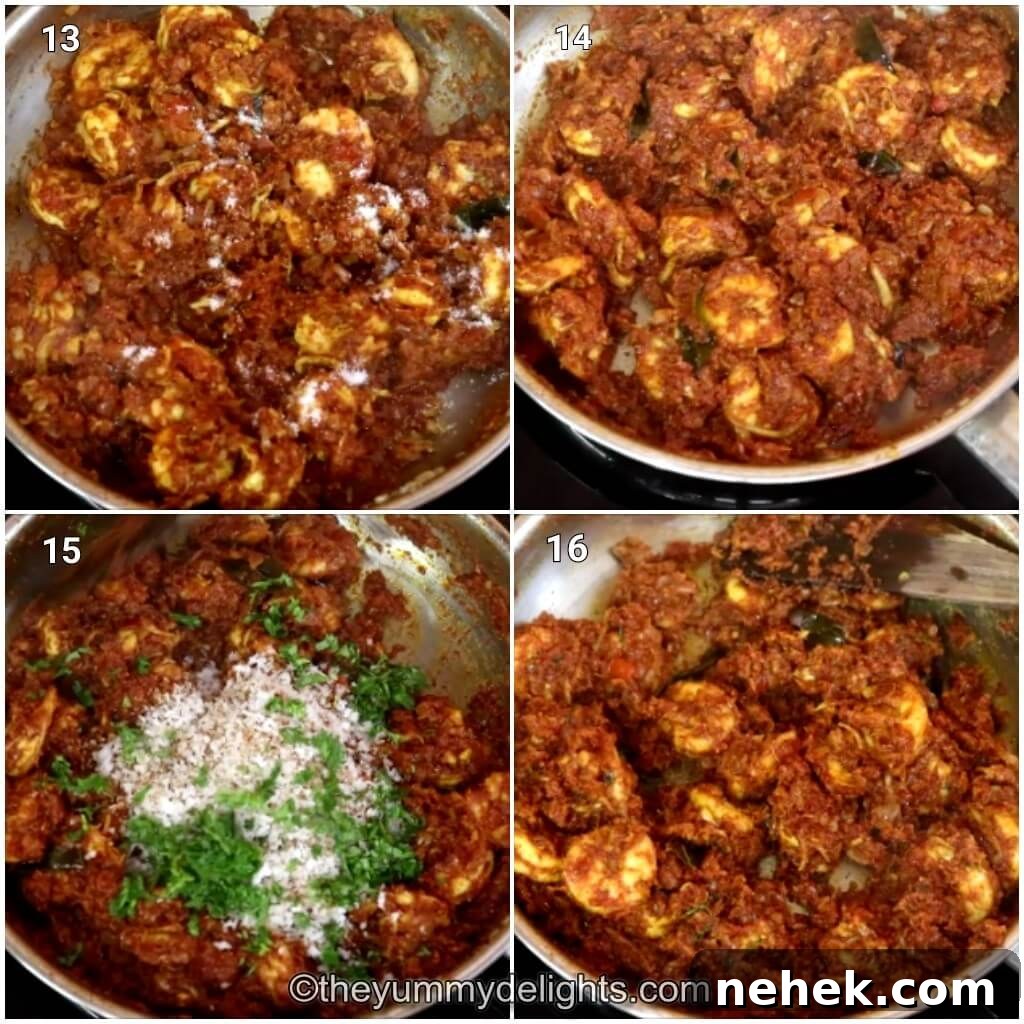
- Stir in the sukka masala. Taste and adjust salt and red chili powder. If needed, add 2–3 tablespoons of water and simmer for 2–3 minutes on low.
- When the masala begins to release oil around the edges, add the remaining roasted coconut and chopped coriander leaves. Combine and cook on low for 2 minutes.
- The Mangalorean prawn sukka is ready—serve hot with rice, dal, neer dosa or roti.
Tips to make the Best Prawn Sukka
- Clean and devein the prawns – remove the black vein to avoid digestive discomfort.
- Roast on low to medium heat – stir frequently so spices and coconut roast evenly without burning.
- Adjust spice level – sukka masala is potent; add more or less to suit your heat preference. You can substitute ½ teaspoon garam masala if needed.
- Use minimal water – this is a semi-dry dish, so add water sparingly during cooking.
- Don’t skip curry leaves – they provide the signature Mangalorean aroma.
What to serve with Mangalorean Prawn Sukka?
To enjoy every bite, serve prawns sukka with:
- Neer dosa or other soft dosas
- Steamed rice with dal
- Ghee rice or jeera rice
- Roti or chapati
Yetti Sukka Variations
- Swap prawns for clams or another shellfish for a regional twist.
If you try this recipe, please leave a comment and rating below—we’d love your feedback.
For questions while making the recipe, you can contact the author directly at [email protected].
Recipe Card
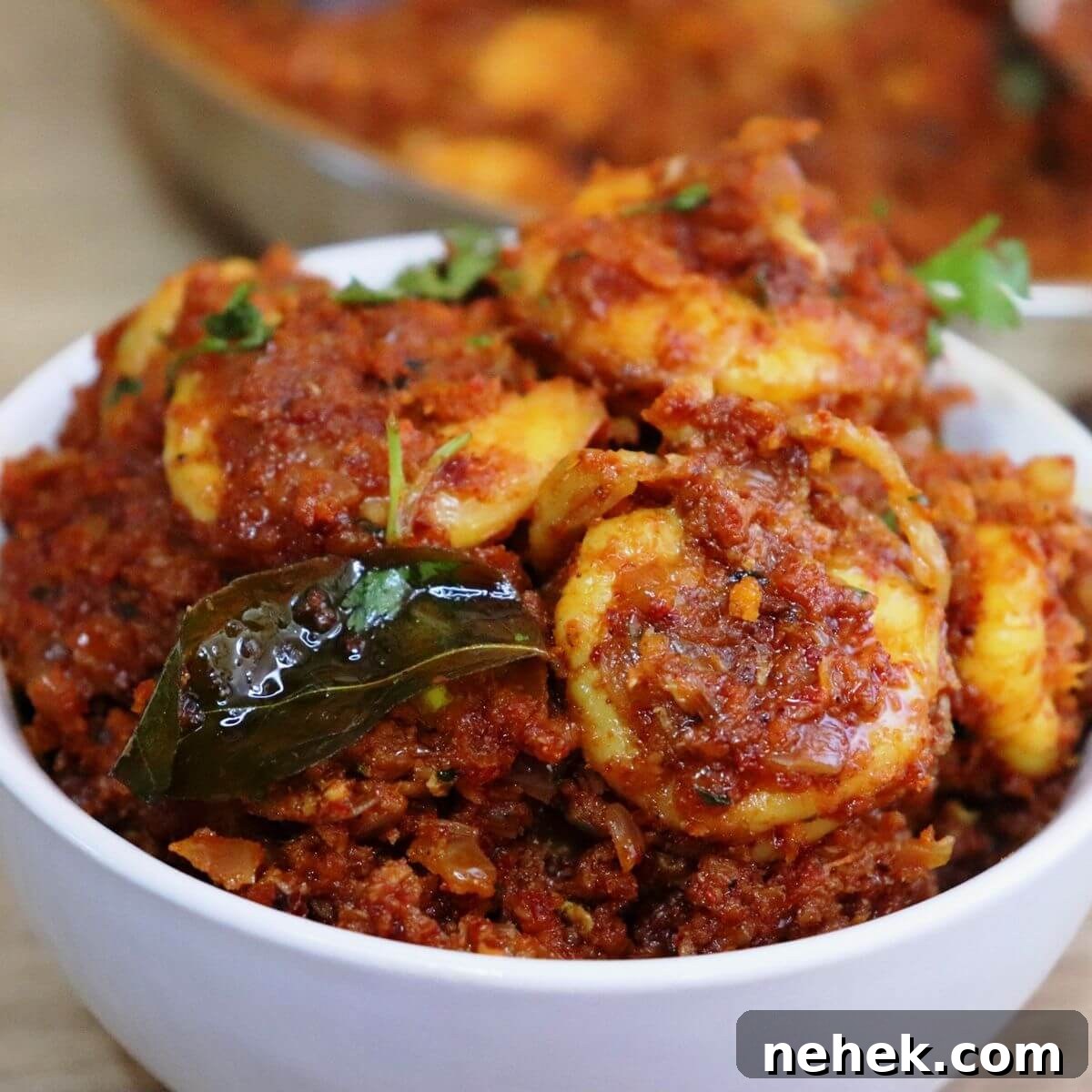
Prawn Sukka Recipe (Yetti Sukka)
Video
Equipment
-
1 Heavy bottom pan
Ingredients
To marinate the prawns
- 400 grams Prawns (deshelled & deveined)
- ¼ teaspoon turmeric powder
- salt to taste
For sukka masala
- 10-12 dried Byadagi or Kashmiri red chilies
- 1 teaspoon cumin
- ¼ teaspoon mustard seeds
- ½ teaspoon black peppercorns
- 10-12 fenugreek seeds
- 1 tablespoon coriander seeds
- 1 teaspoon oil (for frying garlic)
- 5-6 garlic cloves
- curry leaves
- ¾ cup scraped fresh coconut
- ½ teaspoon turmeric powder
- a small ball of tamarind (or lemon juice)
Other ingredients
- 2-3 teaspoon oil
- 1 onion, finely chopped
- curry leaves
- 5-6 garlic cloves
- 1 inch ginger
- 1 tomato, chopped
- salt to taste
- 1 teaspoon red chili powder
- 2 tablespoon coriander leaves, chopped
Instructions
Marinate the prawn
-
Clean and devein the prawns. In a bowl combine prawns, salt and turmeric and marinate for 30 minutes.
-
Crush ginger and garlic roughly and set aside. Chop onion and tomato and grate the coconut.
Making sukka masala
-
Dry roast red chilies until crisp and set aside.
-
Dry roast cumin, mustard, black peppercorns, fenugreek and coriander until aromatic; cool to room temperature.
-
Heat 1 tsp oil and fry garlic until light golden, then add curry leaves and fry briefly; set aside.
-
Dry roast coconut until golden and cool. Reserve ¼ for finishing and use ¾ with the roasted spices.
-
Grind the roasted chilies, spices, garlic, curry leaves and ¾ coconut with turmeric and tamarind into a fine powder without adding water. This is the sukka masala.
-
Store extra masala in an airtight container in the freezer for up to a month.
Making the Mangalorean prawn sukka
-
Heat 2–3 tsp oil in a pan. Sauté onion until translucent.
-
Add curry leaves, crushed ginger and garlic and cook until the onions are golden.
-
Add chopped tomato and cook until soft.
-
Add marinated prawns, stir and cook until they start to curl. Add ¼ cup water, cover and cook until prawns are just done.
-
Add sukka masala, adjust salt and red chili powder to taste. If needed add 2–3 tbsp water and simmer 2–3 minutes on low.
-
When the masala releases oil, add the reserved roasted coconut and coriander leaves. Cook 2 more minutes and serve hot.
Notes
- Always clean and devein prawns to avoid digestive issues.
- Roast ingredients on low to medium heat and stir often to prevent burning.
- Removing seeds from dried chilies reduces heat without sacrificing color.
- If you don’t have tamarind, skip it in the masala and add lemon juice at the end after adding the coconut.
- Do not increase mustard or fenugreek quantities—too much makes the masala bitter.
- Storage: Cool leftovers within two hours and refrigerate or freeze in an airtight container. Sukka stores well in the freezer for about a month.
Nutrition
Nutrition information is automatically calculated and should be used as an approximation.