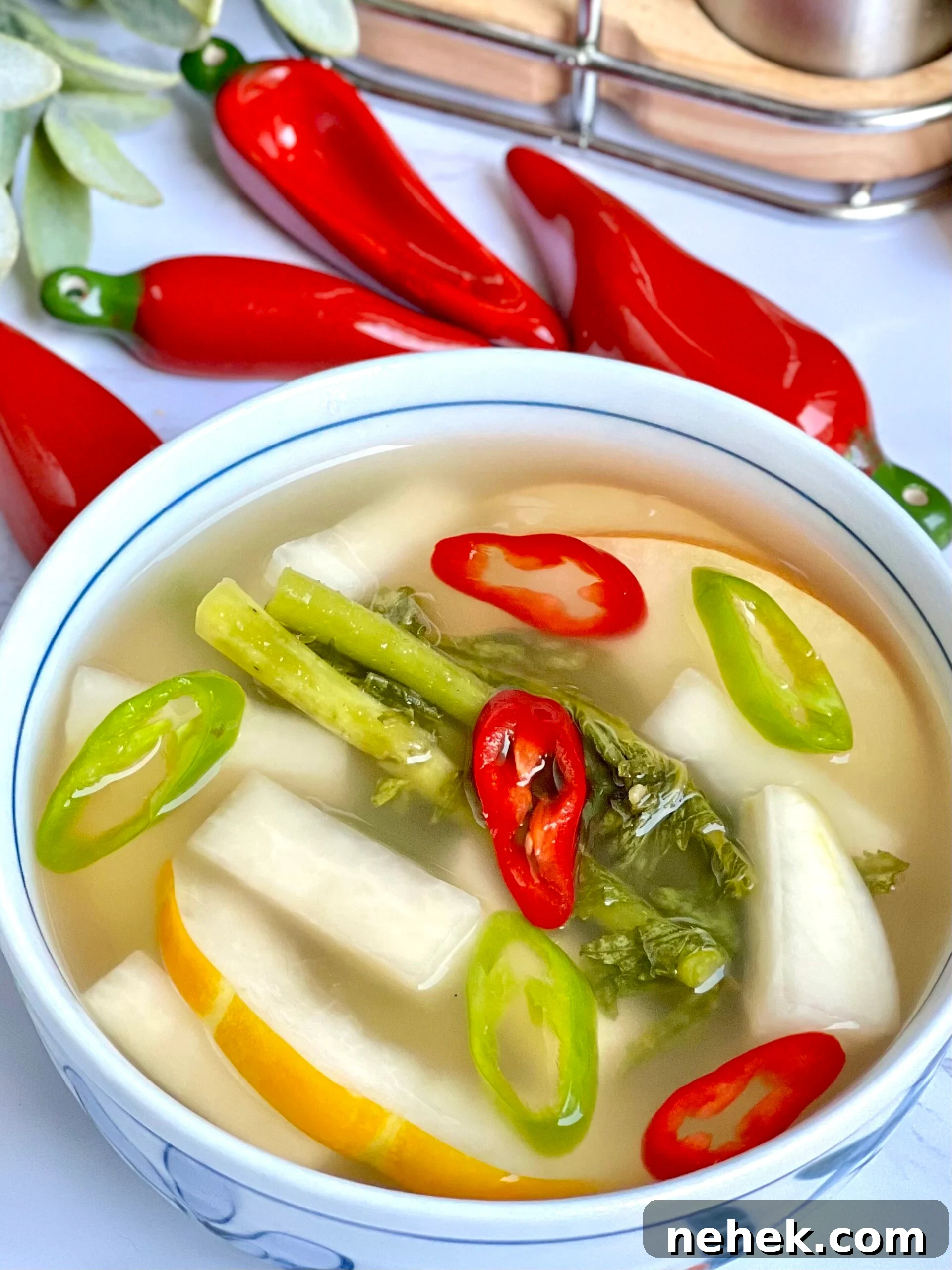
As part of my Top 5 Korean Summer Dishes series, I’m sharing a quick dongchimi recipe. Traditional dongchimi is a winter kimchi that ferments for several days, but this fast version is perfect for summer and provides a bright, tangy brine I use for naengmyeon and other cold dishes.
Dongchimi is a non-spicy water kimchi: tangy, slightly sweet, and incredibly refreshing. When I was a child this was my favorite kimchi. I especially love the mu-chung (radish greens); many people prefer the radish itself, but the greens are my top pick for flavor and texture.
The brine is the star here. It’s delicious chilled and makes a great palate cleanser. In Korea, it’s common to enjoy dongchimi as anju (bar snack) and to sip the cold brine as a chaser with soju.
This water kimchi is versatile. You can make dongchimi guksu (cold noodle soup) or use the brine to make a traditional-style naengmyeon broth.
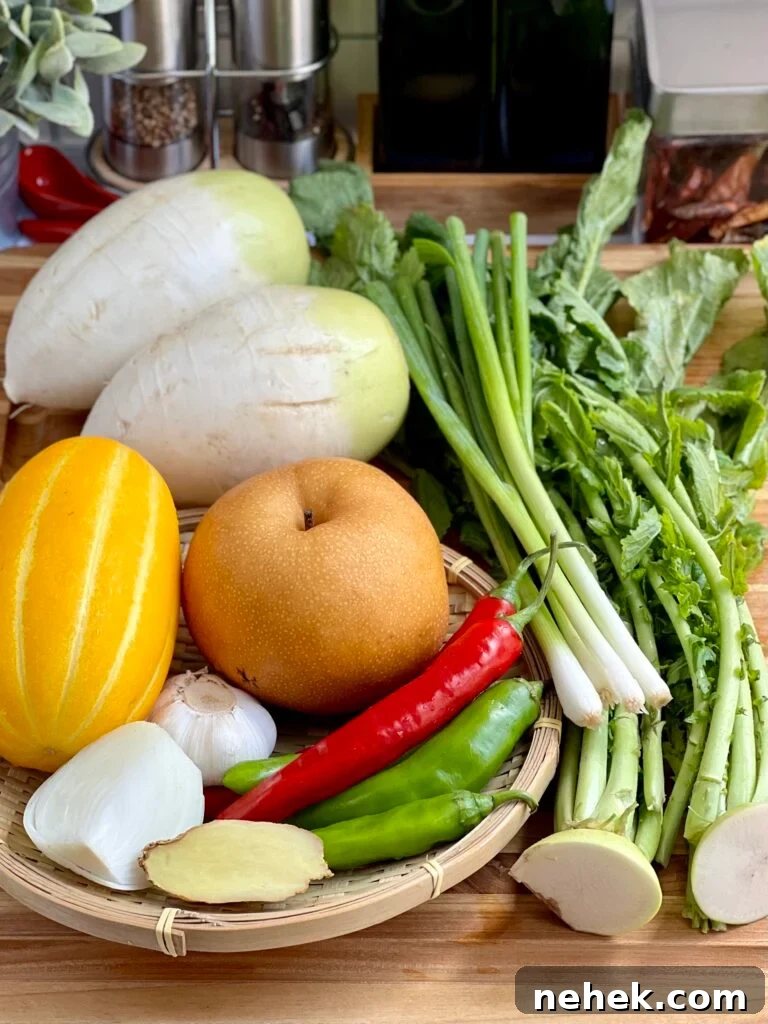
Ingredients:
- Korean radish – Young Korean radish is traditional in winter, but regular radish works well in summer.
- Radish tops (greens) – Optional but highly recommended. They add great flavor and nutrition and are my favorite part of dongchimi.
- Korean sea salt – Best for fermenting. Coarse salt can be used if Korean sea salt isn’t available.
- Fruit – Asian pear is traditional for subtle sweetness. Korean melon (chamoe), when in season, adds a wonderful summer sweetness and extra depth to the brine.
- Peppers – Optional. Green Korean peppers are mild; red peppers add a touch of heat but the finished dongchimi remains gentle.
- Aromatics – Smashed garlic, onion, fresh ginger, and green onions.
- Brine – One sheet of dried kelp soaked in water, plus plum syrup (maesil) and Korean sea salt. If you don’t have plum syrup, a little sugar can be substituted.
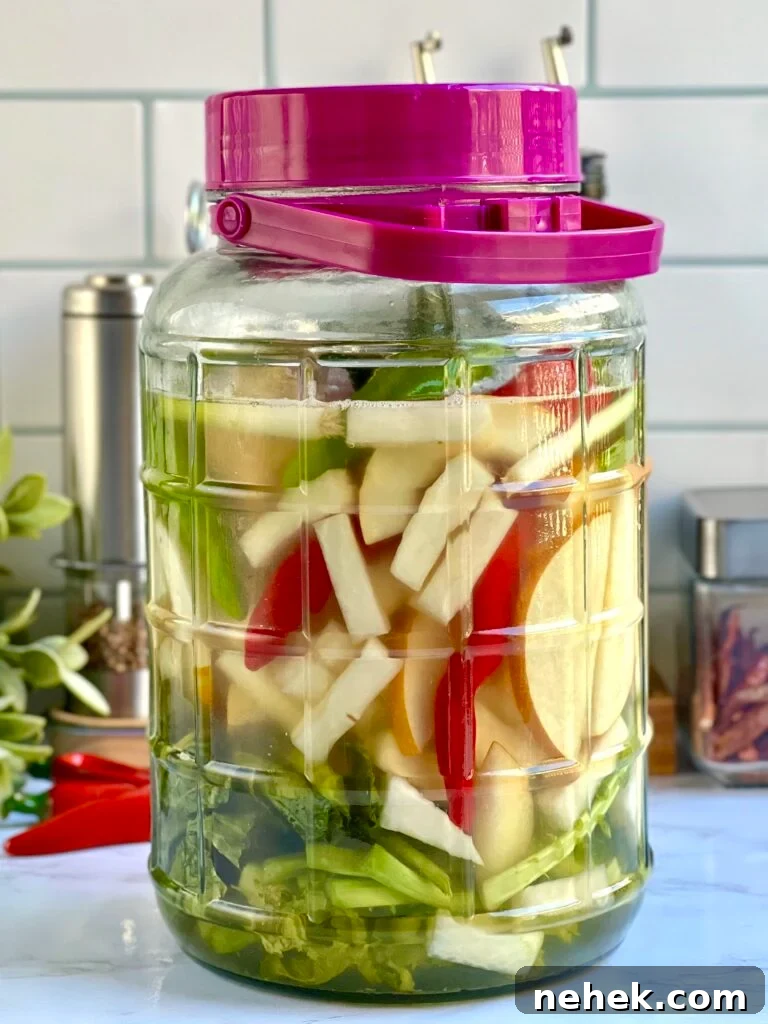
Fermentation Process
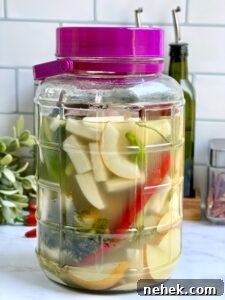
Leave the jar on the counter for 1–2 days, longer if you prefer a stronger sourness. After about one day you’ll see bubbles rising to the surface; by day two there will be more activity and a pleasantly sour aroma. This indicates active fermentation.
I usually let mine ferment at room temperature for at least a couple of days, then move it to the refrigerator. Refrigeration slows fermentation, so the flavor will continue to mellow over time.
Storage
Store dongchimi in the refrigerator for up to two months. It will keep developing flavor slowly while chilled.
If the brine tastes too salty, simply add cold water until it reaches the level of saltiness you like.
To serve, slice the peppers and add a few ice cubes to keep the brine icy cold. Don’t skip the melon if you’ve added it—though not traditional everywhere, it adds a delightful sweetness and texture.
This post contains affiliate links for products I recommend. I’m not sponsored by these brands, but I may receive a small commission from purchases made through those links.

Dongchimi (Radish Water Kimchi)
Ingredients
- 2 lbs Korean radish
- 1/2 lb Korean radish tops (greens)
- 2 tbsp Korean sea salt
- 1/4 Asian pear
- 1/2 Korean melon (chamoe)
- 1 sheet dried kelp
- 10 cups water
- 1/3 cup Plum syrup (maesil)
- 3 tbsp Korean sea salt (for brine)
- 6 garlic cloves, smashed
- 1 tbsp fresh ginger, roughly chopped
- 1/4 onion
- 4 green onions
- 2 red chili peppers
- 2 Korean green chili peppers
Instructions
-
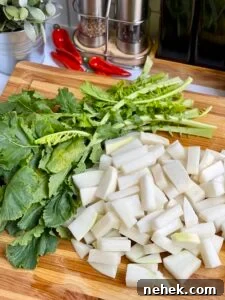
Wash the radish and greens thoroughly. Cut the radish into bite-sized, uniform pieces.

-
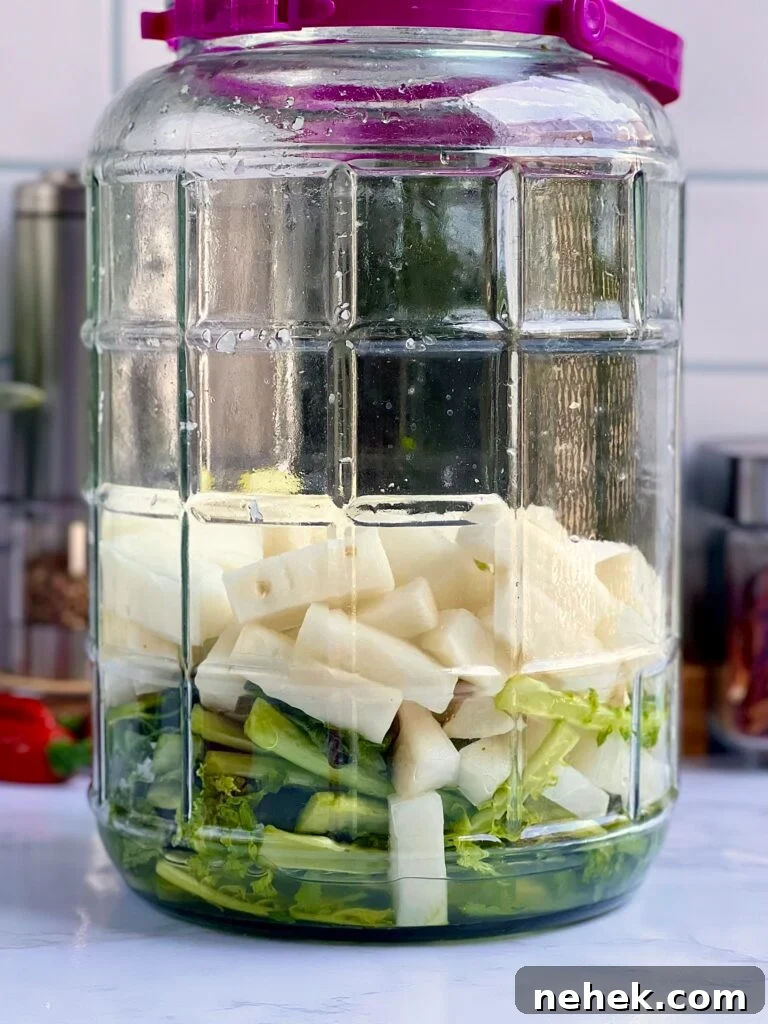
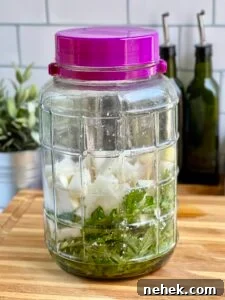
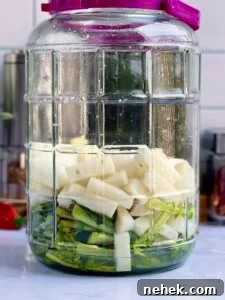
In a large glass jar, place the greens on the bottom and the radish on top. Sprinkle with 2 tbsp Korean sea salt and shake the jar so everything is evenly coated. Let it sit on the counter for 1 hour.
-
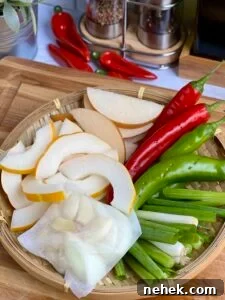
Halve the Korean melon lengthwise and remove the seeds. Slice thinly and peel if you prefer (I usually leave the skin). Thinly slice 1/4 Asian pear. Pierce the chili peppers with a fork. Place garlic, ginger, and onion into a cheesecloth or tea bag. Trim green onions into 3-inch lengths.
-
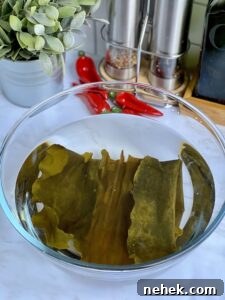
Soak the dried kelp in 10 cups of cold water for 30 minutes.
-
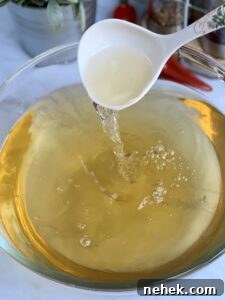
Remove the kelp (set it aside for another use). Stir plum syrup and 3 tbsp Korean sea salt into the kelp-soaked water until dissolved to make the brine.
-
After an hour, the radish and greens should have softened and released liquid—leave that liquid in the jar, as it contributes much of the base flavor.
-
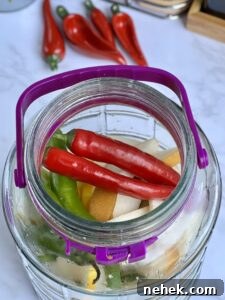
Add the chili peppers, melon, pear, the spice bag (garlic, ginger, onion), green onions, and the prepared brine to the jar.
-
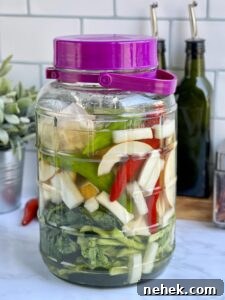
Secure the lid and let the jar ferment on the counter for 1–2 days, depending on how sour you prefer it.
-
After a day the liquid will darken slightly and bubbles will rise—these are signs of fermentation. Taste and, when it suits your palate, transfer to the refrigerator where it will keep for up to two months.
-
When serving, slice the chilies and add ice to the brine for an extra-cold finish. Try the melon pieces—they add a lovely contrast and are a delicious, if unusual, addition.

Nutrition information is calculated automatically and should be used as an approximation.
Additional Info
Like this recipe? Leave a comment below!