
This shortcut croissant recipe for beginners shows how to make flaky, bakery-style croissants at home with a simple technique that replaces traditional lamination.
Traditional croissant recipes often require multiple folds, long rests, and a lot of butter. This method—the giant roll method—streamlines the process while still producing crisp, golden layers outside and a soft, airy interior.

With fewer steps and less butter than classic recipes, this version is perfect for anyone who wants fresh croissants without spending the whole day in the kitchen.
Why You’ll Love This Shortcut Croissant Recipe
This approach is beginner-friendly and works well for more experienced bakers who want a quicker option. It removes the stress of repeated folding and long chill times by using a single, effective layering technique.
Benefits at a glance:
- Simpler process with consistent results
- Fewer ingredients and less butter than traditional laminated dough
- Uses basic pantry staples with no additives
- Produces flaky, layered croissants with a tender crumb

Ingredients
Measure the following for about 12 croissants:
- 190 ml (3/4 cup + 2 tsp) water or milk, room temperature
- 25 g sugar (about 2 tbsp)
- 3 g salt (1/2 tsp)
- 3 g active dry yeast (1 tsp)
- 300 g all-purpose flour (approx. 2 1/4 cups)
- 100 g unsalted butter
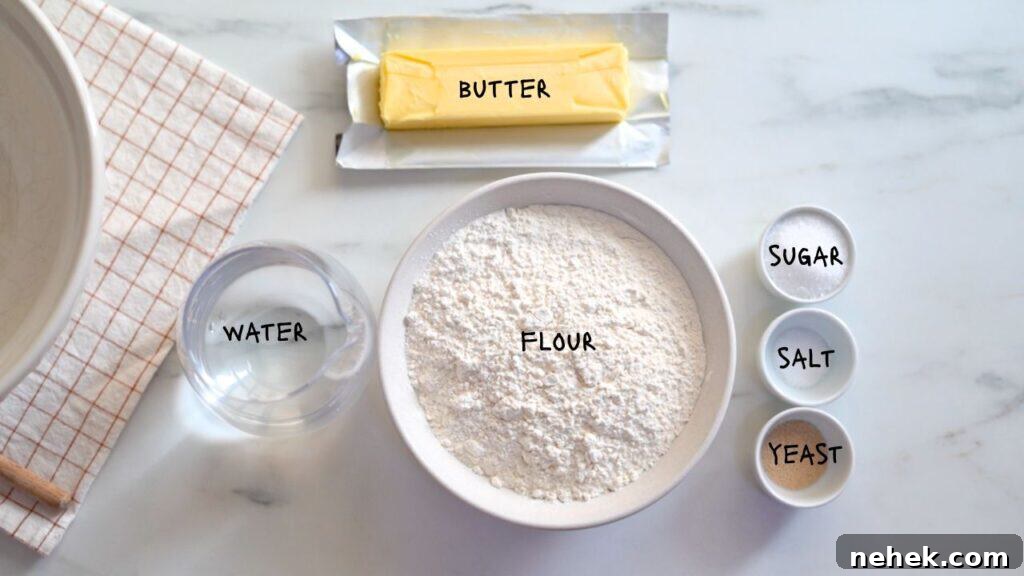
These simple ingredients produce croissants that are crispy on the outside and light and layered on the inside.
Overview: Giant Roll Method (5 steps)
The process is straightforward and can be completed in five main stages:
- Prepare the dough
- Build the giant roll
- Divide and shape
- Proof the croissants
- Bake to golden perfection
Step 1: Prepare the Croissant Dough
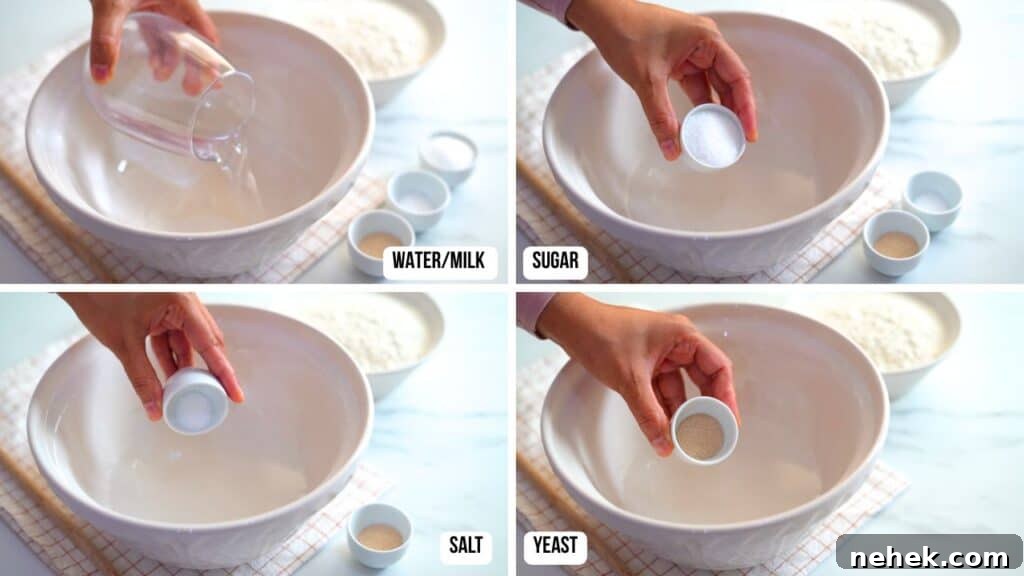
Combine the room-temperature water (or milk) with sugar, salt, and yeast, stirring until dissolved. Add the flour gradually and mix to form a dough. Knead for about 5 minutes until the dough is smooth and elastic. Let it rest for 10 minutes to relax the gluten, which will make rolling easier.
Step 2: Make the Giant Roll
Roll the rested dough into an even thin rectangle roughly 3 mm thick (for reference, a 46 x 36 cm rectangle worked well). Spread the butter evenly over the entire surface.
Starting from one side, roll the dough tightly like a jelly roll. Stretch the roll gently to make it longer—aim for about 25 inches—then coil it into a spiral to form the giant roll. Pinch the end to seal so it holds its shape.
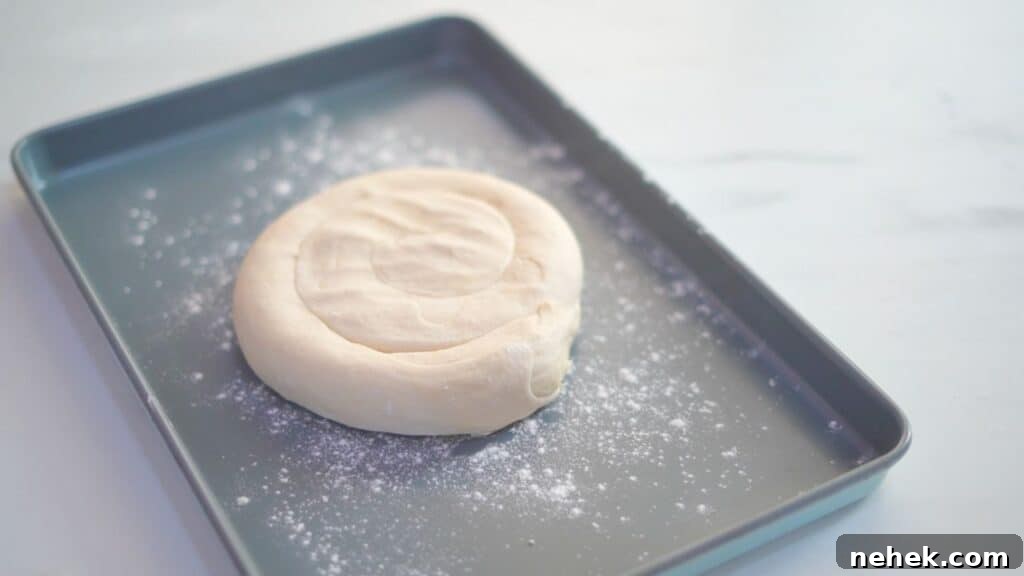
Chill the coiled roll in the freezer for 15–20 minutes to firm up the butter and make handling easier.
Step 3: Divide and Shape the Croissants
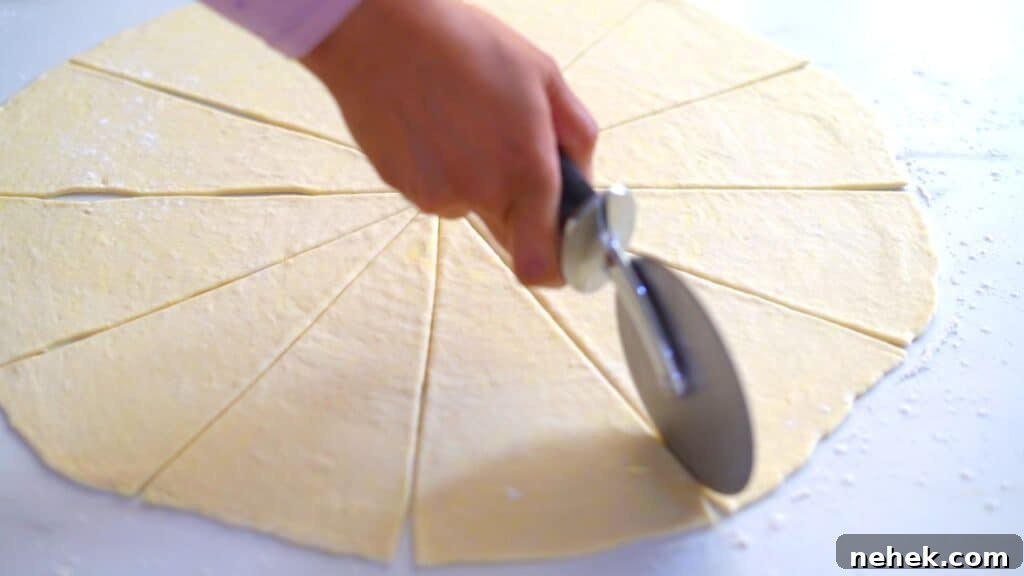
Remove the chilled roll and roll it out into a thin circle about 50 cm in diameter and 3 mm thick. Cut the circle into 12 equal triangles.
Starting at the wide end of each triangle, roll toward the tip to form the classic croissant shape. Place shaped croissants on a baking tray with space between each.
Step 4: Proof the Croissants
Cover the tray loosely with a cloth or plastic wrap and let the croissants proof in a warm place for about 2 hours. Because the dough was chilled, proofing takes longer than with regular bread dough. The croissants should become soft and noticeably puffy; this is key to achieving a light, airy interior.
Step 5: Bake the Croissants
Preheat the oven to 200°C (400°F). While the oven heats, you can place the tray in the freezer briefly to keep the butter firm so it doesn’t melt too fast in the oven—this helps create flakier layers.
Brush each croissant with egg wash for a glossy, golden crust.

Bake at 200°C (400°F) for 10 minutes, then reduce the temperature to 190°C (375°F) and bake another 15–18 minutes until deep golden and crisp. If you like extra crispiness, add 1–2 minutes.
Video
Serving Suggestions
Fresh croissants are best enjoyed warm. Serve plain or with butter and jam, honey, chocolate spread, or cheese. For savory options, fill them with eggs, ham, or vegetables. They pair beautifully with coffee or tea and make a satisfying breakfast or snack.

Storage and Reheating
Cool croissants completely before storing. At room temperature in an airtight container they stay fresh for about 2 days. For longer storage, wrap individually and freeze for up to 1 month.
To reheat, warm in a 180°C (350°F) oven for 5–7 minutes to restore crispiness. Avoid microwaving, which can make them soft and chewy.

Notes and Tips
- Chill the dough: After forming the giant roll, chill briefly so the butter firms up for easier handling.
- Chill before baking: Freeze shaped croissants a few minutes to keep the butter from melting too quickly in the oven.
- Proof well: Allow a full, visible rise for a light interior.
- Bake in two stages: Start hotter to set layers, then lower the temperature to finish baking evenly and develop color.
Shortcut Croissants Recipe Card

Shortcut Croissants Recipe for beginners
Bincy Chris
Pin Recipe
Ingredients
- 190 ml Water (or 3/4 cup + 2 tsp; milk optional)
- 25 g Sugar (about 2 tbsp)
- 3 g Salt (1/2 tsp)
- 3 g Yeast (1 tsp)
- 300 g Flour (approx. 2 1/4 cups)
- 100 g Butter
Instructions
Prepare the dough
- Mix water, sugar, salt and yeast. Add flour and knead about 5 minutes until smooth. Rest 10 minutes.
Make the giant roll
- Roll dough into a thin rectangle (~3 mm). Spread butter evenly.
- Roll tightly like a jelly roll, stretch to about 25 inches, coil into a spiral and seal. Chill 15–20 minutes.
Divide and shape
- Roll into a thin circle (~50 cm, 3 mm). Cut into 12 triangles and roll from the wide end to form croissants.
Proof
- Place on a tray, cover, and let rise in a warm spot for about 2 hours until puffy.
Bake
- Preheat oven to 200°C (400°F). Place the tray in the freezer briefly to keep butter firm. Brush with egg wash.
- Bake at 200°C (400°F) for 10 minutes, then reduce to 190°C (375°F) and bake 15–18 minutes more until deep golden.
Notes
Chill after forming the giant roll so it’s easier to handle.
2. Chill before baking
Freeze shaped croissants briefly so the butter stays firm and helps create flaky layers.
3. Proof well
Allow a full rise for a light, airy interior.
4. Bake properly
Start at a higher temperature to set layers, then lower the heat to finish baking evenly.