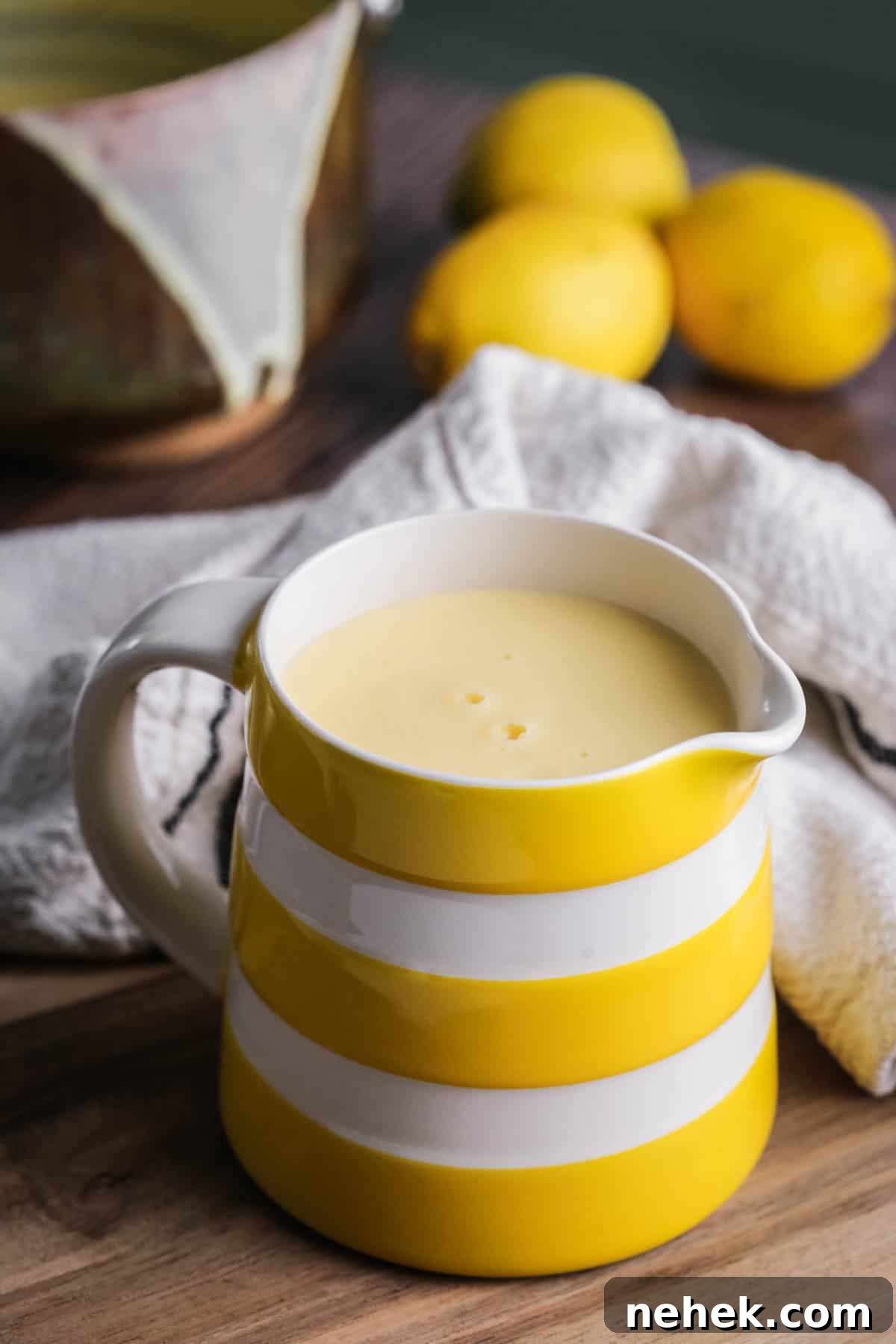
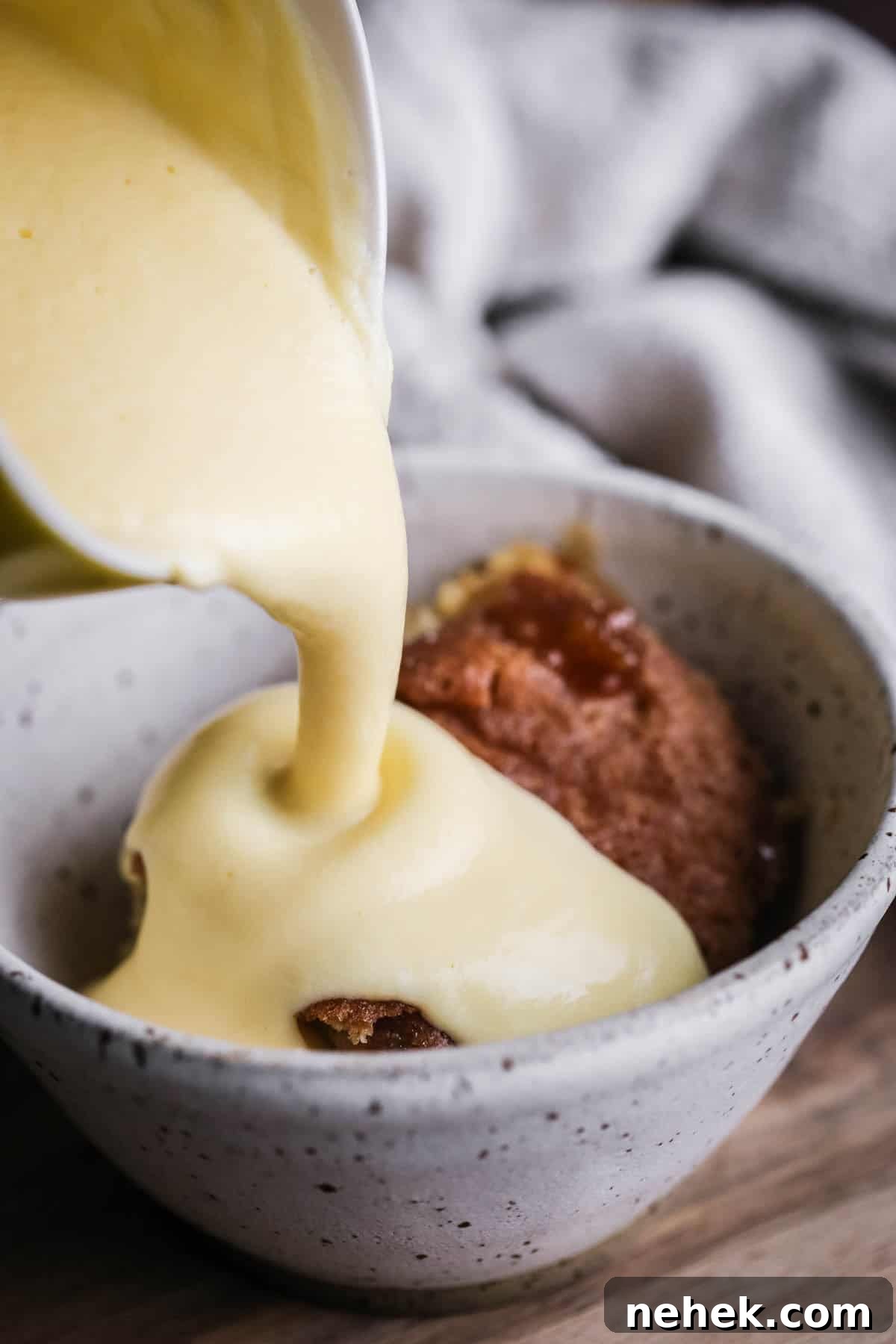
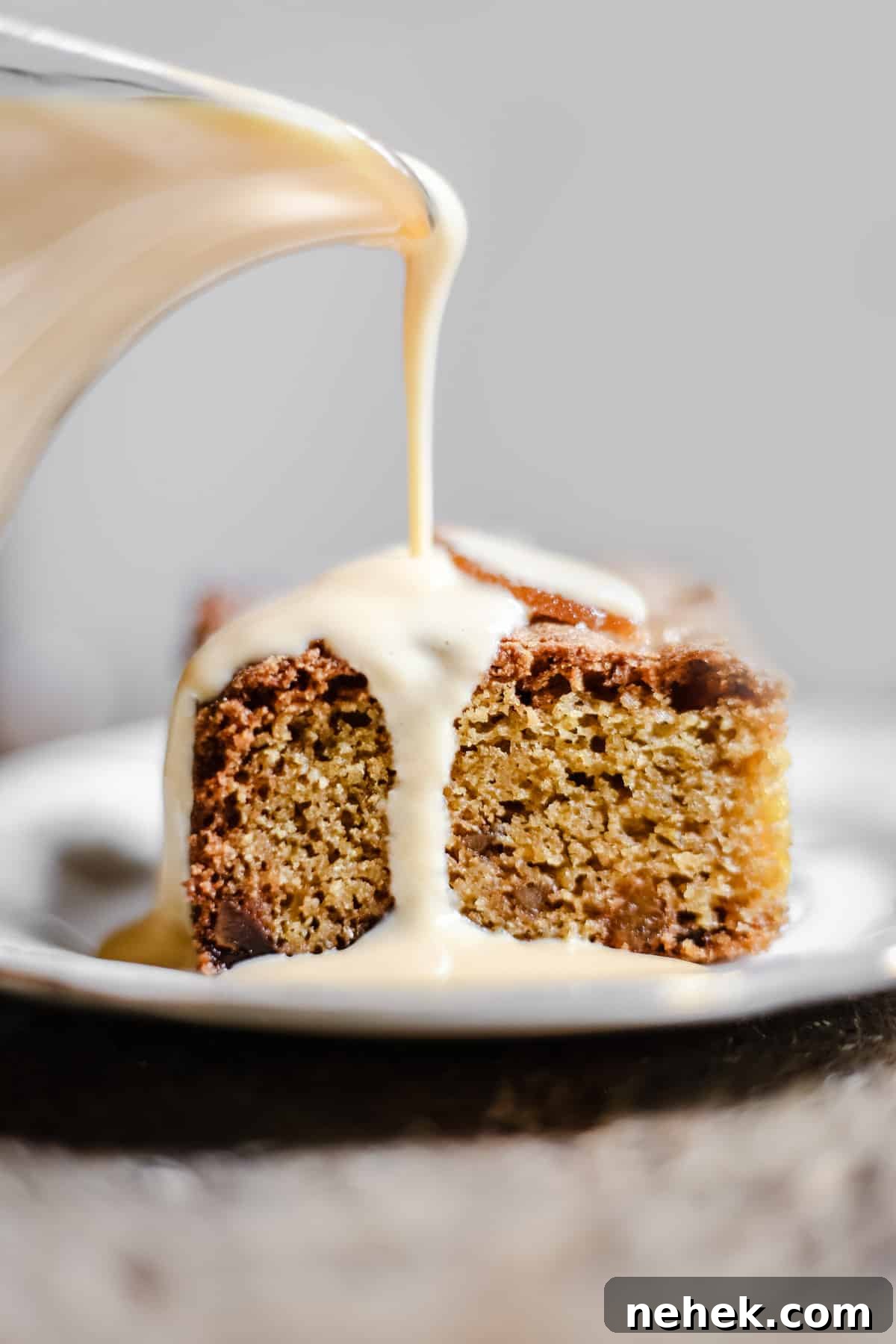
This lemon custard, perfect for pouring over your favourite puddings and desserts, is fragrant, zesty and comforting. It complements a wide range of sweet dishes — from cakes and crumbles to pies, or simply drizzled over sliced bananas.
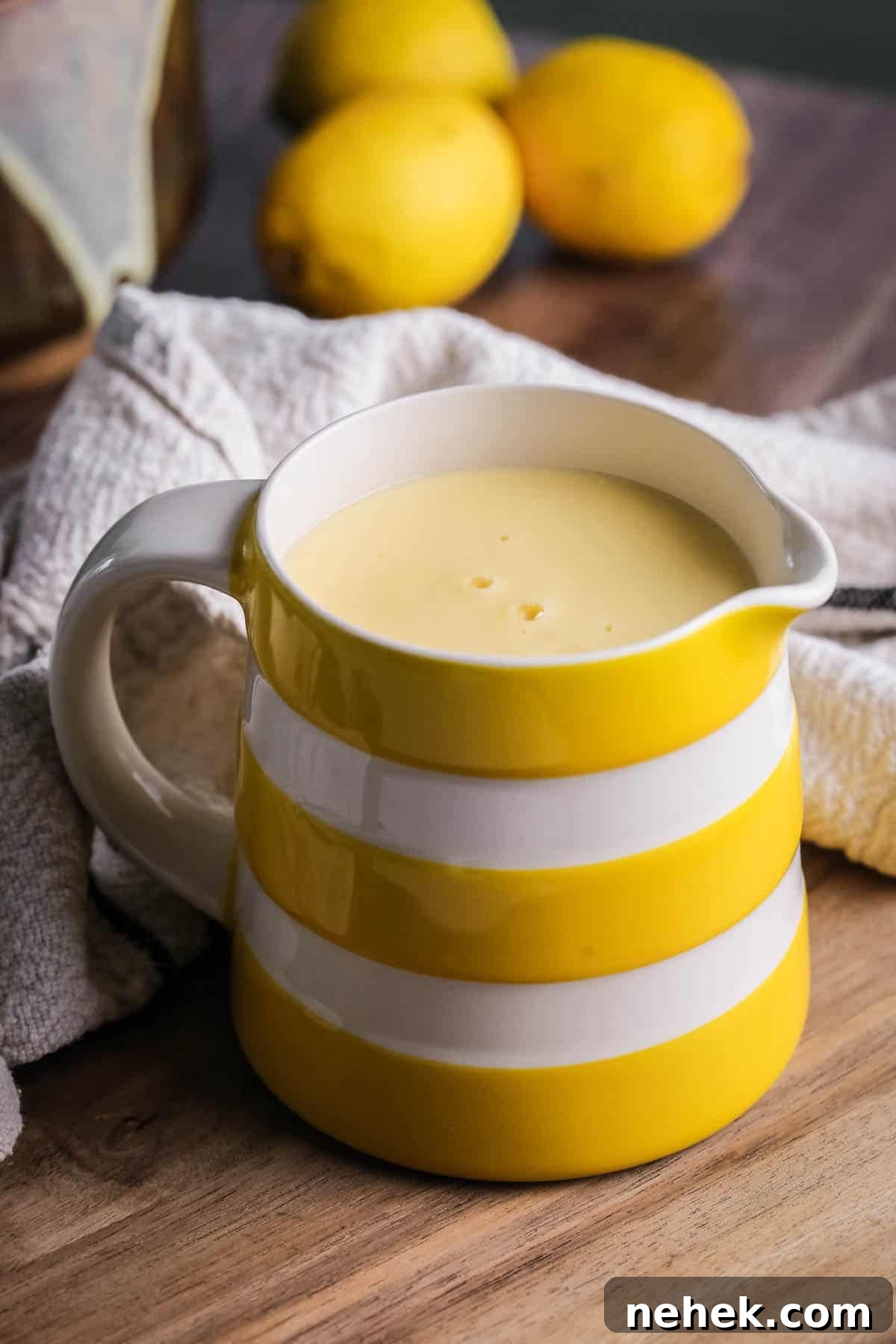
Lemon custard sauce is lighter and more delicate than lemon curd or lemon posset, which are thicker and set when chilled. This pouring custard — similar to a crème anglaise but a touch thicker and homely — is best served warm and ladled generously over apple pies, sponge puddings or a bowl of fresh fruit. It’s comfort food at its most satisfying.
The ingredients are pantry staples and require no cream, so you likely have everything you need already. Making fresh custard from scratch is quick and easy and delivers a cleaner, fresher flavour and a silky texture, all infused with bright lemon notes.
The technique is almost identical to making vanilla custard, with one planning step: the milk should be infused with lemon peel for at least two hours (or overnight). Infusing with peel rather than adding juice reduces the risk of the custard splitting and gives a floral, gently citrus flavour rather than a sharp one.
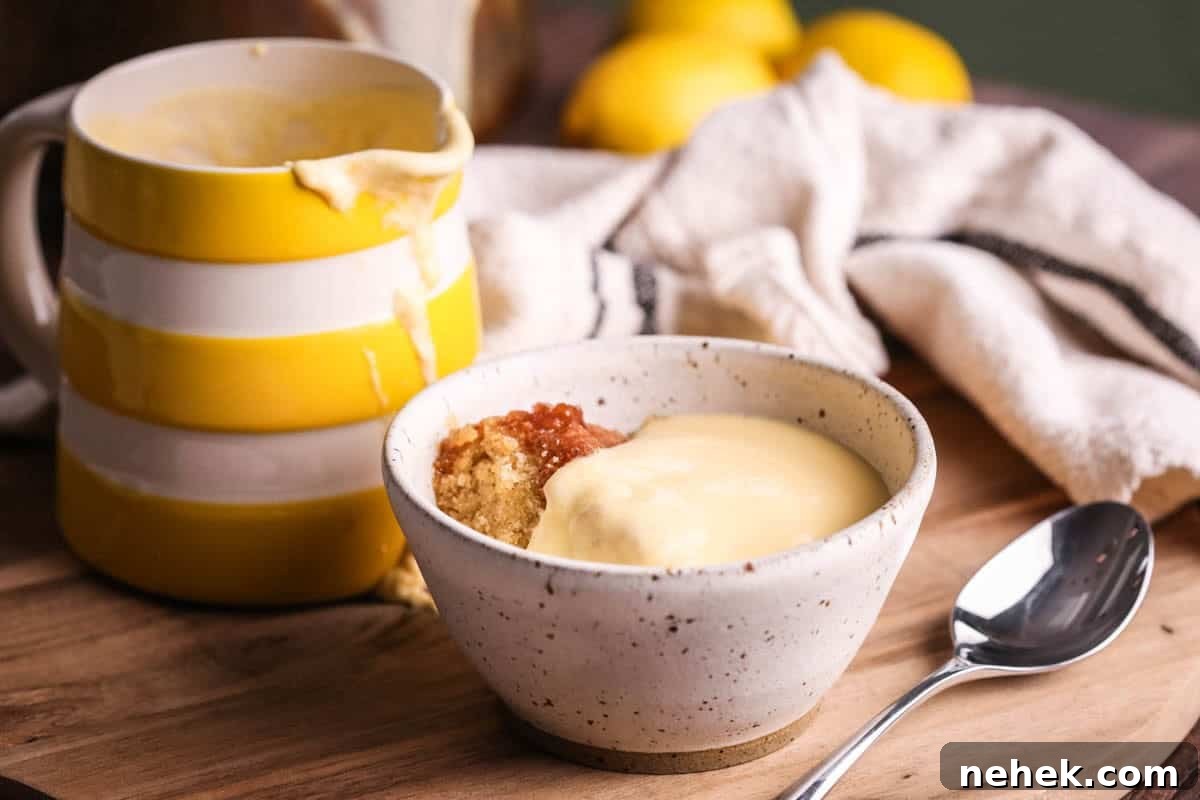
Why You’ll Love This Lemon Custard
- No cream required — you probably already have all the ingredients.
- The absence of cream keeps the flavour light and clean, a great match for citrus.
- Simple to scale: easily halved for fewer people.
- Quick to make. The lemon-infusing step is hands-off and straightforward.
- You can infuse the milk the night before for convenience and deeper flavour.
- This silky custard instantly upgrades a shop-bought sponge, sliced fruit or a humble bowl of bananas into a more special dessert.
Watch The Video
If you find visuals helpful, watch the video to see each step when making the lemon custard.
Ingredients needed
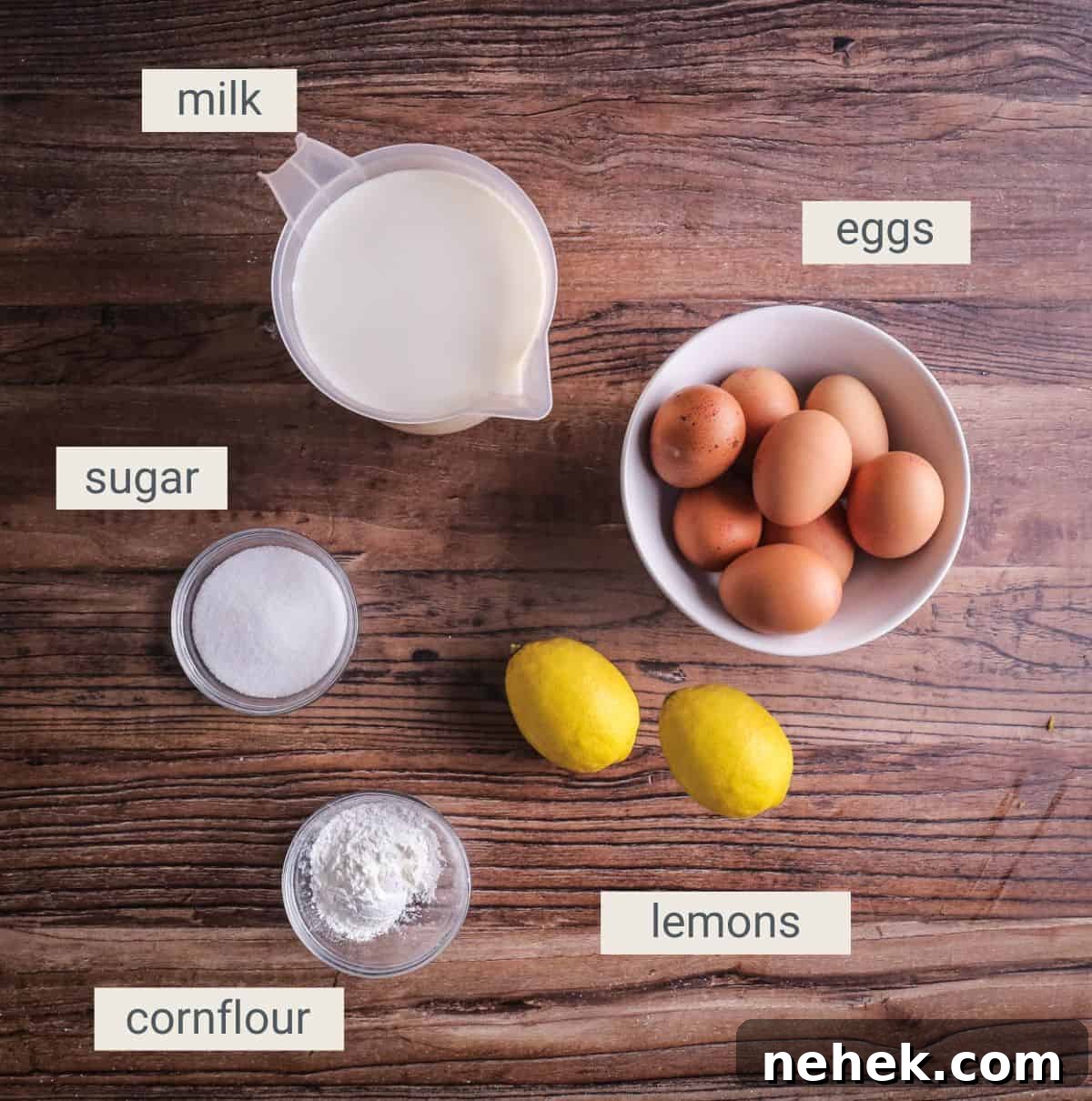
Egg yolks. Use medium eggs; choose the best free-range you can find for richer colour and flavour.
Lemons. Use unwaxed, preferably organic, lemons for the peel infusion.
Caster sugar. Fine baking sugar is ideal, though granulated will work.
Whole milk. Full fat milk gives a creamier result. For a dairy-free version use oat or almond milk.
Cornflour (cornstarch). This stabilises and thickens the custard.
How To Make Lemon Custard
For full recipe measurements and timings, see the recipe card below.
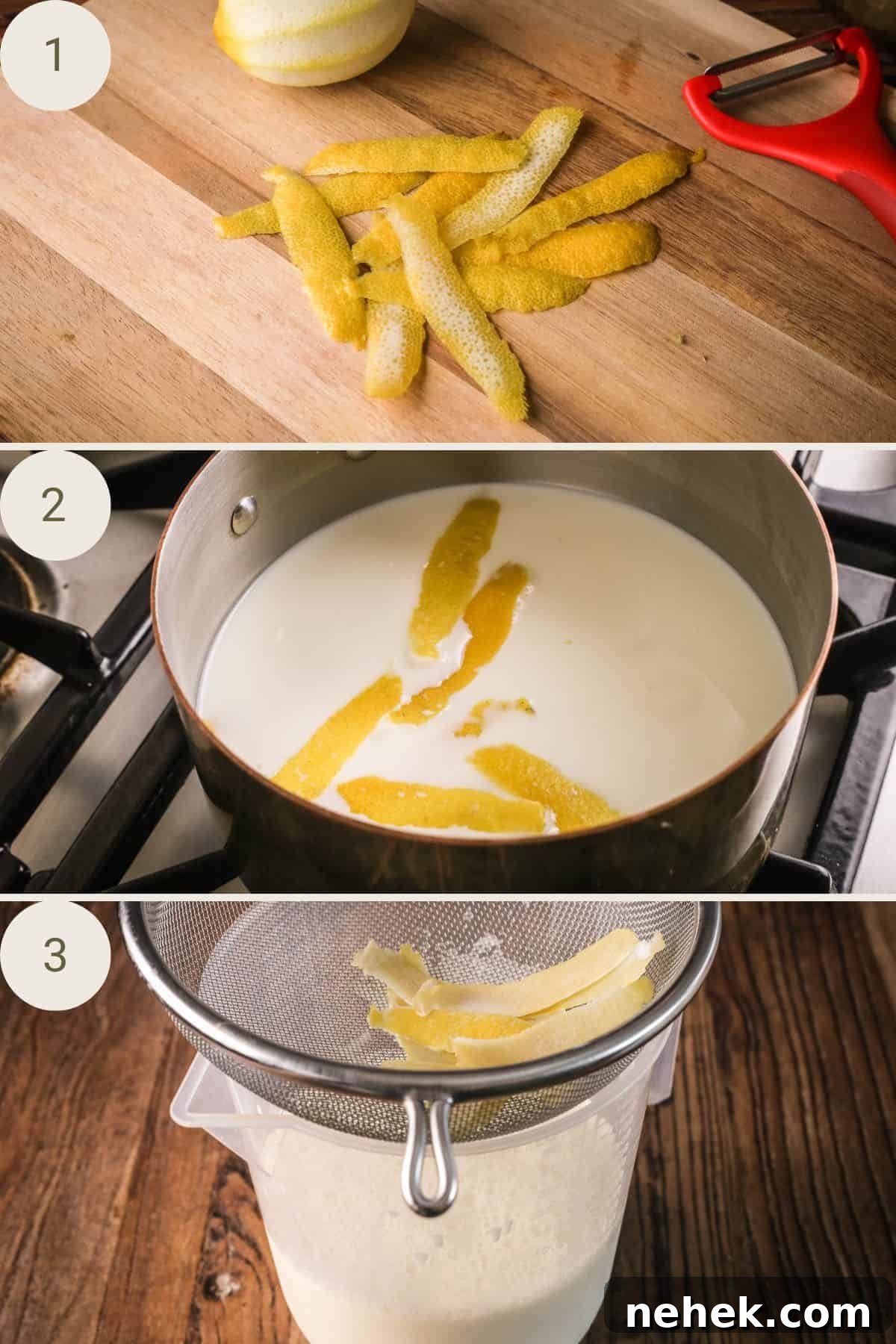
Warm the milk with the lemon peel until it is just below boiling, then remove from the heat and allow it to steep for at least two hours, or overnight in the fridge for a more pronounced flavour.
Whisk the egg yolks with the sugar until pale and thick, then blend in the cornflour.
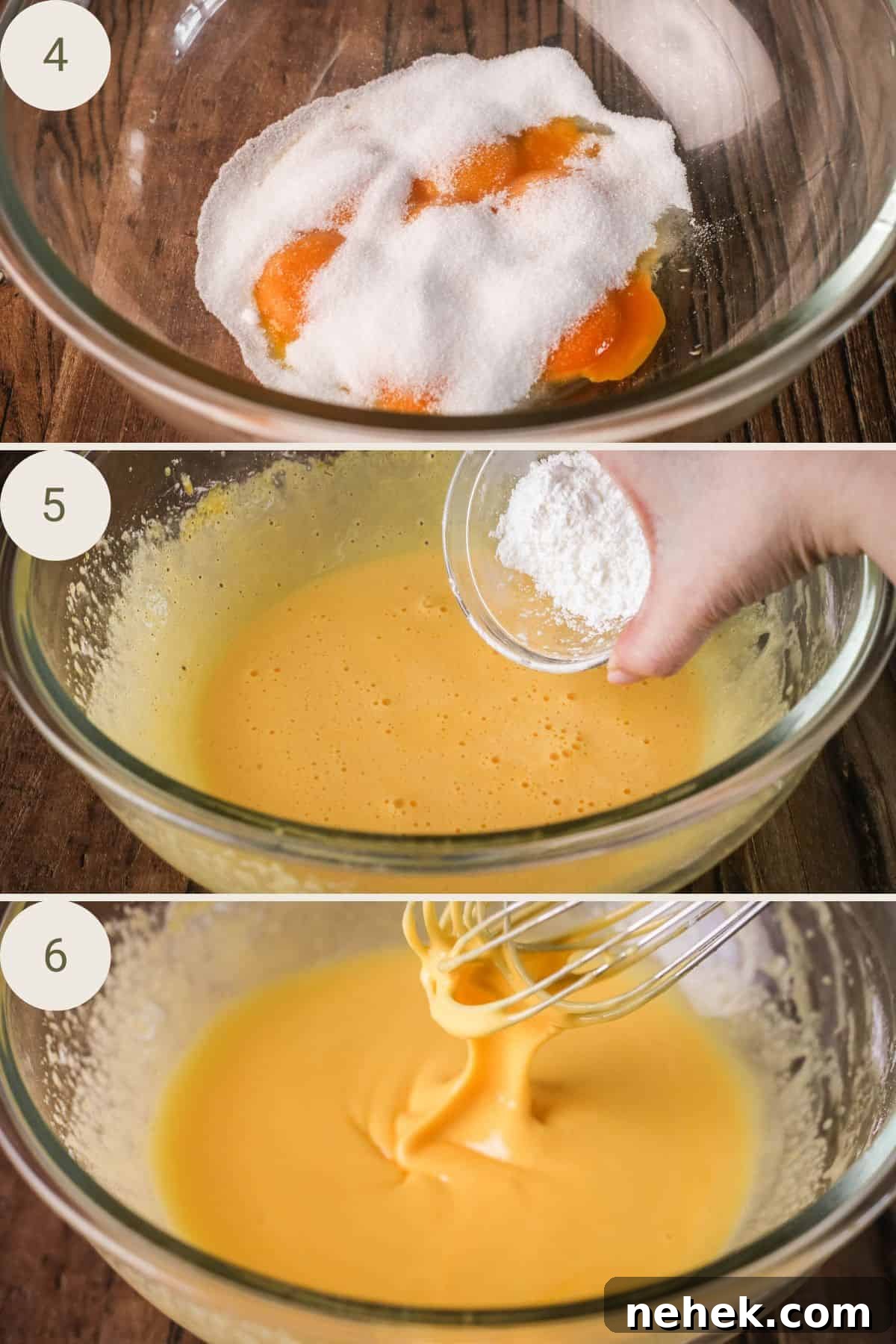
Strain the infused milk, then pour it into the egg mixture in a thin steady stream while whisking continuously to temper the eggs.
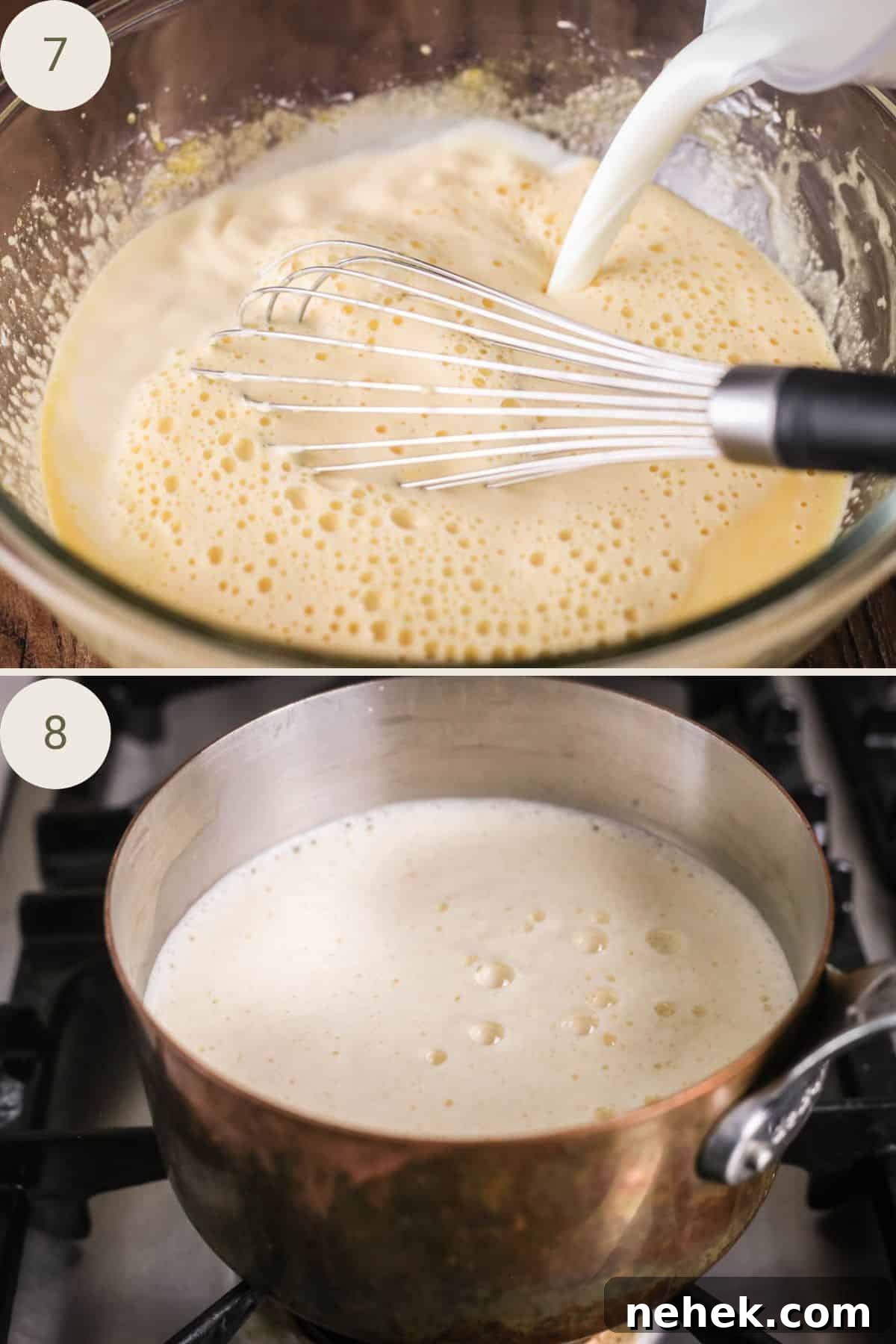
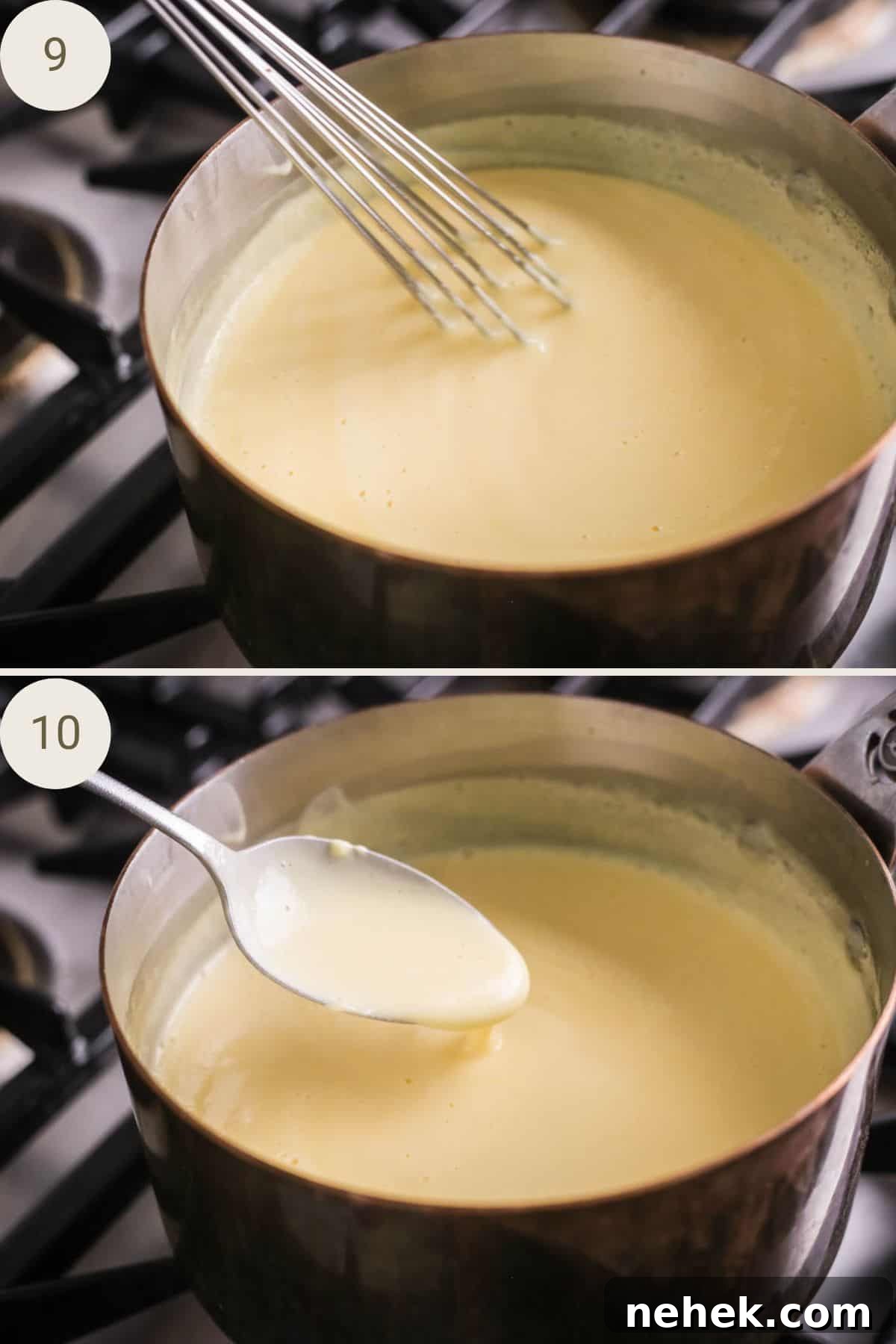
Transfer the combined mixture to a saucepan and heat gently, whisking constantly, until the custard thickens and becomes pourable.
Tips and Troubleshooting
Heat the milk gently when infusing; do not boil. Remove it when it begins to shimmer and small bubbles form beneath the surface (around 60–65°C / 140–149°F).
Infusing the milk overnight in the fridge intensifies the lemon flavour, but avoid leaving it more than 12 hours or it may develop bitterness. Always strain out the peel before using the milk.
Pour the milk from a measuring jug so you can add it slowly to the eggs without splashing. Placing the bowl of yolks on a damp towel helps keep it steady while you whisk and pour.
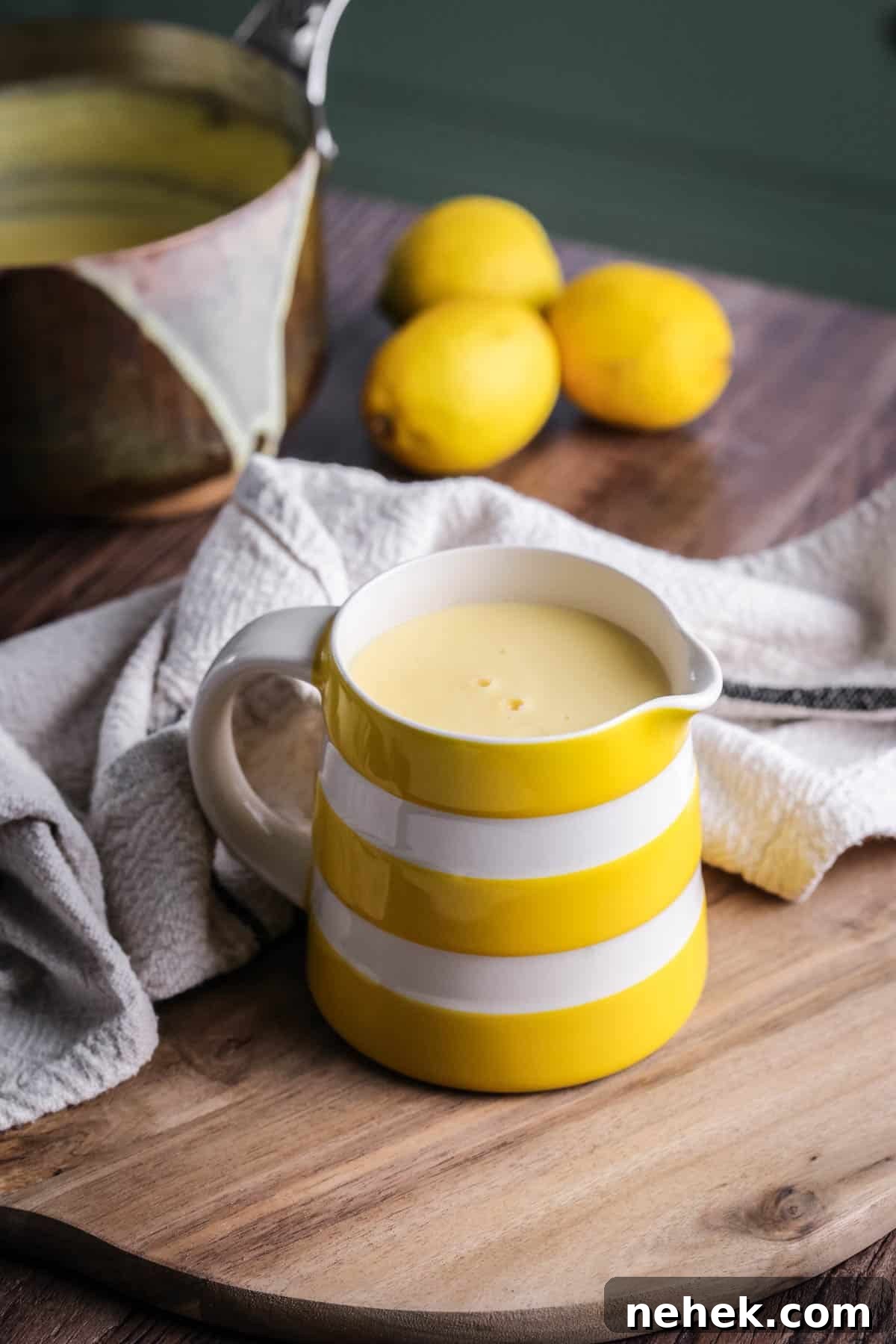
When cooking the custard in the saucepan, keep the heat low and whisk continuously to prevent lumps. Heating too quickly can destabilise the cornflour and cause separation; thickening usually takes about 10 minutes on low heat.
Once thick, the custard should reach roughly 80°C (176°F). Remove it from the heat and continue whisking for a minute. Cover the surface with cling film or baking parchment and let it cool for 10–15 minutes before serving to avoid scalding.
More Homemade Custard Recipes You’ll Love
- Homemade Gluten-Free Vanilla Custard
- Homemade Strawberry Custard
- Creamy Chocolate Custard
Making Ahead
You can prepare the lemon-infused milk up to 12 hours before making the custard. The finished custard will keep for up to three days in an airtight container in the fridge.
Reheat gently in a saucepan over low heat, whisking to restore a smooth texture. Avoid rapid heating.
Freezing
Freezing custards thickened with cornflour can be unreliable; they sometimes separate and become grainy when thawed. If you do freeze and reheat, blending with an immersion blender may restore some smoothness, but the texture is rarely identical to freshly made custard.
Desserts To Serve With
- Lemon and Ginger Cake
- Gluten-Free Spotted Dick
- Gluten-Free Raspberry Pudding
- School Cake
- Apple and Blackberry Crumble
- Bread and Butter Pudding
Lemon Custard Sauce
Pin Recipe
15
2
2 15
Ingredients
- 900 g whole milk
- 2 lemons
- 8 egg yolks
- 80 g sugar
- 2 tablespoons cornflour (cornstarch)
Instructions
- 1. Slice the peel away from the lemons with a very sharp knife, removing all the white pith.
- 2. Place the lemon peel and milk in a saucepan and heat until just below boiling.
- 3. Remove from the heat and allow the milk to infuse with the peel for at least 2 hours, or overnight in the fridge.
- 4. Whisk the egg yolks with the sugar until pale and thick, then whisk in the cornflour.
- 5. Strain the chilled lemon-infused milk into a measuring jug, then pour it in a thin steady stream into the egg mixture while whisking constantly.
- 6. Pour the combined mixture into a saucepan and heat gently, stirring continuously, until the custard thickens.
- 7. Remove from the heat. Press a sheet of baking parchment or cling film onto the surface of the custard and let it rest for 10–15 minutes until it cools slightly. Remove the cover, whisk briefly to smooth, and serve from a jug or the pan.
Video
Notes
- A suitable substitute for cornflour is tapioca starch.
- The yolks should be about 20 g each; for this full recipe you need roughly 160 g of yolks in total.
- The recipe can easily be halved for fewer servings.
- Infuse the milk overnight for stronger lemon flavour, but avoid more than 12 hours to prevent bitterness.
- Heat the custard slowly; rapid heating can destabilise the thickener. Expect about 10 minutes to thicken on low heat.
US customary measurements: Conversions are estimates. This recipe was tested using metric measurements; for best accuracy use a digital scale.
Nutrition information: The nutritional values below are estimates calculated online and will vary with the exact ingredients used.
Nutrition per serving of custard.
Nutrition
Carbohydrates: 20g
Protein: 7g
Fat: 8g
Saturated Fat: 4g
Cholesterol: 208mg
Sodium: 52mg
Potassium: 226mg
Fiber: 1g
Sugar: 16g
Vitamin A: 448IU
Vitamin C: 14mg
Calcium: 169mg
Iron: 1mg
Have you tried this recipe?
Please leave a review and star rating — it helps support the author and keeps recipes free to share.