On average each of us uses 13 personal care products daily containing roughly 169 unique ingredients. Most of these ingredients go unnoticed and unexamined, yet they form an invisible layer we apply to our bodies every day. Even when consumers want to know more, current manufacturing and labeling rules often keep that information out of reach.
Please join the call for stronger safety standards and clearer transparency for the products we use regularly—especially to protect vulnerable people (children, the elderly, pregnant people, those with health conditions, and chemically sensitive individuals) and groups disproportionately targeted or exposed, such as people of color and professional salon workers.
Why we must act on cosmetics regulation
There is a common belief that someone, somewhere has already confirmed these products are safe before they reach store shelves. That assumption is often false, and much of my work is about correcting that misperception.
Instead of expecting every consumer to become an expert in ingredient lists, we should establish clear, effective rules that reduce harmful chemicals in products and simplify safer choices. Policy changes can prevent harm at scale rather than relying solely on individual vigilance.
Your voice matters. Advocates are asking the public to support stronger federal oversight of the cosmetics industry to close gaps in safety and labeling.
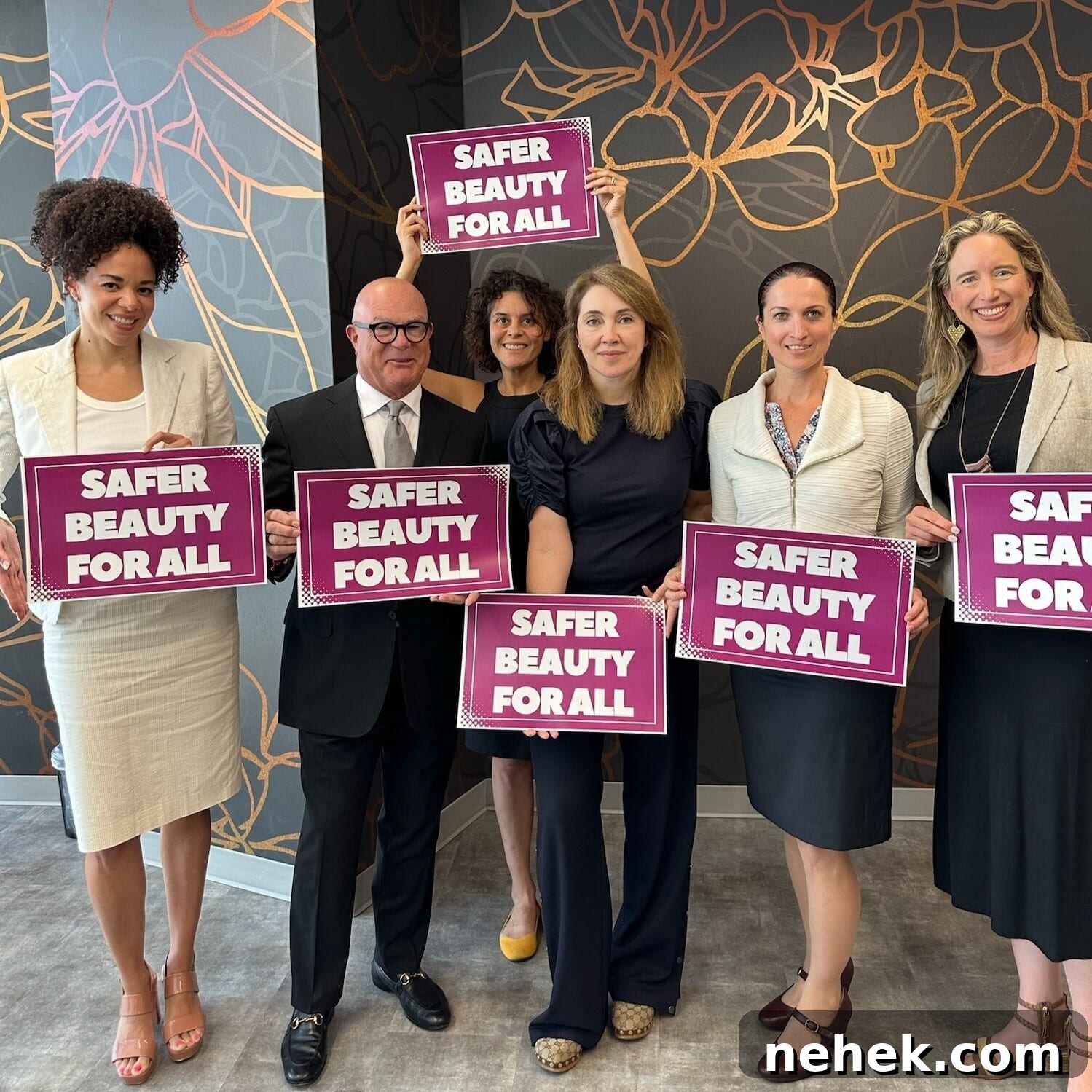
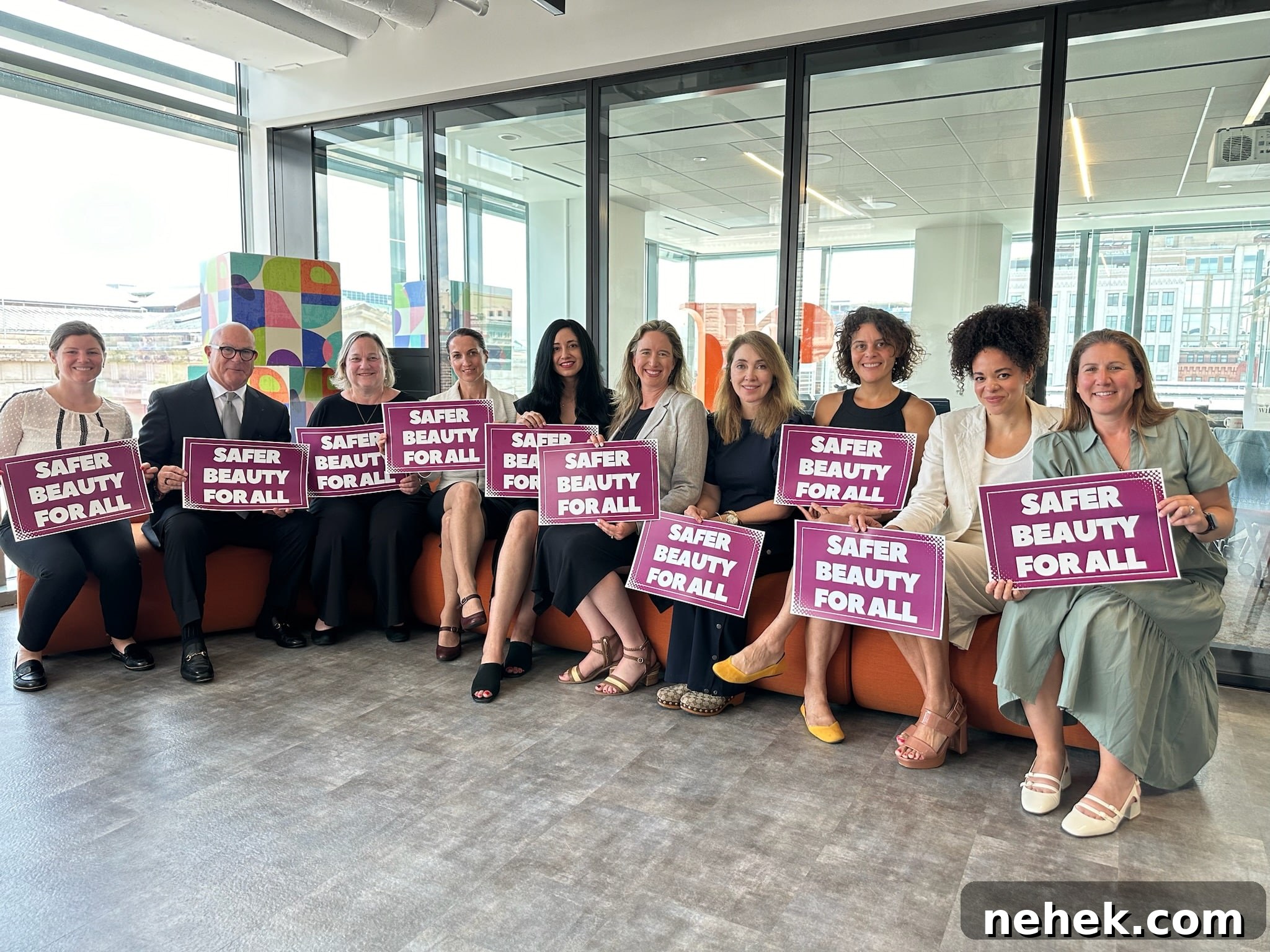
Recently I spent time advocating in Washington, D.C. for a set of five bills known as the Safer Beauty Package. These bills are in the House of Representatives now and need momentum from concerned citizens to advance—and later to gain Senate support.
A brief history of U.S. cosmetics regulation
U.S. regulation of cosmetics gives the impression that products are well overseen, but in practice the rules are limited. Oversight began with the Federal Food, Drug, and Cosmetic Act of 1938, which included only a few lines about cosmetics. For decades, little meaningful change followed. Between 1938 and the recent Modernization of Cosmetics Regulation Act of 2022 (MoCRA), only 11 ingredients or compounds were restricted, a number that contrasts sharply with the European Union’s list of over 1,700 banned substances.
MoCRA made important improvements—requiring facility and product registration, reporting of serious adverse events, authority for FDA recalls, talc testing for asbestos, and disclosure of certain fragrance allergens—but it left major gaps. It did not restrict additional harmful ingredients or require full disclosure of all fragrance and flavor ingredients to consumers.
That is why further action remains necessary.
Groups such as Breast Cancer Prevention Partners (BCPP) have intensified advocacy to fill these gaps. Long-time congressional champions, including Representative Jan Schakowsky of Illinois, have sponsored bills to address persistent safety and transparency shortcomings.
We all use cosmetics
“Cosmetic” is a broad legal term and does not only mean makeup. Under the law it covers articles intended to be applied to the body for cleansing, beautifying, promoting attractiveness, or altering appearance. That includes shampoo and conditioner, shaving products, lotions and balms, perfumes and colognes, hair styling products, many cleansers (excluding true soaps), some toothpastes, deodorants, and of course makeup. In short, cosmetics touch nearly everyone’s daily routine.
What the five Safer Beauty bills address
H.R. 3619: The Toxic-Free Beauty Act
This bill follows a simple strategy: ban the most hazardous ingredients first. Research has already identified certain substances that pose high risks to health, yet MoCRA did not ban any specific ingredients. The Toxic-Free Beauty Act would federally prohibit 11 high-hazard substances commonly found in personal care products.
Examples include:
- The phthalates DBP and DEHP, used in nail polish and fragrances, which are linked to endocrine disruption, reproductive harm, and cancer risks.
- Different forms of formaldehyde and formaldehyde-releasing preservatives found in hair-smoothing products, body washes, makeup, and baby shampoos that are associated with irritation, respiratory harm, and cancer concerns.
- Certain parabens like isobutylparaben and isopropylparaben, used in sunscreens and cosmetics, linked to hormonal activity and reproductive concerns.
- Hair-dye-related chemicals such as m- and o-phenylenediamine associated with sensitization and other toxicities.
- Mercury in some skin-lightening products and soaps, which harms the nervous system.
Some U.S. states and the EU have already banned many of these ingredients, and multinational companies routinely sell different formulations to comply with varying laws. A federal ban would ensure consistent protections nationwide.
H.R. 3620: Cosmetic Safety for Communities of Color and Professional Salon Workers Act
This bill focuses on populations that face disproportionate exposures and harms. Products marketed to people of color frequently contain higher levels of hazardous chemicals, and professional salon workers face repeated, high-volume exposures during their workdays.
Evidence shows higher risks associated with certain product use, including increased breast cancer risks linked to chemical hair straighteners and hair dyes among Black women. Salon workers often lack access to information and safer product options despite intense occupational exposure.
The bill would provide:
- Access to translated safety data sheets so workers understand hazards and safe handling.
- Funding for research to identify chemicals of concern in products marketed to vulnerable populations.
- Support for green chemistry development of safer alternatives.
- Resources to establish national centers focused on beauty justice and salon worker health and safety.
H.R. 3621: Cosmetic Fragrance and Flavor Ingredient Right to Know Act
MoCRA requires manufacturers to disclose ingredient lists to the FDA, but consumers still do not get full ingredient disclosure for fragrances and flavors. These categories are often treated as trade secrets and listed simply as “fragrance” or “flavor,” which can mask hundreds or thousands of individual chemical components.
Because people can be allergic or sensitive to many different substances, limiting disclosure to a short list of common allergens is inadequate. This bill would require full transparency of fragrance and flavor ingredients so consumers and workers can make informed choices and avoid specific allergens.
H.R. 3622: Cosmetic Supply Chain Transparency Act
Smaller manufacturers often buy compounded ingredients from upstream suppliers and lack the leverage to demand full disclosure. This bill would improve transparency across the supply chain, enabling companies of all sizes to access ingredient information needed to create safer products and to share that information with consumers.
H.R. 6519: No PFAS in Cosmetics Act
PFAS—per- and polyfluoroalkyl substances—are persistent “forever chemicals” that accumulate in people and the environment. Research links PFAS exposure to cancers, reproductive harm, liver and thyroid damage, and reduced vaccine effectiveness. These compounds are used to create smooth, long-lasting textures in many products, including cosmetics.
MoCRA only directed a study of PFAS; it did not restrict their use. Because PFAS are a broad, persistent category and can be added at many stages of production, this bipartisan bill seeks a full ban on intentionally added PFAS in personal care products. Several states have already moved to ban intentional PFAS in cosmetics.
How you can help
Participating in advocacy can be straightforward. Many organizations provide clear tools to contact your representatives with a single form: enter your address, identify your representative, and use a template message or write your own note asking them to support the Safer Beauty Package.
When you contact your representative, their office will record your message and stance. You may receive a response that acknowledges your outreach, and your participation helps build the momentum these bills need in Congress.
Please reach out to your elected officials today to express your support for stronger cosmetic safety and transparency.
A personal note
I write about this with my teenage daughter in mind. While I personally research ingredients and make cautious choices, many young people do not have that guidance. Developing bodies may be more vulnerable to hormone-disrupting chemicals, neurotoxicants, and bioaccumulative substances. We have warning signs now; waiting for widespread harm before acting is avoidable and avoidably risky.
These policy changes are about protecting children, workers, and communities who are most at risk. Using our democratic voice to request stronger protections is a practical step we can all take.
Further reading:
- 12 Personal Care Products to Avoid
- 10 Labeling Traps to Recognize in Body Care
- Protecting Your Human Sponge
- 5 Life Habits for Healthy Skin
If you take action, please share how it goes—I welcome your thoughts and experiences.