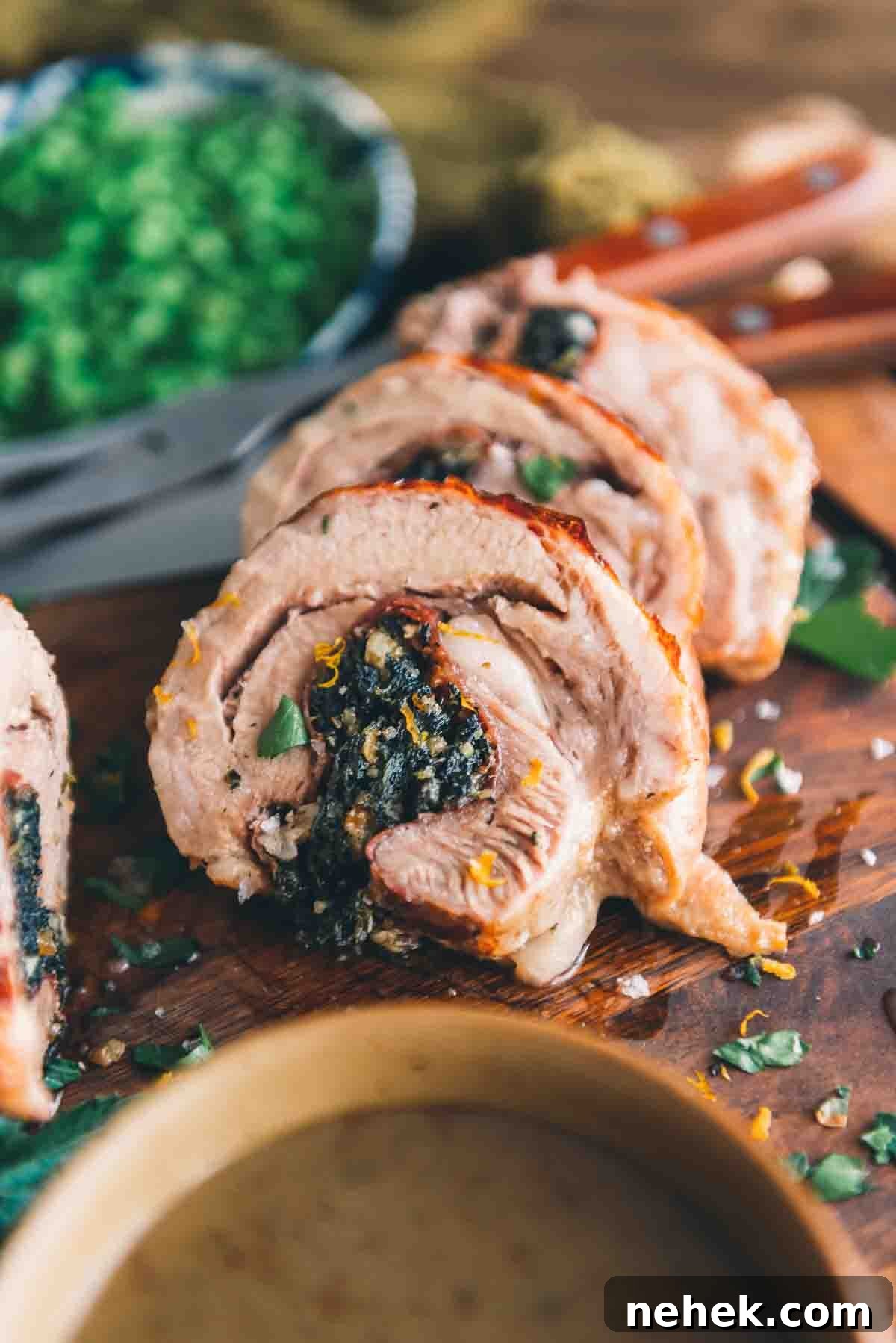
Impress your guests with this mouth-watering stuffed breast of veal recipe. Rich, savory, and elegant, this classic preparation is ideal for holidays, special occasions, or any dinner where you want to make an impression.
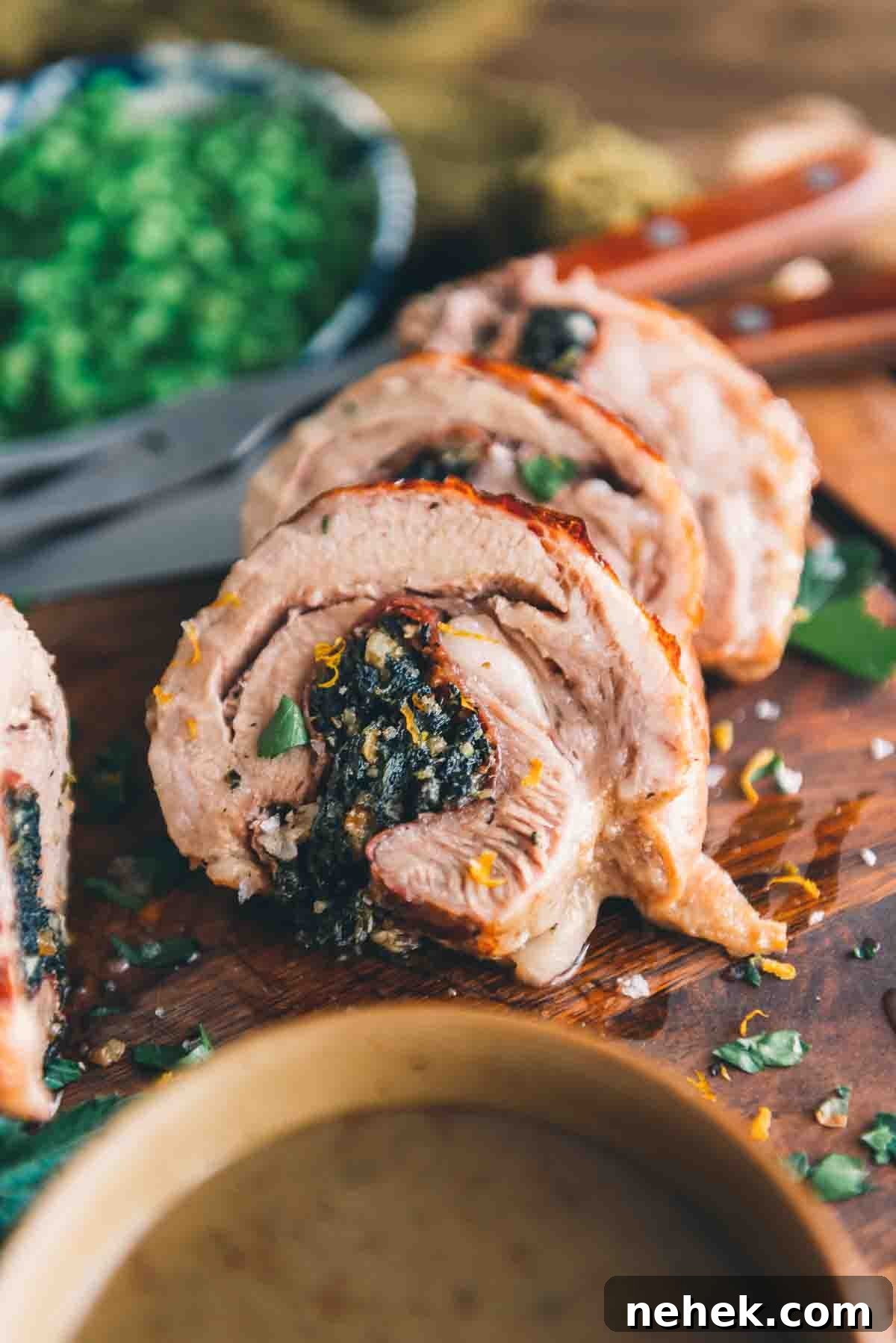
Table of Contents
- Save This Recipe ✉️
- The Cut: Breast of Veal
- Ingredients for stuffed veal breast
- How to cook Breast of Veal
- Make the Filling
- Prep the Veal
- Stuff and Roll the Breast of Veal
- Sear
- Braise
- Rest & Reduce
- Slice and Serve
- Girl Carnivore EXPERT TIPS
- What to Serve with
- Wine Pairing:
- Leftovers and Reheating
- More delicious veal recipes
- Stuffed Breast of Veal Recipe
- Recipe FAQs
- Sources
This post was sponsored by Veal – Discover Delicious, funded by the Beef Farmers and Ranchers, but all opinions are my own.
Veal evokes classic European kitchens and family Sunday dinners. The breast of veal is a hearty, flavorful cut that shines when slow-braised or roasted. Though underused, it delivers depth and tenderness when cooked low and slow, and a stuffed, rolled breast makes an impressive centerpiece that honors tradition while feeling modern and approachable.
The Cut: Breast of Veal
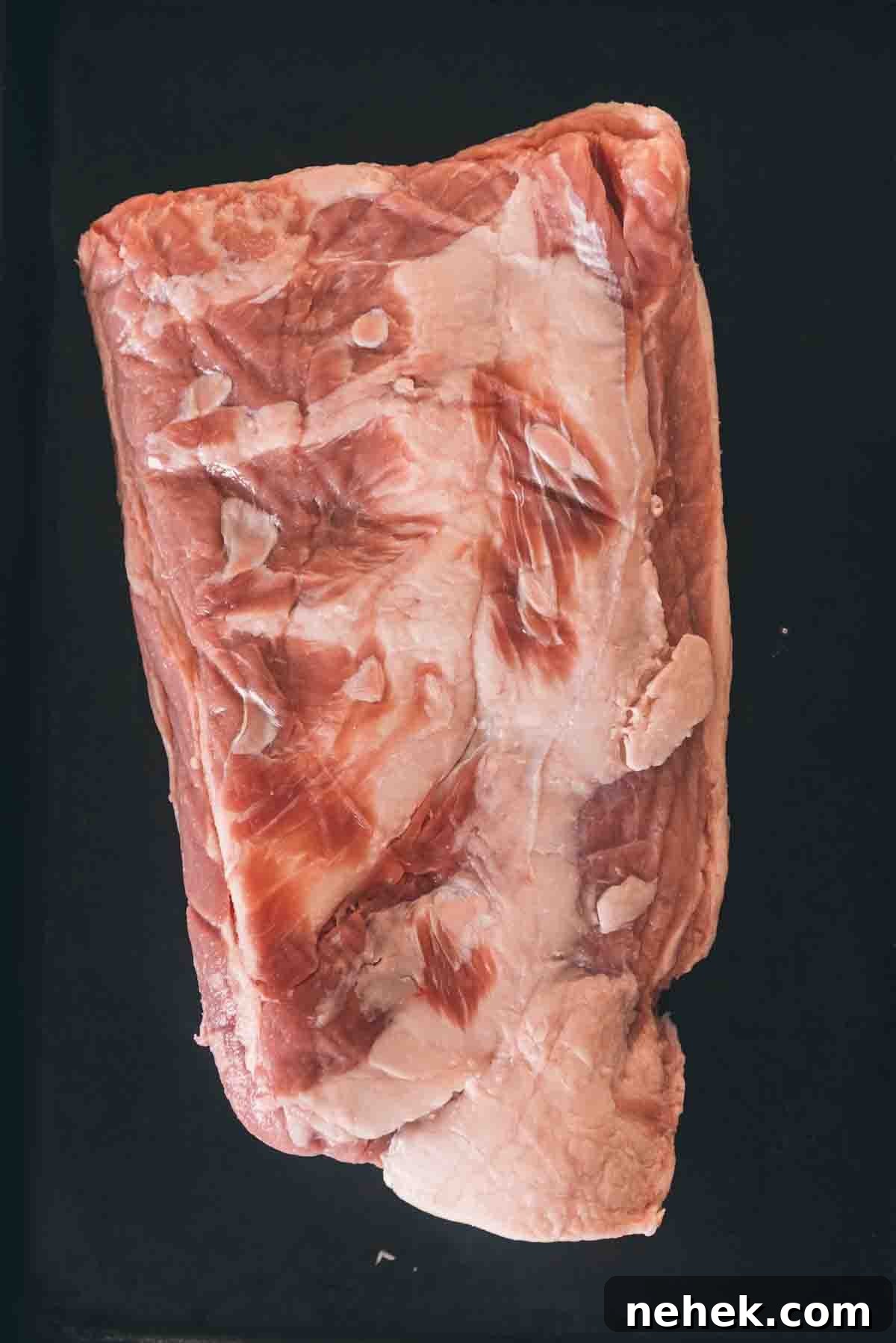
Breast of veal comes from the brisket and plate area of the animal. It’s a fattier, worked muscle with a richer flavor than many veal cuts. Because it contains more connective tissue, it benefits from slow braising or roasting so the meat becomes tender and succulent. This method produces a depth of flavor that simple quick-cook veal cuts don’t offer.
Whole veal breast can be hard to find in some regions; your local butcher can often supply it, debone it, or add a pocket for stuffing. For this recipe we keep things straightforward and roll the meat without a pre-made pocket so it’s accessible for cooks at every skill level.
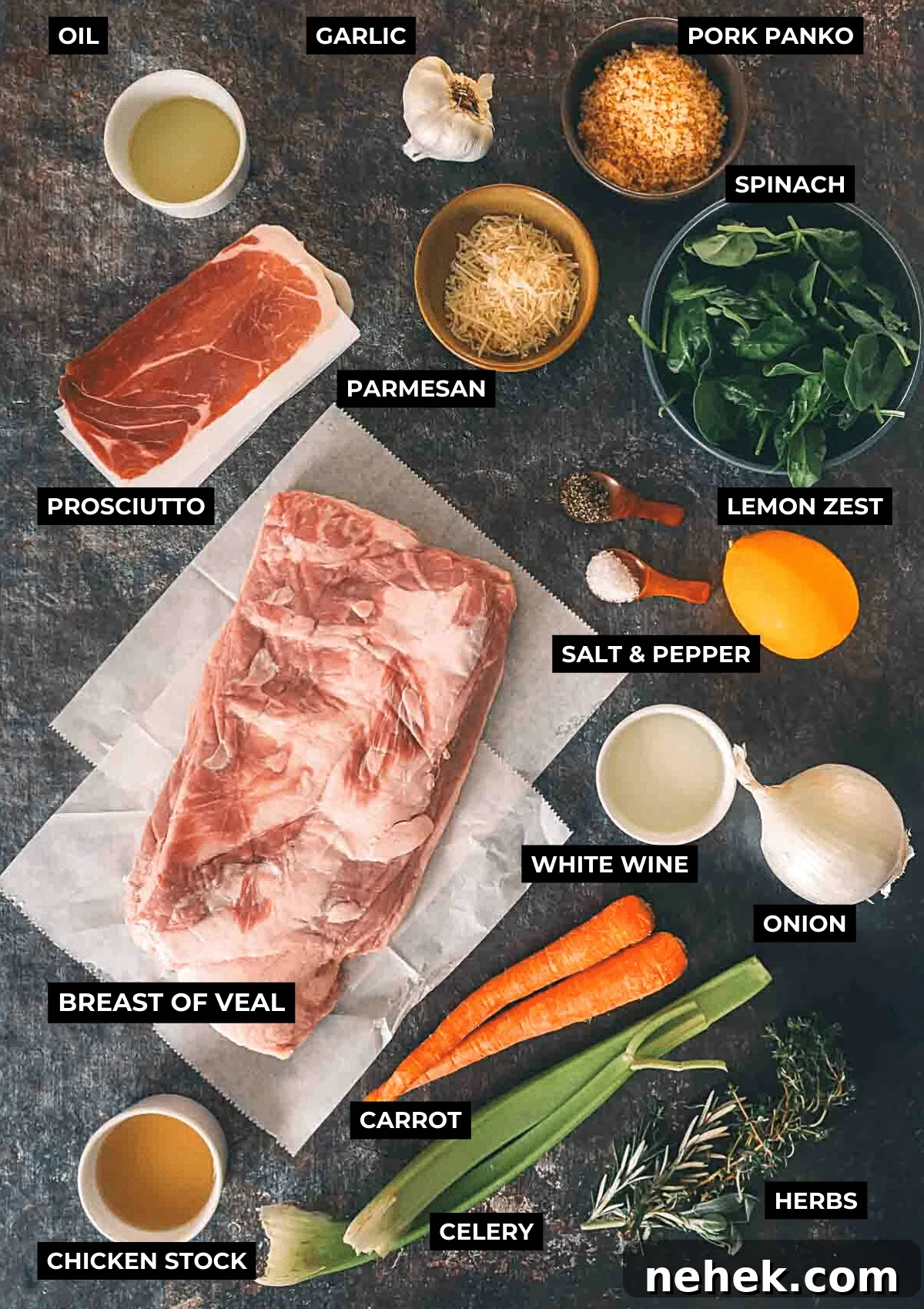
Ingredients for stuffed veal breast
For the filling:
- Spinach – fresh baby spinach, blanched and squeezed dry.
- Garlic cloves – minced or sautéed briefly.
- Panko – pork panko or traditional panko to bind.
- Parmesan – freshly grated for flavor.
- Salt and pepper – kosher salt and freshly ground black pepper recommended.
- Lemon zest – brightens the filling.
For the braised veal:
- Prosciutto – a thin layer to add salt and richness.
- Breast of veal – 3–5 lb piece, ask your butcher if needed.
- Neutral oil – canola or avocado for searing.
- Dry white wine – for deglazing and flavor.
- Onion, carrot, celery – roughly diced for the braise base.
- Fresh herbs – rosemary, thyme, tarragon, and sage tied as a bouquet garni.
- Chicken broth – or veal stock for deeper flavor.
- Garlic compound butter – to finish the roast.
- Gremolata – parsley, garlic, and lemon zest for brightness.
Note: to keep the dish kosher, omit the prosciutto and use regular breadcrumbs.
How to cook Breast of Veal
The recipe is multi-step but straightforward if you prepare your mise en place. Have your twine cut, filling ready, and pan preheated. The process: make the filling, prep and roll the veal, sear, braise, finish roasting uncovered for color, rest, strain and reduce the braising liquid, then slice and serve.
Make the Filling
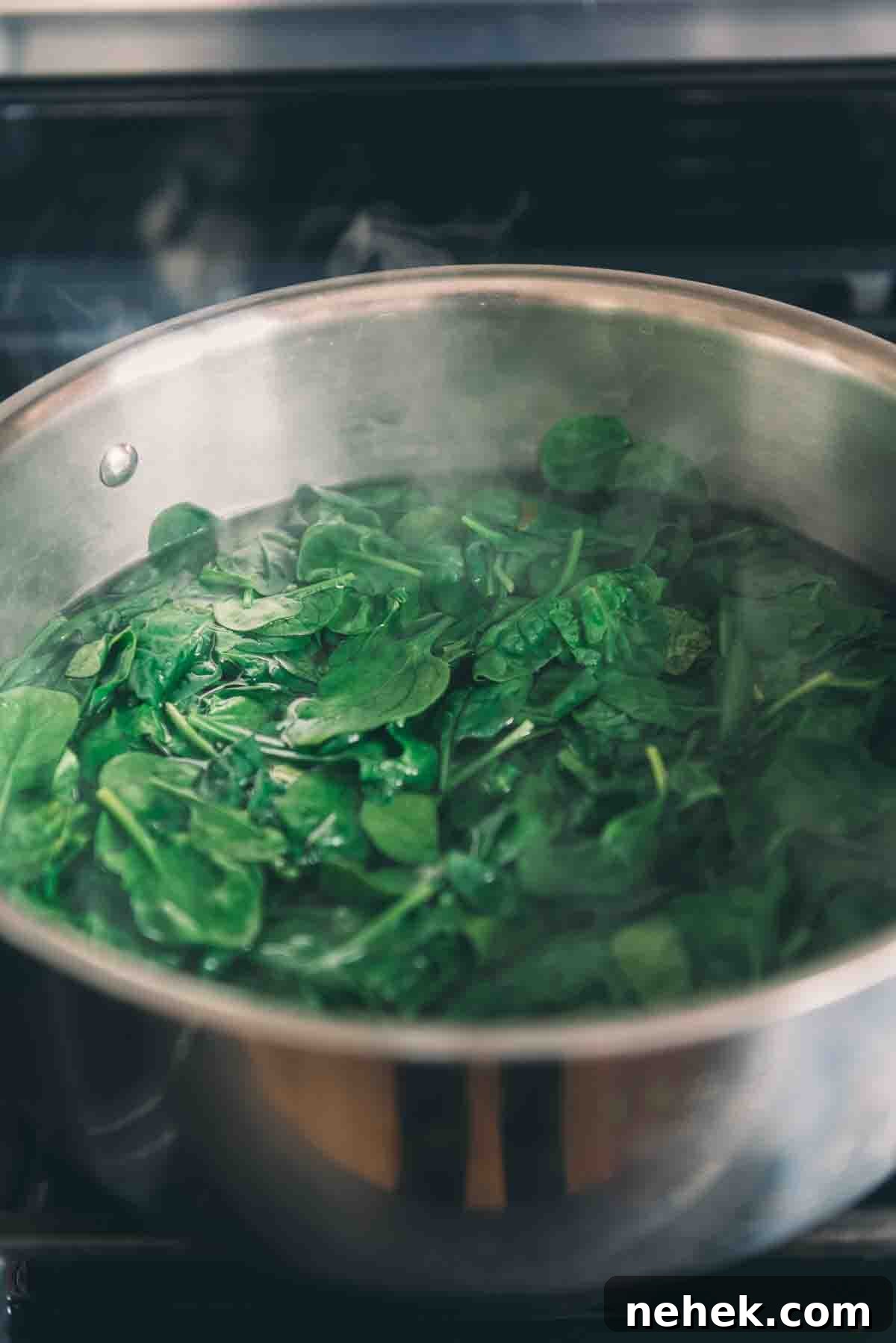
- Blanch spinach in boiling water for 1 minute, then drain and cool in a colander.
- Squeeze out as much liquid as possible using towels or hands.
- Combine the drained spinach with garlic, panko, Parmesan, salt, pepper, and lemon zest in a food processor and pulse until evenly combined.
Prep the Veal
- Trim excess fat or bones and lay the boneless breast on a clean surface. Pound to an even thickness if necessary.
Stuff and Roll the Breast of Veal
- Season the veal with salt and pepper and place it fat-side down.
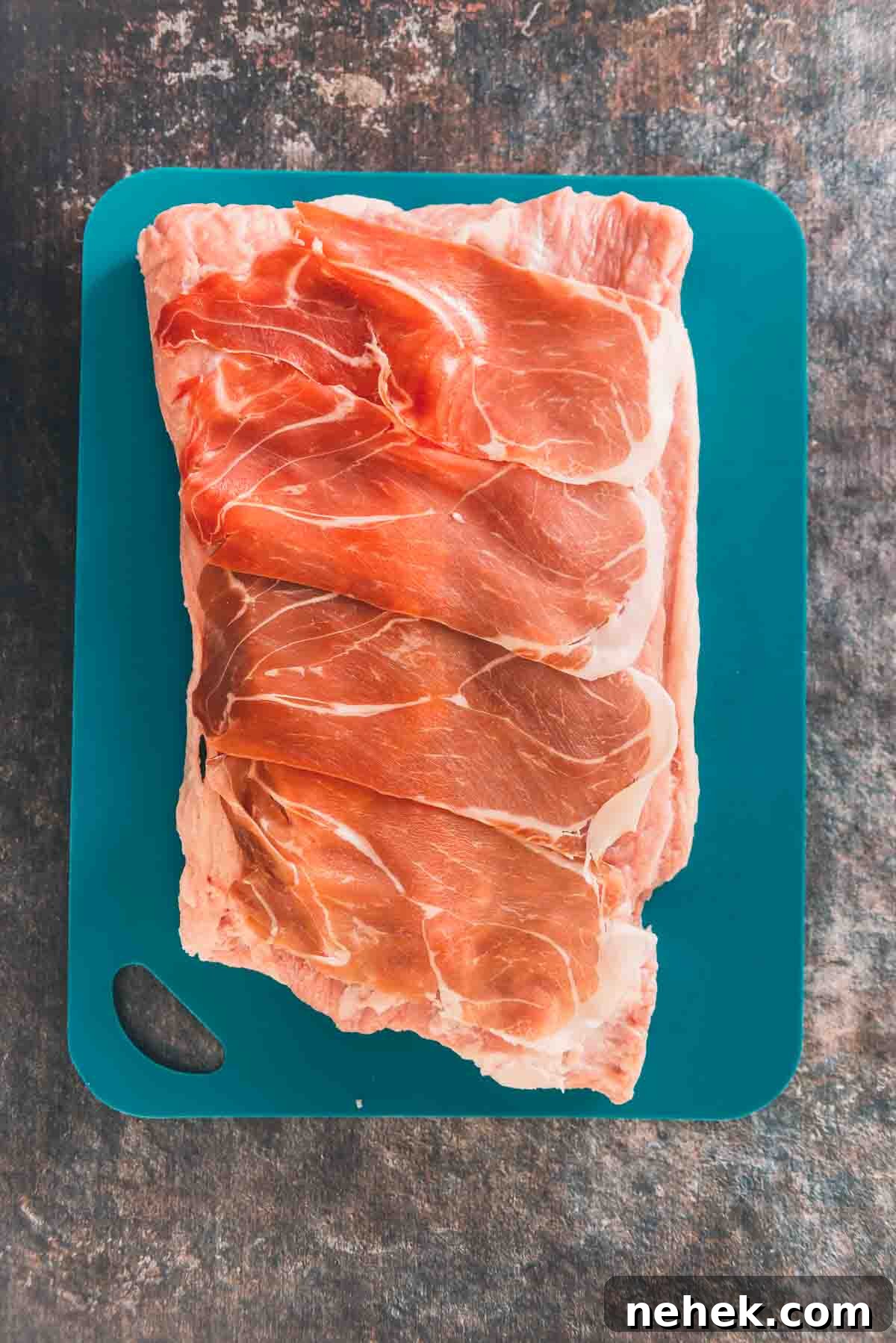
- Lay prosciutto slices in a single overlapping layer over the veal.
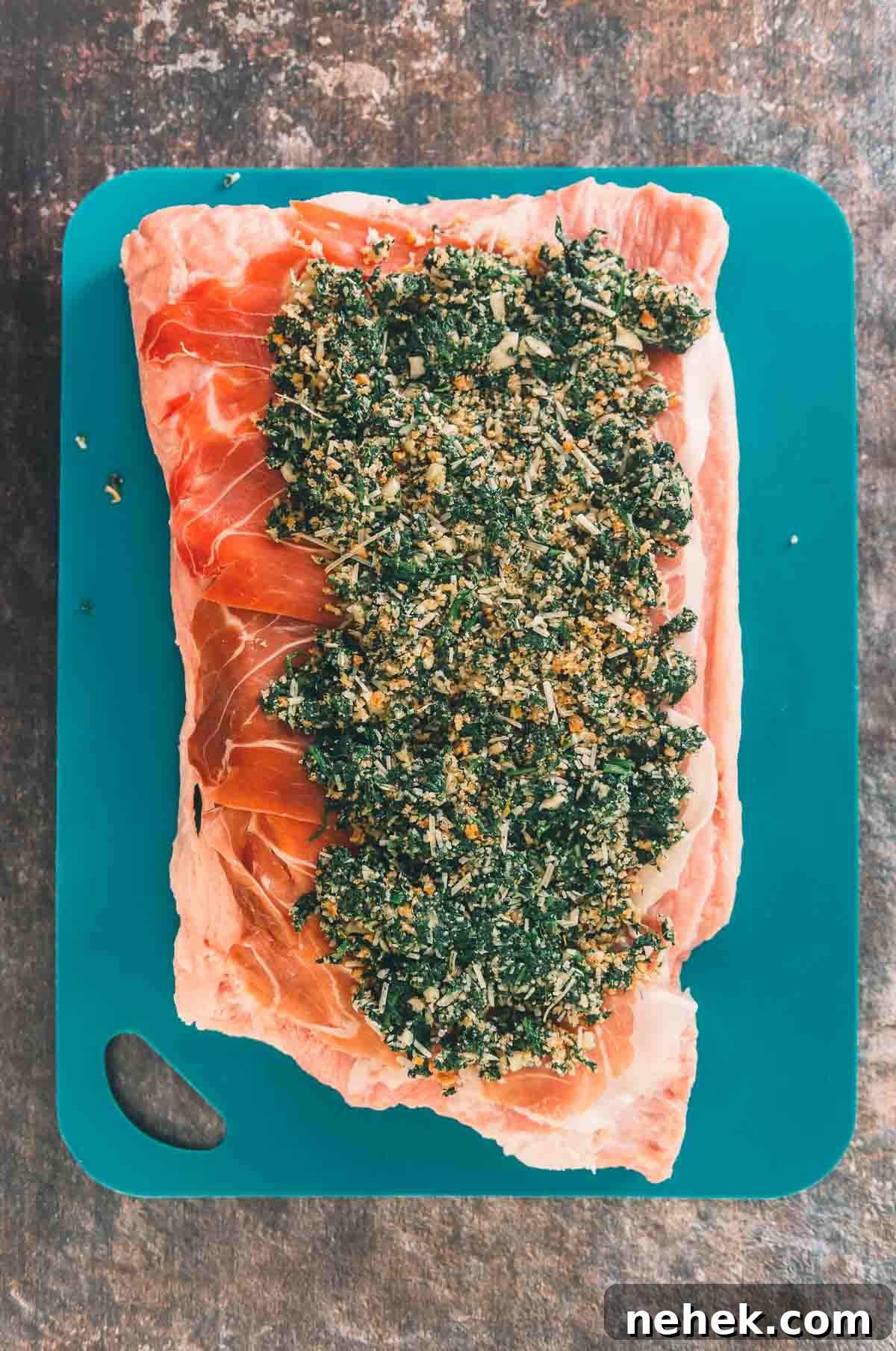
- Spoon the spinach filling across the surface, leaving a 1-inch border along the long edge.
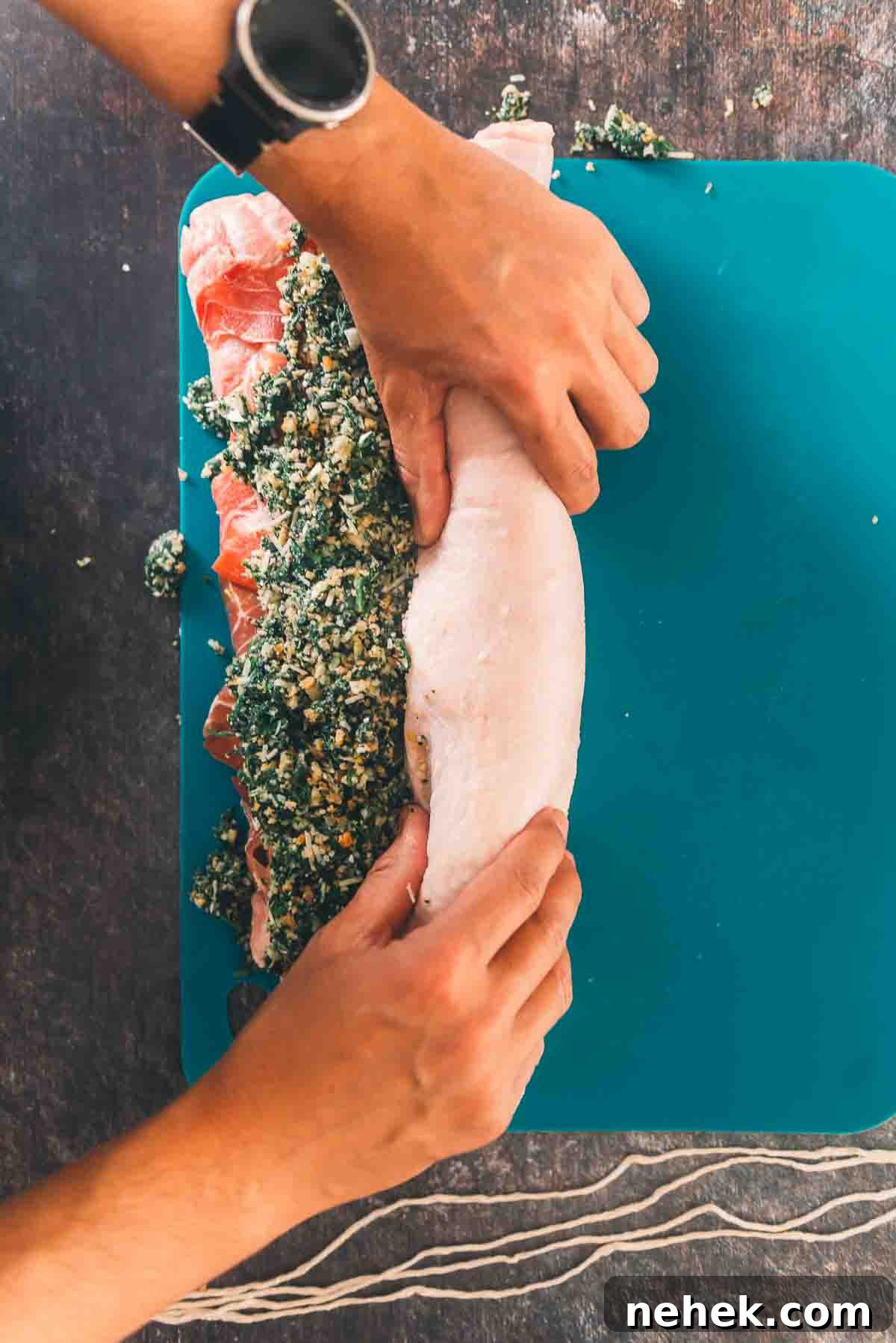
- Tightly roll from the long edge, using your thumbs to keep the filling tucked in. Fold edges under as needed.
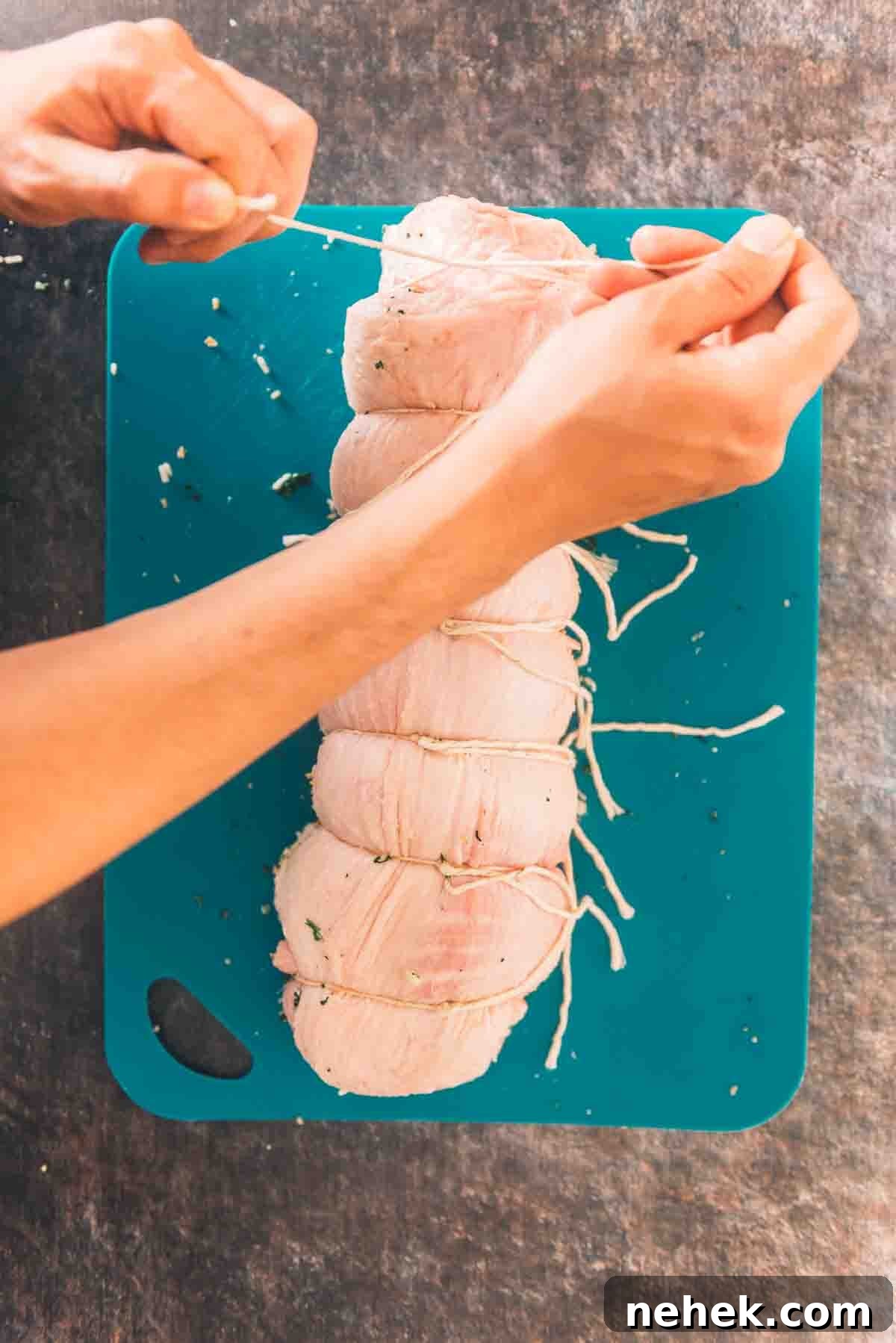
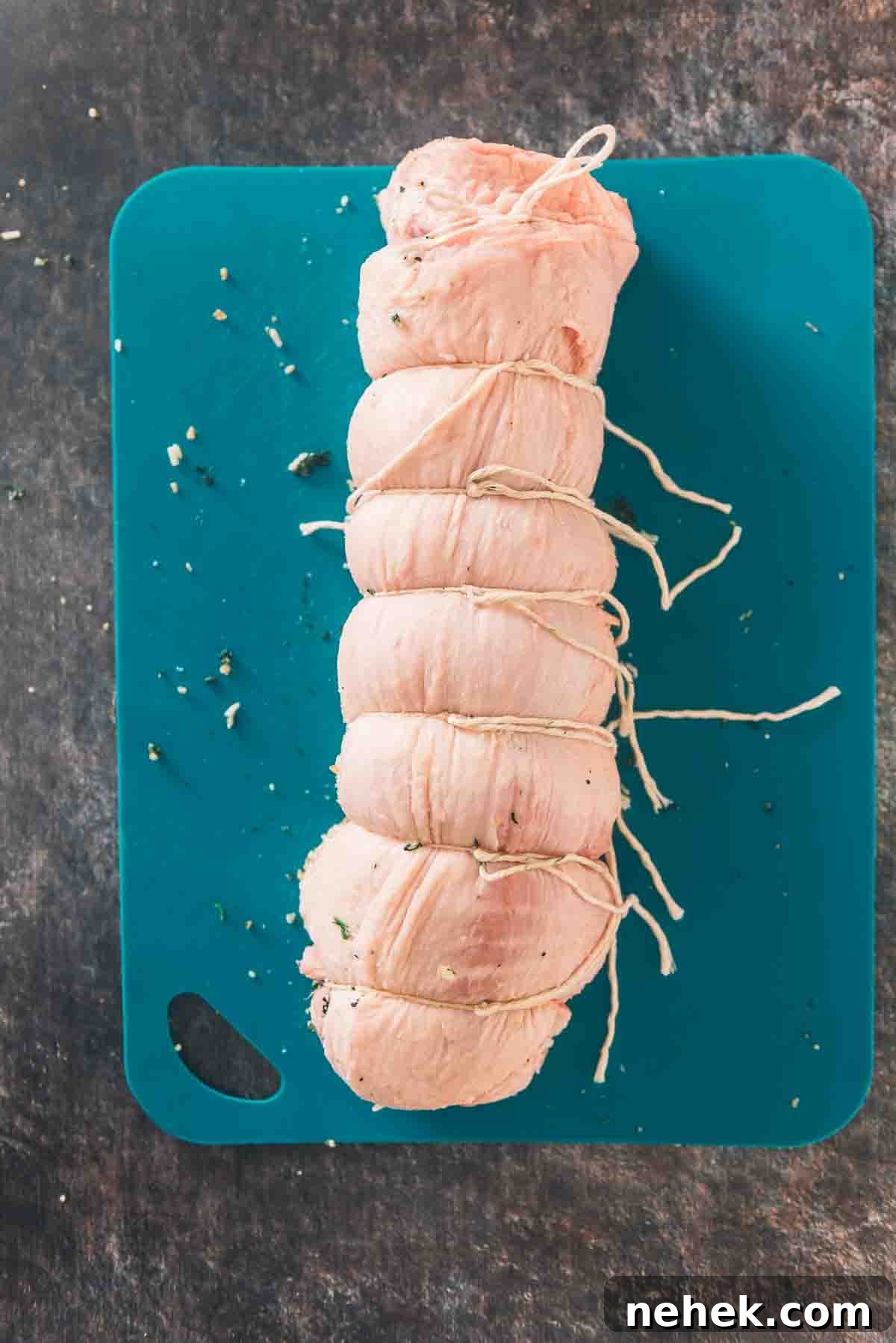
- Secure the roll every 1–2 inches with butcher’s twine.
Sear
- Preheat oven to 300°F (150°C) and set the rack low to mid position.
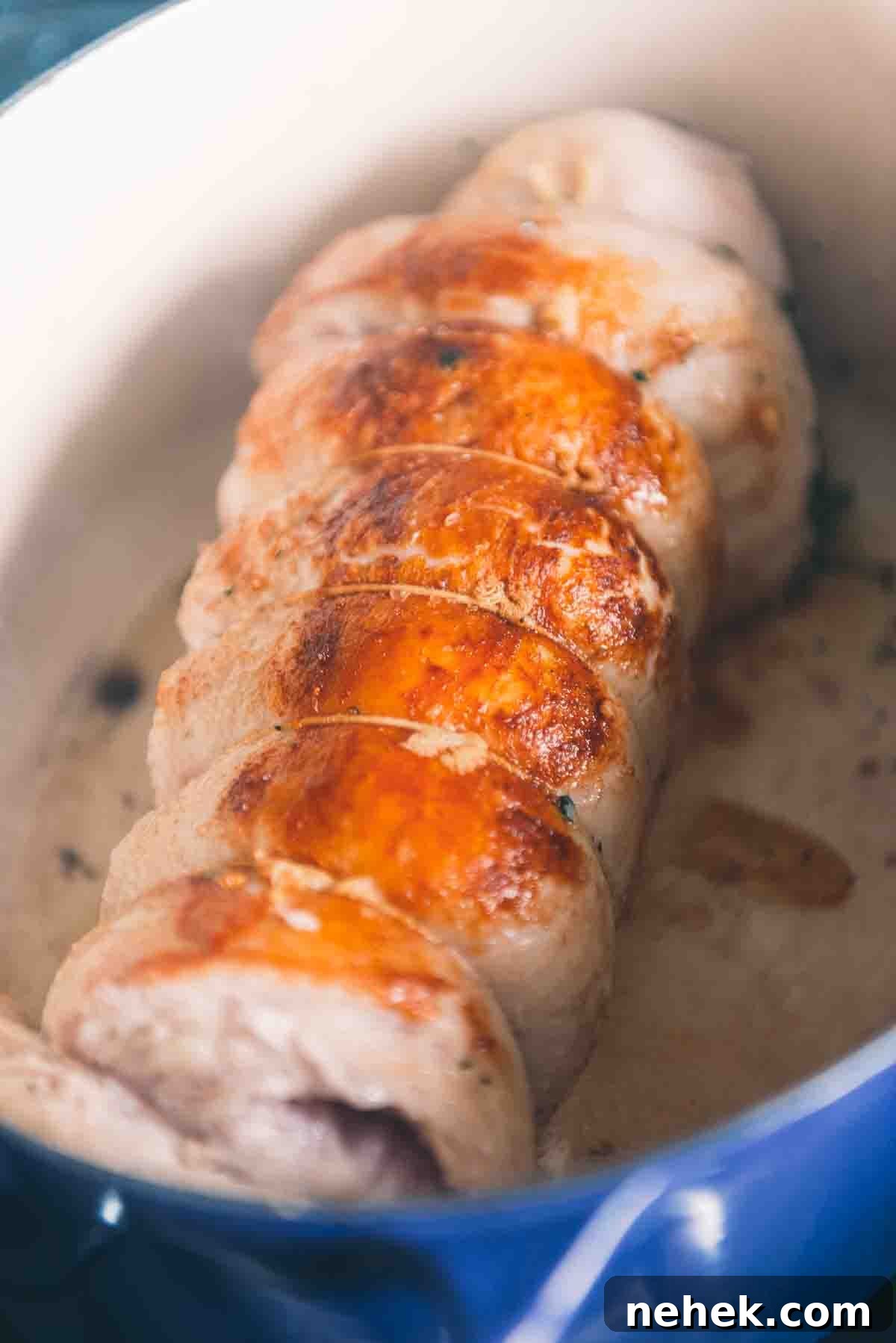
- Heat a large Dutch oven or cast-iron skillet over medium-high, add oil, and when shimmering, brown the roast on all sides, about 3–4 minutes per side.
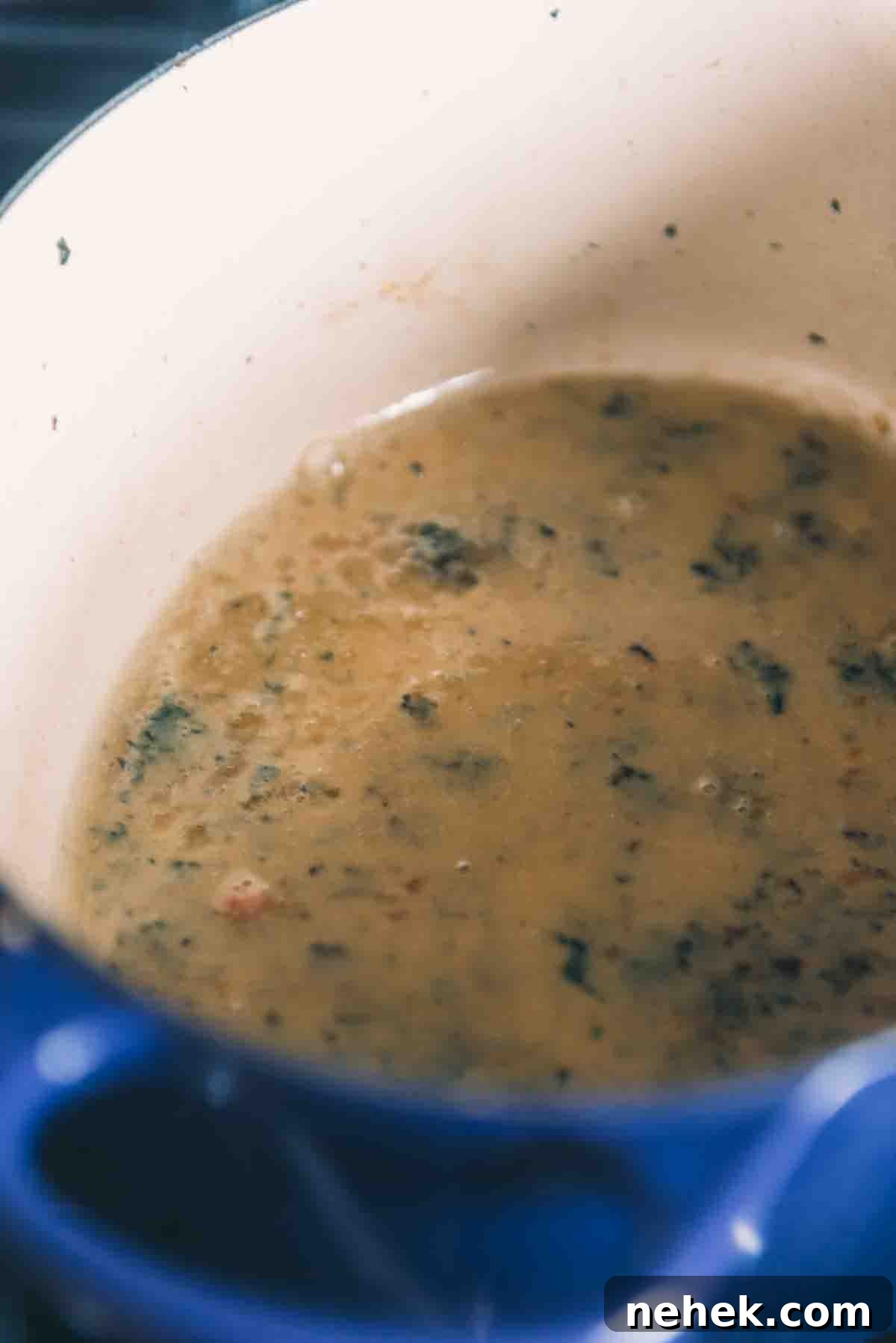
- Transfer the roast to a cutting board. Deglaze the pan with the white wine, scraping up browned bits.
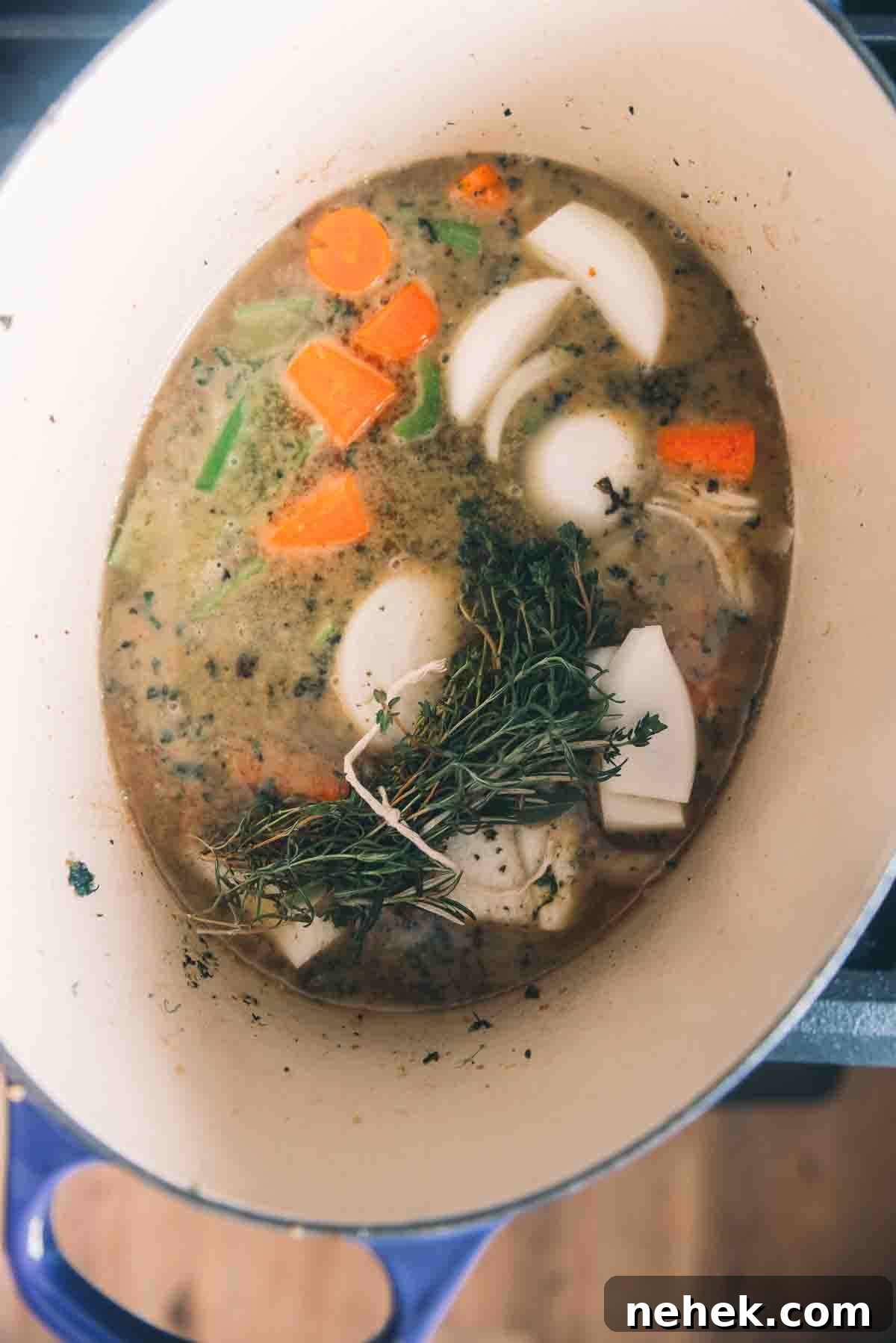
- Add the diced onion, celery, and carrot to the pan and tuck in the bouquet garni. If you seared in a separate pan, transfer the wine reduction as well.
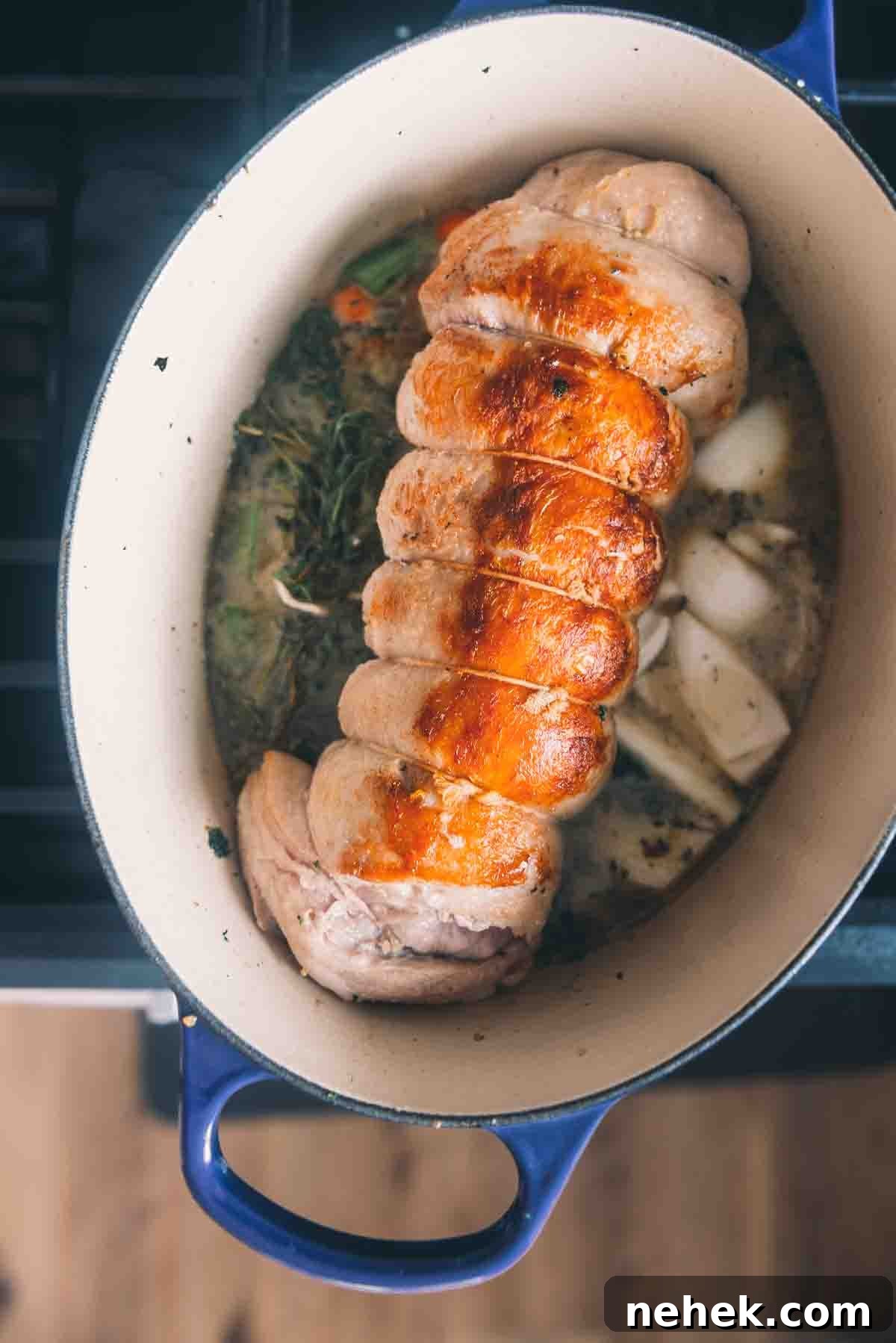
- Nestle the stuffed roast seam-side down into the vegetables and add chicken broth so the liquid comes halfway up the roast. Cover with the lid or foil.
Braise
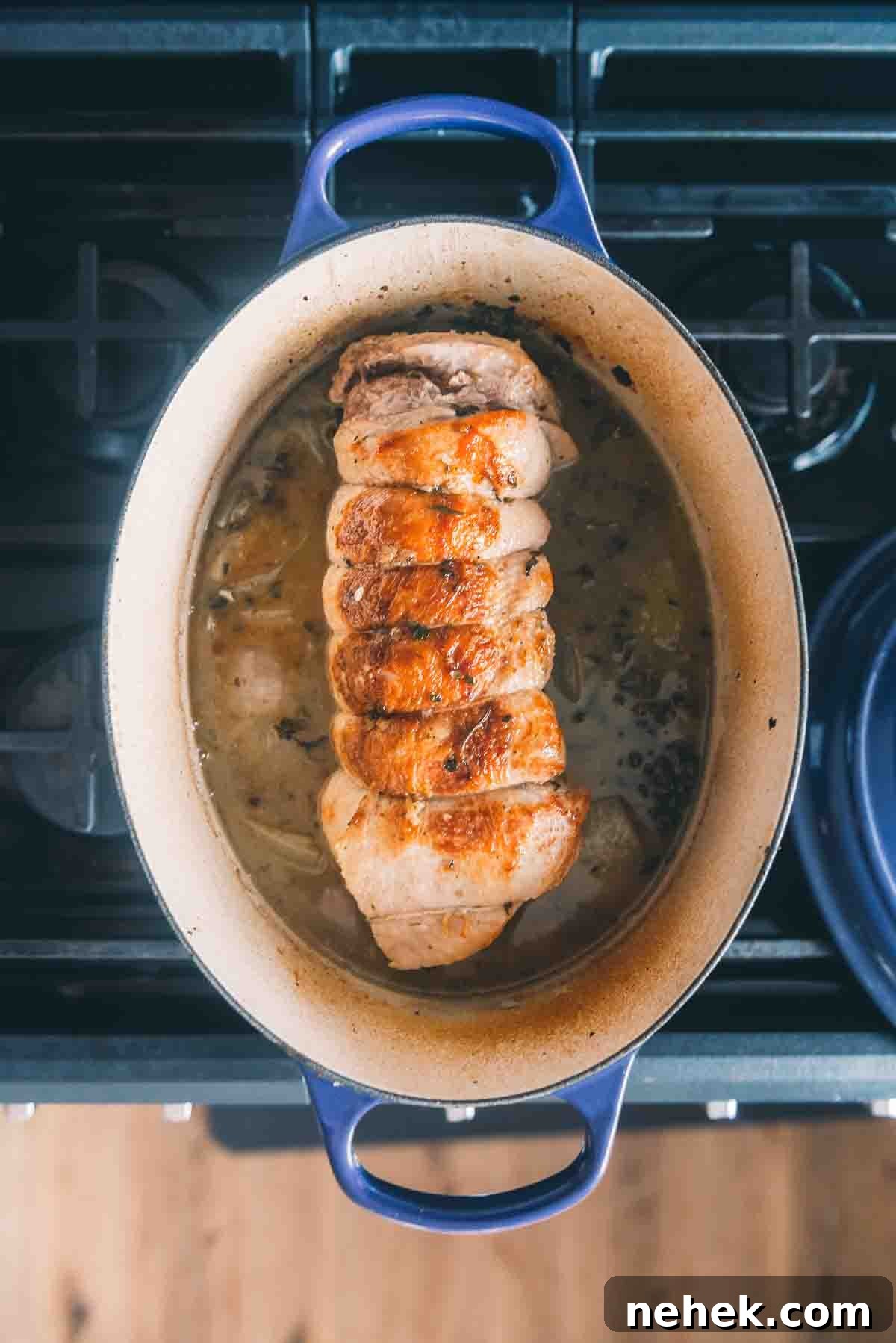
- Place the covered pot in the oven and braise for 1½ hours, basting every 20 minutes and adding more broth if the liquid gets low.
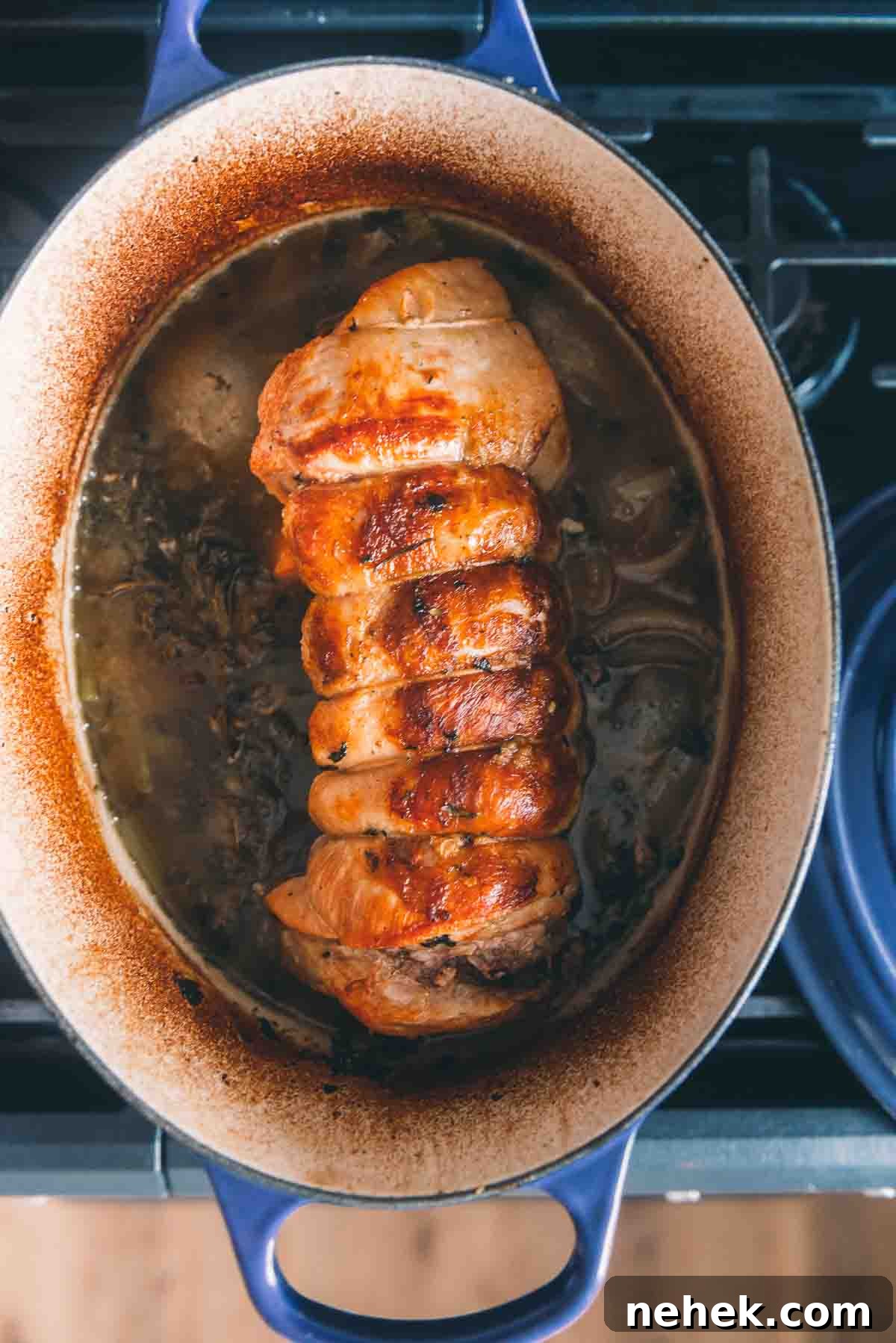
- Increase oven temperature to 400°F (200°C), remove the cover, and roast uncovered another 30–45 minutes, basting, until the internal temperature reaches 165°F in the meat (probe should be in meat, not filling).
Rest & Reduce
- When the roast reaches 165°F, remove it and transfer to a cutting board. Spread garlic compound butter over the top and tent loosely with foil to rest for about 15 minutes.
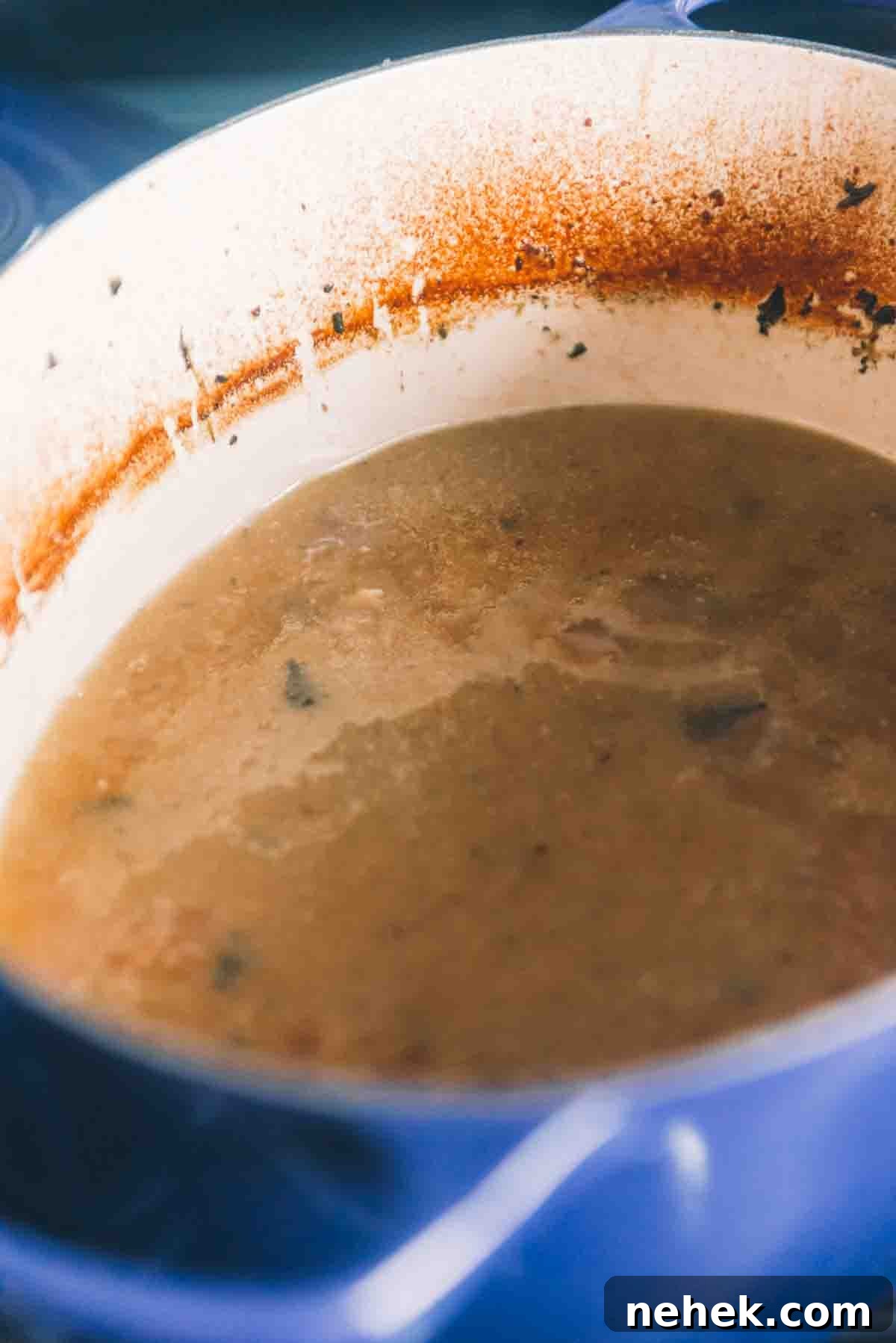
- Strain the braising liquid into a clean pan, bring to a boil, then simmer until reduced by half. Cool briefly and skim any fat before serving.
- Make the gremolata by finely mincing parsley and garlic and mixing with lemon zest; use it to brighten the plated slices.
Slice and Serve
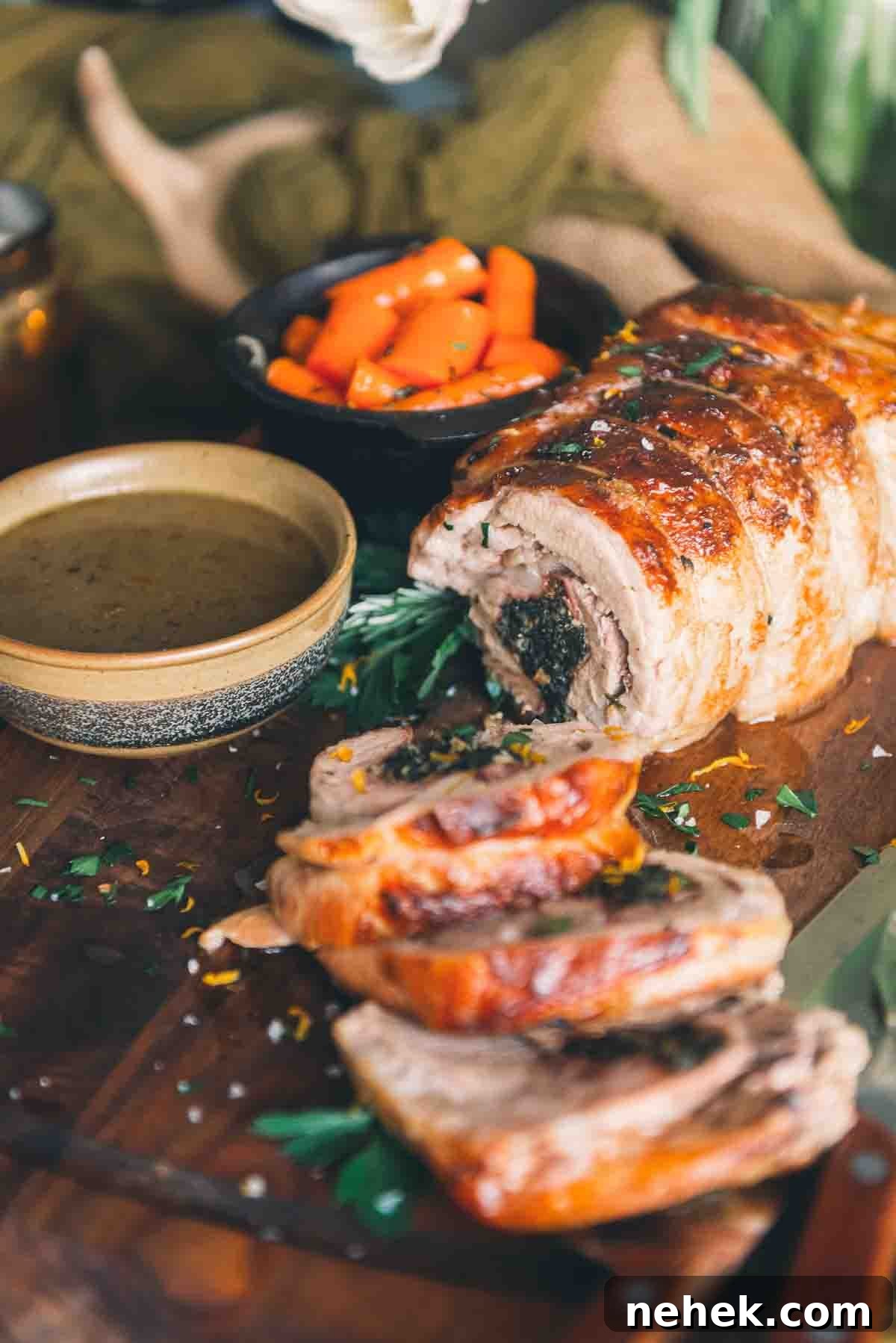
- Remove twine, then slice the roast into ¾”–1″ medallions with a sharp knife.
- Serve hot with a drizzle of the reduced braising juices and a sprinkle of gremolata alongside your favorite sides.
Girl Carnivore EXPERT TIPS
- Use long tongs and a sturdy spatula to handle the roast while searing.
- Substitute veal stock for chicken stock if available for a deeper flavor.
- Use a reliable digital thermometer and ensure the probe is in the meat, not the filling.
- Swiss chard can be mixed with spinach—remove stems before blanching to avoid bitterness.
- For a touch of heat, add 1 tsp red pepper flakes to the filling if desired.
What to Serve with
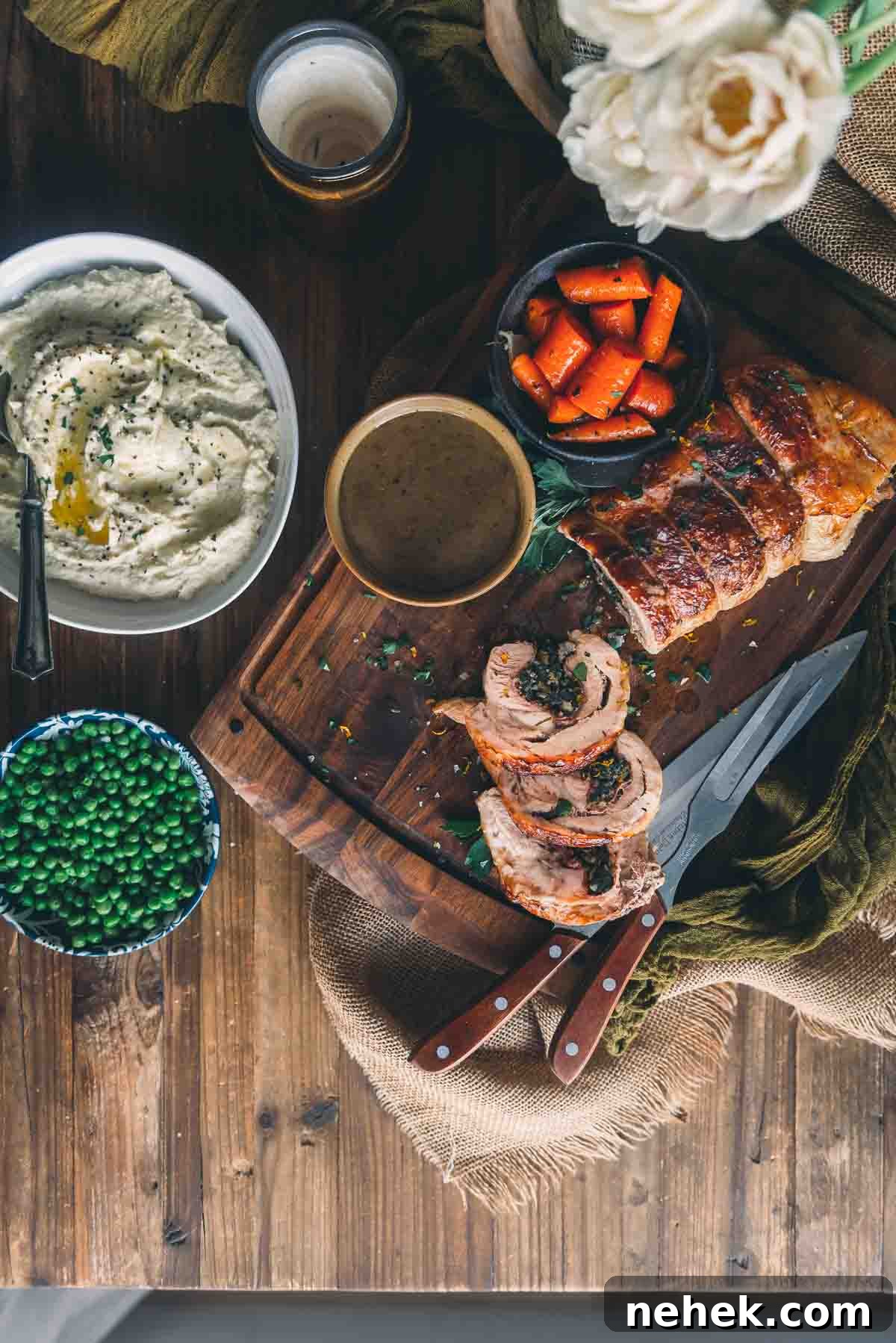
Classic sides include mashed potatoes, pureed turnips, or roasted root vegetables. Steamed or roasted carrots, peas, green beans, smoked Brussels sprouts, a simple green salad, risotto, or rice also pair well. Choose sides that complement the richness of the veal and the brightness of the gremolata.
Wine Pairing:
This stuffed veal works with both whites and lighter reds. Try a crisp Pinot Grigio, Sauvignon Blanc, or, if you prefer red, a light Pinot Noir to balance the dish.
Leftovers and Reheating
Store leftovers in an airtight container in the refrigerator for up to 3 days. Reheat in a 325°F oven, covered with foil, until warmed through (about 10 minutes). You can freeze cooked stuffed veal for up to 3 months; thaw overnight in the fridge and reheat gently in a 325°F oven.
More delicious veal recipes
Veal Recipes
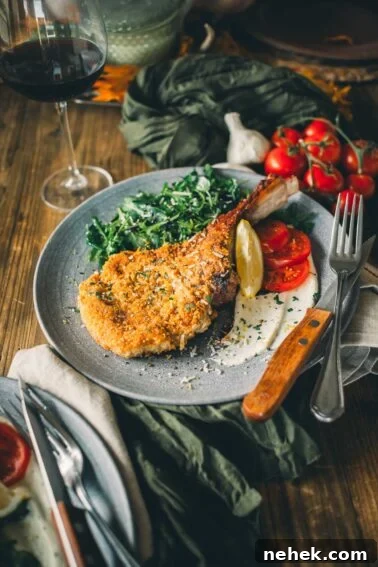
Classic Veal Milanese
Veal Recipes
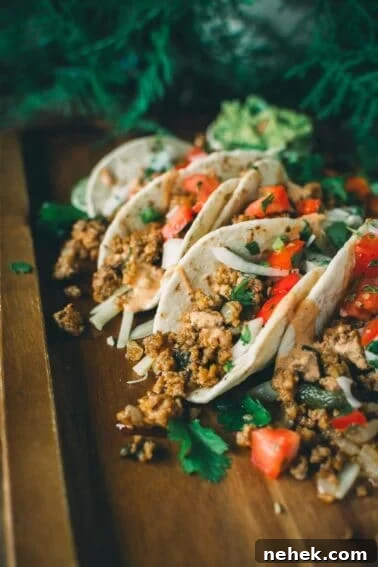
Ground Veal Tacos
Veal Recipes
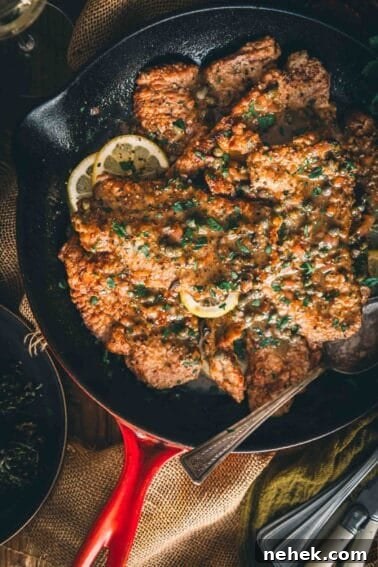
Veal Piccata
Veal Recipes
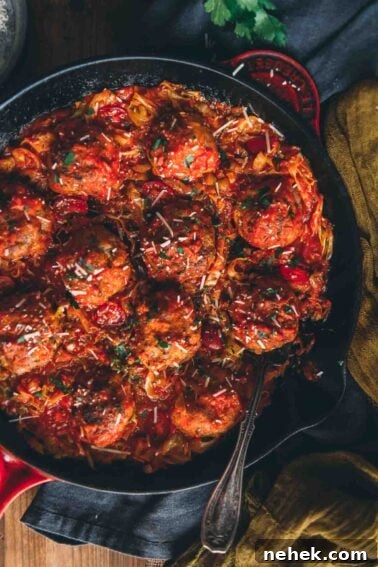
Veal Meatballs
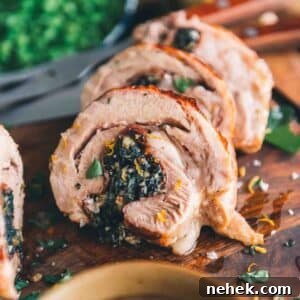
Stuffed Breast of Veal
Ingredients
Filling:
- 4–5 cups spinach
- 4 garlic cloves
- 1 cup pork panko or traditional panko
- 1 cup freshly grated Parmesan
- 1 tsp salt
- ½ tsp pepper
- 1 tsp lemon zest
For the braised veal:
- 4 oz prosciutto
- 4 lbs breast of veal
- 2 tbsp oil
- 1½ cups dry white wine
- 1 onion, roughly diced
- 2 carrots, roughly diced
- 2 celery stalks, roughly diced
- 2 sprigs rosemary, 5 sprigs thyme, 2 sprigs tarragon
- 2–3 cups chicken broth (or veal stock)
- 4 tbsp garlic compound butter
Gremolata
- ¼ cup parsley, minced
- 4 garlic cloves, grated
- 1–2 tsp lemon zest
Instructions
Prep the filling:
- Blanch spinach and drain well.
- Squeeze out excess water.
- Sauté garlic briefly, then pulse spinach, garlic, Parmesan, lemon zest, salt, and pepper in a food processor. Add panko and combine.
Prep the veal:
- Preheat oven to 300°F and set rack low-mid.
- Trim and pound the veal if needed, then season with salt and pepper.
- Lay prosciutto on the veal, spread the filling leaving a 1″ border, roll tightly, and tie every 1–2 inches.
Sear the veal:
- Heat oil in a Dutch oven, brown the roast on all sides, then transfer to a board.
- Deglaze with wine, add vegetables and bouquet garni, add stock, and nestle the roast seam-side down.
- Cover and place in the oven.
Braise:
- Braise 1½ hours, basting every 20 minutes, until internal temp reaches 150°F. Increase oven to 400°F, remove cover, and roast uncovered 30–45 minutes until 165°F.
Rest:
- Transfer roast to a board, top with garlic compound butter, and tent with foil to rest 15 minutes.
Reduce the liquid:
- Strain the braising liquid, boil and reduce by half, and skim any fat.
Make the gremolata
- Mix minced parsley, garlic, and lemon zest by hand.
Serve:
- Slice into ¾”–1″ medallions, plate with the reduction and a sprinkle of gremolata.
Notes
- Use long tongs and a sturdy spatula to move the roast while searing.
- Veal stock is preferred over chicken stock for richer flavor if available.
- Use a quality digital meat thermometer; ensure the probe reads the meat, not the filling.
- Swiss chard can be substituted for some spinach; remove stems before blanching.
- Add 1 tsp red pepper flakes to the filling for heat if desired.
Nutrition
Recipe FAQs
USDA recommends 145°F for veal, but because this cut is fattier we cook this stuffed breast to 165°F and let it rest so the final temperature reaches about 170°F. Insert the probe into the meat, not the filling, for an accurate reading.
Roasting or braising are the most common methods. Roasting yields a browned crust; braising ensures tender, moist meat. This recipe combines both to get tender meat with a golden exterior.
Times vary by size and thickness, but expect about 1.5–2.5 hours at 300°F, finishing under higher heat until the internal temperature reaches the target.
Yes. You can assemble the stuffed roast and refrigerate it, well wrapped, for up to 24 hours before cooking.
Yes. Classic preparations often allow the roast to be made ahead and reheated or served later for unexpected guests. Proper cooling and storage are essential.
Sources
Recommended reading includes authoritative books on meat and butchery as well as guidance on cooking temperatures. Consult trusted culinary texts or government food-safety resources for further details on safe internal temperatures and best practices.